

News

The Art of Living Has Its Formula
In his induction speech to the RAED—titled “Autogenesis: From Anti-Stress Technique to Art of Living”—José Luis González de Rivera presents his autogenesis method, which, drawing on his own personal experience, has evolved into a simple, practical relaxation technique that delves into deep mental processes.

What the Glory Façade That Will Complete the Sagrada Família Will Look Like
Francesc Torralba analyzes an article regarding the competition to design the Glory façade of the Sagrada Família basilica in Barcelona, which would bring the temple’s construction to completion.

Artificial Intelligence and Sustainability
Antoni Garrell reflects on the current limitations of AI regarding its high energy dependency in the article “Is Artificial Intelligence an Enemy of Sustainability?”

What the Doctors of the Blue Division Knew About the Holocaust
In the article “Los médicos españoles de la División Azul y el Holocausto” (The Spanish Doctors of the Blue Division and the Holocaust,) Francisco López Muñoz reconstructs—drawing on diaries, memoirs, and postwar testimonies—what the doctors and medical personnel of the Blue Division saw and understood regarding the persecution of Jews on the Eastern Front.
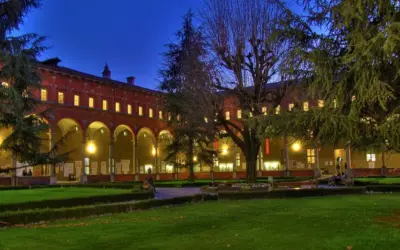
Gallucci, New Director General of Europe’s Largest Private University
Carlo Maria Gallucci has been appointed the new Director General of the Catholic University of the Sacred Heart, the largest private university in Europe, headquartered in Milan with campuses in the Italian cities of Brescia, Piacenza, Cremona, and Rome.

The Genesis of Europeanism in Spain: From the Academy to the Media
Jordi Xuclà is the subject of an article in Crónica Global in which journalist Miranda Solana highlights how he drew attention to the Spanish intellectuals who joined the movement that emerged from the Congress for Cultural Freedom during the Cold War.

Recognition for the Pioneer of Gene Editing
Francis Mojica receives the Vives Network Medal of Honor in recognition of his contributions to the discovery and development of the CRISPR (Clustered Regularly Interspaced Short Palindromic Repeats) system, one of the most important gene-editing tools of the 21st century.
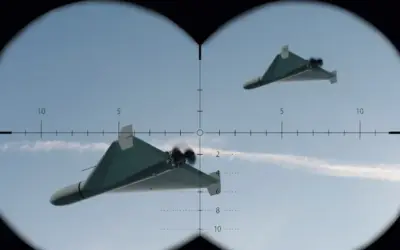
The War the West Is Already Losing
Army Colonel Jesús Alberto García Riesco warns of the disconnect in Western security strategies regarding the new model of warfare in the article “The West’s Deficit on the Transparent Battlefield.”
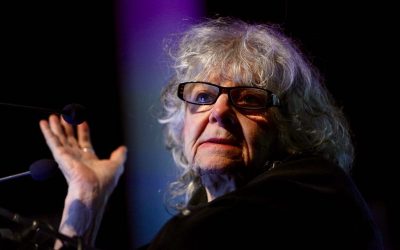
Ada Yonath, in memoriam
The Governing Board of the RAED, on behalf of the entire academic community, deeply regrets the loss of its Honorary Member Ada Yonath, 2009 Nobel Laureate in Chemistry, who passed away on August 31 at the age of 87

A note of caution on children’s nutritional supplements
Rafael Urrialde reflects on a study that suggests baby food pouches with spouts are more like sugary drinks or smoothies than nutritious food

Climate change: scientific certainty, political problem
In his presentation, “El cambio climático: certeza científica, problema político” Francisco González de Posada argues that while there is scientific consensus on this phenomenon, caused by human activity, there is no political, social, and moral response commensurate with the challenge it presents.

The diplomatic dimension of law
Jaume Antich and Javier Junceda, part of the teaching team of the Postgraduate Program in Diplomatic and Consular Law at the Barcelona Bar Association. Antich addresses the criminal protection of internationally protected persons, while Junceda participates with the session “Diplomacy from the perspective of administrative law: The Ministry of Foreign Affairs.”