


José Luis González de Rivera, a doctor of Medicine and Professor of Psychiatry and Medical Psychology, was inducted as a full member of the Royal European Academy of Doctors (RAED) during a solemn ceremony held on 9 September at the Madrid headquarters of the Royal Economic Society of Friends of the Country. The new academic delivered the induction speech AUTOGÉNESIS: de técnica antiestrés a ARTE DE VIVIR (Autogenesis. From an Anti-Stress Technique to the Art of Living), in which he presented his autogenesis method, which, based on his own personal experience, becomes a simple and practical relaxation technique that delves into deep mental processes. He was answered on behalf of the Royal Corporation by honorary academic Francisco González de Posada. The session was streamed live on the RAED’s YouTube channel, where it can still be viewed.
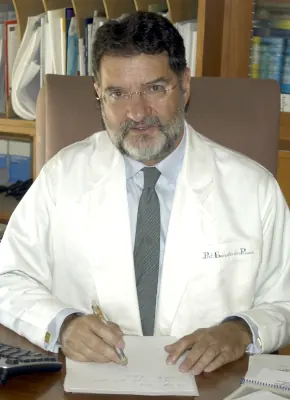
Dr. José Luis González de Rivera
The new academic began his address by explaining how, through the autogenic training developed by German psychiatrist and neurologist Johannes Heinrich Schultz, he experienced a feeling of calm for the first time in his life. This technique does not consist of suppressing impulses or concentrating in order to achieve a result. Active concentration, linked to achievement, stimulates the sympathetic nervous system and can trigger cortisol, he explained. Passive concentration does the opposite: it fixes attention on something without intention or desire, accepting any outcome in advance. “It is the attitude of someone who contemplates the waves without wanting to change the sea. Alongside it operates passive acceptance: recognising that what is happening is what is happening, without following thoughts or rejecting them. It is not resignation. It is receptivity,” he stated.
From these two techniques arise three successive methods that the new academic has developed, as he explained during his address: somatosensory meditation focuses attention on bodily sensations -weight, warmth, heartbeat, breathing- with minimal interference; sentimental meditation observes how emotions are transformed into feelings and these, in turn, into opinions; and autogenic analysis, or meditation on the inner world, allows automatic mental dynamics to flow with maximum acceptance. Each level requires mastery of the previous one, González de Rivera explained.
The effects, he maintained, are mainly two and of a different order. The first is the relaxation response, the reverse of the fight-or-flight response described by American physiologist Walter Bradford Cannon: muscle tone decreases, the heartbeat becomes regular, adrenaline and cortisol levels fall and alpha waves increase. Practised regularly, it trains the neural circuits of calm that originate in the anterior hypothalamus and improves what he calls neurovegetative attunement: cooperation between the sympathetic and parasympathetic systems. The body stops remaining ‘switched on’ when danger no longer exists. It improves resistance to stress-related illnesses and personality becomes more balanced and empathetic. The second effect is an expansion of consciousness: more complete access to one’s own contents and processes. Different mental states, which in everyday life follow one another and contradict each other, can merge into a more unified consciousness. Memories, intuitions and solutions emerge. Traumas that have not been processed may also resurface, he warns. Because of its calmness, the autogenic state facilitates the deactivation of their emotional charge and their integration. According to the author, this is where the greatest therapeutic effectiveness of autogenic analysis lies.
The method has similarities with other Eastern methods, but González de Rivera does not mythologise them: both approaches are based on the same human capacity, sustained attention. What began as a clinical technique against stress becomes, in his formulation, what in Classical Greece was considered an art of living, he maintained. Remaining calm helps to prevent and treat ailments and, above all, as he stressed in his address, to inhabit a life that has been given to us as both a project and a task. It requires effort, he concluded, although he asked the audience whether or not it is worth making the effort to become master of oneself and of one’s own happiness.
González de Rivera has been head of the Psychiatry Department at the Jiménez Díaz Foundation and has taught at McGill University and McMaster University, both in Canada, as well as at the University of La Laguna and the Autonomous University of Madrid. He has supervised 30 doctoral theses, coordinated six treatises and authored 18 reference monographs, including “Manual of Psychiatry”, “Psychosomatic Medicine”, “Stress Syndromes”, “Psychological Abuse”, “Emotional Crises” and “Love According to Doctors”. He has described creative psychoses, a new nosological entity, and developed the PSI Method – Sequential Integrative Psychotherapy. His book “Autogenics 3.0”, translated into several languages, brings together the latest advances in autogenic training and therapeutic meditation.
He is a corresponding member of the Royal Academy of Medicine of the Canary Islands and an honorary member of the Argentine Association of Psychiatrists, the Spanish Society of Psychosomatic Medicine, the British Autogenic Society, the Interdisciplinary Association for Research and Teaching on Autogenesis of Italy, the Italian Society of Autogenic Therapy and the French Society of Psychotherapeutic Relaxation. He has received numerous awards and distinctions, including the Silver Medal of Spain’s Royal National Academy of Medicine, the Special Award of the American Academy of Psychosomatic Medicine, the Vallejo-Nágera Award of the Official College of Physicians of Madrid, the Best Paper Award at the 4th Virtual Congress of Psychiatry and the Gold Medal of Forum Europe 2000, among other national and international recognitions. He has been president of the Spanish Association of Psychotherapy and the Spanish Society of Psychosomatic Medicine, as well as a member of the Governing Board of the Spanish Society of Psychiatry, a board member of the European Federation for Psychotherapy and a member of the Advisory Council of the International Society of Psychoneuroendocrinology.
Entrance speech: “AUTOGÉNESIS: de técnica antiestrés a ARTE DE VIVIR”