



Mr Jesús Alberto García Riesco
Jesús Alberto García Riesco, colonel in the Spanish Army, member of the Spanish Association of Military Writers and contributor to the Royal European Academy of Doctors (RAED), warns of the strategic lag in the security policies of Western countries in the face of the new model of warfare in the article “The West’s Deficit on the Transparent Battlefield”, published on 15 August in the digital newspaper La Crítica. The expert will publish the paper “Postmodernism and European Security”, in which he explains how postmodernity challenges the Enlightenment’s claim to universal knowledge, in the book that will collect the papers from the 10th International Academic Meeting held by the Royal Corporation from 15 to 20 March in several German cities under the general title “The Rhine as a Stream of Knowledge: Cross-Border Dialogues”.
For García Riesco, on the new battlefield, persistent surveillance by drones, sensors and data networks turns the surface into a killing zone. Hiding is increasingly difficult, movement is more lethal and adaptation ceases to be an advantage and becomes a condition for survival. Electronic warfare degrades communications and artificial intelligence is beginning to assume command-and-control functions. Cheap drones dominate the space over the front and rear areas and threaten to operate in autonomous formations coordinating air, land and maritime systems in real time. The combatant is left isolated in shelters or forced into high-risk incursions, trapped between fear and helplessness.
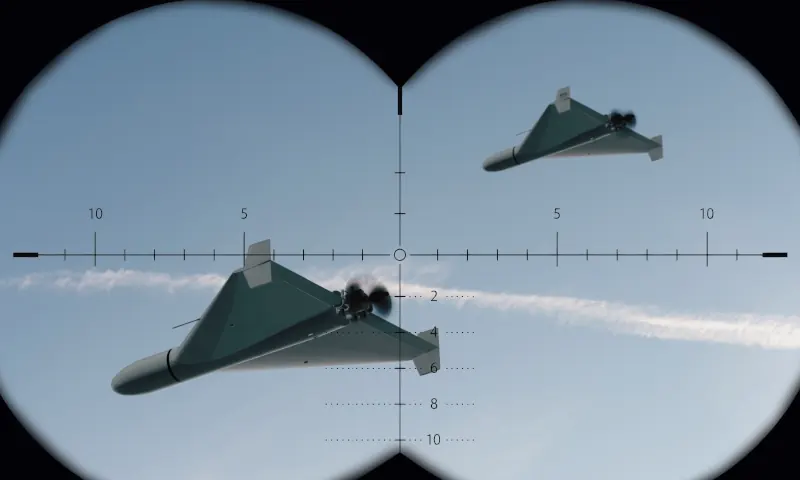 Avoiding any hint of technological fetishism, García Riesco points out that the drone is one rung of the ladder, not the whole war. Transparency rests on sensors, precision fires and reliable networks; then artillery comes back into play and, ultimately, human infantry. Ground forces remain essential for conquering and holding territory. Ukraine illustrates this: it is not merely a drone war, but a complex conflict in which these systems have gained prominence. Russian interference, however, has already reduced the initial effectiveness of the disruptive Bayraktar TB2 drone and precision munitions such as the Excalibur. New counter-drone systems, especially lasers, and the ability to blind satellites could restore greater importance to ground troops. Another consequence of this new environment is the so-called underground shift. Fighting in the open has become so exposed that manoeuvre is tending to move underground, burying logistics routes, command posts and medical facilities as the surface becomes uninhabitable.
According to García Riesco, the underlying problem for the West is not merely equipment: it is tempo. Drones, sensors, electronics, industry and tactics are revised within weeks. NATO procurement cycles, at around 20 months, are no longer fit for purpose. Ukraine has shortened that chain with frontline engineers, mass production of unmanned systems and the Delta system, which fuses data from land, sea and air to deploy cheap mass against scarce and expensive Western platforms. Russia, through Rubikon and the Zapad 2025 exercises, has centralised research, analysis, procurement and drone employment, placing the emphasis on small units and attacks on command posts, bases and logistics. To compete with that bloc, the expert says, the West cannot simply buy more gadgets. It needs a different command culture, new units, air defence and electronic warfare as priorities, scalable drone production and, above all, organisations capable of learning, deciding, manufacturing and integrating innovations faster than the adversary.