

Francisco González de Posada, Professor of Physical Foundations at the Polytechnic University of Madrid and honorary member of the Royal European Academy of Doctors (READ), took part last May in an Ordinary Scientific Session of the Royal National Academy of Medicine, where he delivered the lecture “Climate Change: Scientific Certainty, Political Problem.” The expert argued that, although there is scientific consensus on this phenomenon and its human causes, there is no political, social and moral response commensurate with the scale of the challenge. The academic has also presented in various forums over recent weeks the book “Towards a Moral Dictionary of Don Quixote,” by Francisco Parra Luna, Emeritus Professor of Sociology at the Complutense University of Madrid and a recognised communicator.
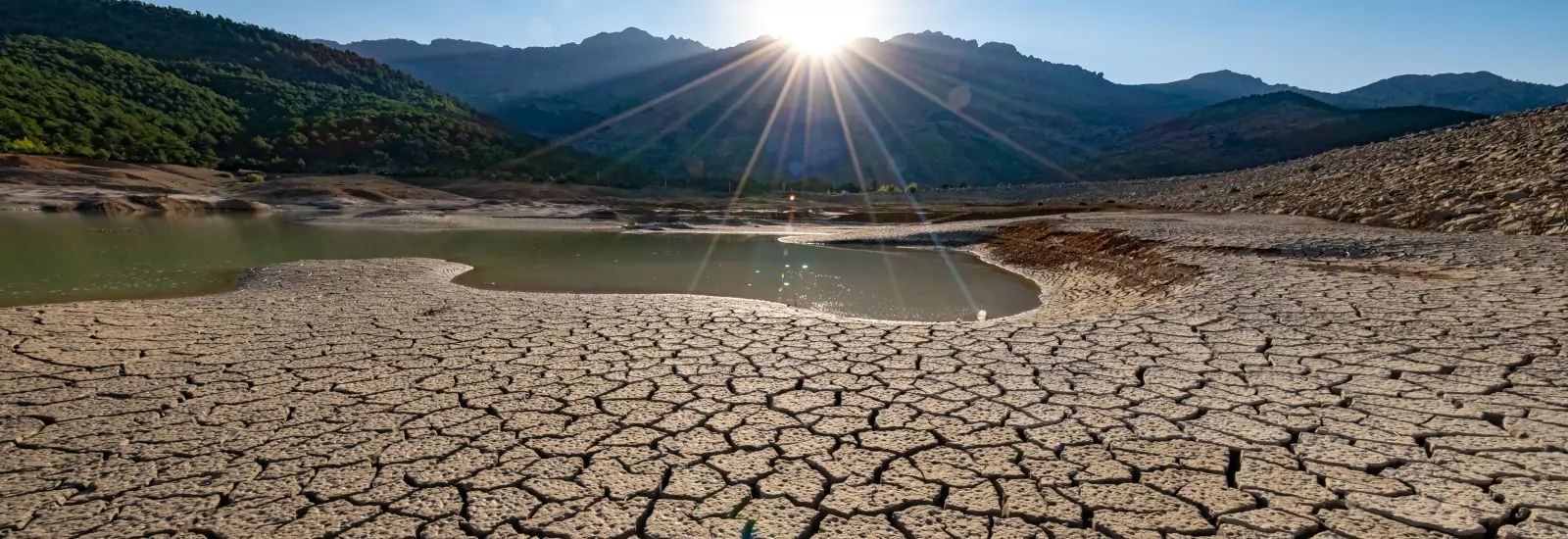
In his presentation, González de Posada began by distinguishing what is known as anthropogenic global warming from other concepts such as climate change, an expression he considers too neutral. Since the beginning of the industrial era, he argued, the increase in the planet’s average temperature can be explained by the accumulation of carbon dioxide and other greenhouse gases emitted by human activity. In his view, this attribution is not a disputed hypothesis: science has established it unequivocally since at least the 1980s. The Earth’s climate has always varied due to natural causes, but this is not that kind of variation. We are, he stated, in a new geological phase, the Anthropocene, marked not only by changes in the atmosphere but also by the material footprint of industry and consumption.
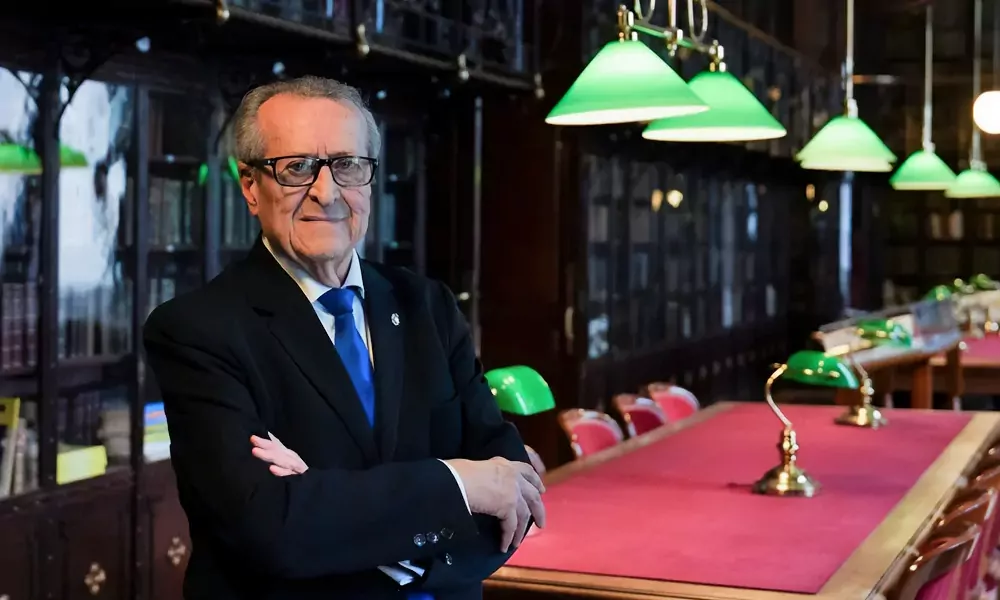
Dr Francisco González de Posada
From that point, he argued, treating the issue as though it were an ideological controversy is a category error, since science is not the property of any political party and the problem affects the entire human species, as well as all other species, rather than one particular faction. Scientists, he considered, should communicate the message more widely and more clearly, while those with social responsibilities should emphasise the consequences and moral responsibilities involved. On the political level, González de Posada observed that the Paris Agreements and successive climate summits have resulted in commitments that have not translated into the urgent and complete decarbonisation of the economy. “The present situation is one of climate emergency: not a slogan, but a description of what is already happening and of what children and grandchildren will inherit. Science has done its part; the bottleneck is political,” he concluded.
González de Posada is a civil engineer and holds a doctorate in Civil Engineering from the Polytechnic University of Madrid, a degree in Philosophy and Humanities from the Pontifical University of Salamanca, and a degree in Physical Sciences from the Complutense University of Madrid. He was awarded the Medal of Honour for the Promotion of Invention and also served as Rector of the University of Cantabria. He is a full member of the Royal Academy of Doctors of Spain and a member of the World Academy of Art and Science, a corresponding member of the Royal Academy of Fine Arts of Cádiz, the Royal Academy of Fine Arts of San Fernando and the Royal Academy of Sciences, Fine Arts and Letters of Écija, and an honorary member of the Academy of Medical Sciences of Cantabria, the Royal Academy of Valencian Culture, the Royal Academy of Medicine and Surgery of Cádiz and the Royal Academy of Medicine of the Canary Islands. He is also a full member and President of the Academy of Sciences, Engineering and Humanities of Lanzarote.