

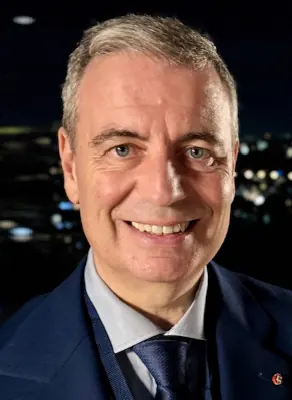
Dr Jordi Xuclà
Jordi Xuclà, a renowned jurist, professor of international relations and full member of the Royal European Academy of Doctors (RAED), was featured on 1 July in Crónica Global, a channel of the digital newspaper El Español, which reported on his induction into the Royal Corporation. Journalist Miranda Solana explains how the expert highlighted the Spanish intellectuals who joined the movement that emerged from the Congress for Cultural Freedom during the Cold War, before an audience that included the Minister of Economy and Finance of the Government of Catalonia, Alícia Romero. Xuclà delivered the induction speech “The Catalans at the Origins of Europeanism and the Cold War”.
In his address, the new academic discussed the Catalan presence at the origins of the Europeanist movement, both in the late 19th and early 20th centuries and, above all, after the Second World War. Xuclà presented little-known but significant historical aspects, such as Catalan participation in the Congress of The Hague in May 1948, chaired by British Prime Minister Winston Churchill, which led to the founding of the European Movement and the incorporation of Catalans into Europeanist and anti-communist networks during the Cold War. The Congress for Cultural Freedom, covertly financed by the United States through channels linked to the CIA, was a central instrument for promoting democratic, Europeanist and anti-communist cultural and political elites. Catalans also played a prominent role in this network, seeing Europe as a means of combating both Francoism and communism at the same time.
As Crónica Global notes, the academic highlighted key figures in exile who helped pave the way for the restoration of democracy, including Salvador de Madariaga, Joaquim Xirau, Josep Trueta and Indalecio Prieto, as well as the protagonists of the discreet first sounding in Spain in 1958, when international emissaries clandestinely contacted figures inside the country such as Julián Marías, Camilo José Cela and Josep Maria Castellet to test their willingness to break the dictatorship’s isolation. “All this work would crystallise in milestones such as the 1962 Congress of the European Movement, disparagingly labelled the ‘Munich Conspiracy’ by the Franco regime,” Solana explains in her account of the event.
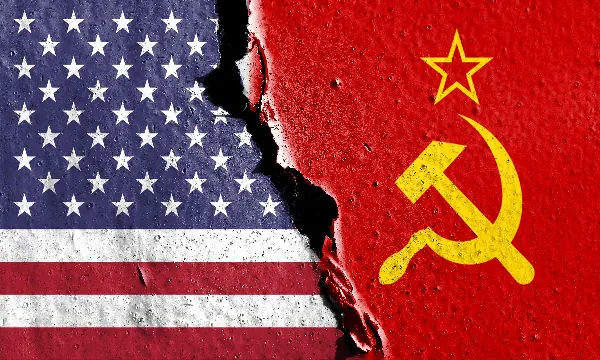 For Xuclà, the Congress and magazines such as “Cuadernos”, which began publication in Paris in the wake of that movement and ran from 1953 to 1965, became platforms for cultural anti-Francoism and Europeanism, within which key figures established contacts from the late 1950s onwards. The expert considered how the legacy of this movement shows that ideas can become political infrastructure, while also serving as a warning about the risks of their instrumentalisation.
With more than 20 years of experience in politics and legislation, Xuclà has been an elected member of the Congress of Deputies and of the Parliamentary Assembly of the Council of Europe, as well as of the Committee on the Election of Judges to the European Court of Human Rights and the Council of Europe’s Venice Commission. A specialist in public law, political intelligence and coalition building, he currently advises on international relations and public affairs. He is Vice-President of Ágora Diplomática and President of the Advisory Council of the Institute of Global Affairs. He also teaches international relations at several universities and is actively involved in European and diplomatic initiatives.