


Dr August Corominas
August Corominas, Professor of Human Physiology at the University of Murcia and the Autonomous University of Barcelona and Emeritus Member of the Royal European Academy of Doctors (READ), shares with the academic community the article “Astatine, a new element of technological importance”, in which he addresses the importance of this material, considered the rarest and most radioactive on Earth. The academic has recently shared in this publication the articles “The secret of longevity in the ‘blue zones’”, “Beware of falls, by night and by day”, “The good life and the virtuous life”, “Biological life and quantum life”, “Smart hospitals”, “Cosmonautics and space medicine”, “Abuse and its management”, “Quantum biology”, “The black man of Banyoles (Bushman or Hottentot)”, “Polydactyly”, “Adolescence, a critical age in human life”, “Mermaids, the illusion of sailors and seafarers”, “Biblical diet: pure and impure foods”, “Rare diseases”, “The starving people of Gaza”, “Sexology in adolescence and somatopause — andropause and menopause”, “Cyberattacks, cyberwarfare and cybersecurity”, “Refugees”, “Human evil”, “The geostrategy of rare earths”, Conscience and omission: the misery of the ruler, “Plasticosis”, Humanisation and “The Island of Doctor Moreau and the ‘therians’”. He is also the author of one of the chapters of the book “Vitality in ageing. If you wish, you can live more years in good health”, published by the Royal Academy with the support of Vichy Catalán.
Astatine, a new element of technological importance
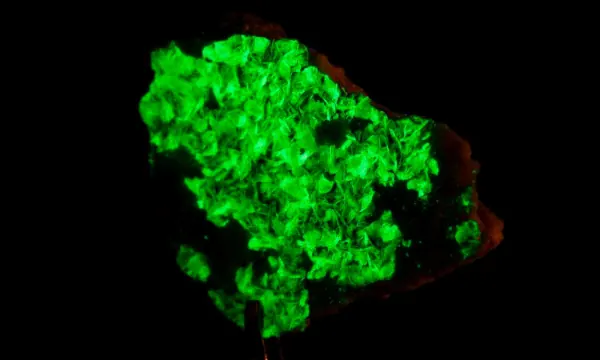 The periodic table is not only an inventory of chemical elements, but also a map of the limits of matter, time and stability. Among all its components, astatine (At) occupies a singular place: it is the rarest natural element in the Earth’s crust and, at the same time, one of the most unstable. Paradoxically, this extreme transience does not condemn it to scientific irrelevance, but places it on the frontier between physical finitude and therapeutic hope, especially in the field of nuclear medicine.
1. Astatine in the periodic table: a borderline element
Astatine is a halogen with atomic number 85. Unlike other elements in its group, it has no stable isotopes. All its nuclei decay rapidly through radioactive processes, preventing its natural accumulation in macroscopic quantities.
It is estimated that, at any given moment, there are fewer than a few dozen grams of astatine in the entire Earth’s crust, formed transiently by the decay of uranium and thorium. This condition constitutes an extreme case of material finitude, in which existence is brief, fragmentary, and always on the verge of disappearance.
From chemical and nuclear perspectives, astatine challenges classical models of periodic behaviour, prompting a revision of concepts such as bonding, electronegativity, and stability in heavy elements.
2. Nuclear instability and scientific knowledge
The importance of astatine lies not in its abundance but in its capacity to illuminate the limits of knowledge. Studying astatine means confronting:
-
The fragility of the atomic nucleus.
-
The balance between nuclear forces.
-
The transition between matter and radiation.
In this sense, astatine functions as a natural laboratory of instability, essential for understanding how and why matter disintegrates. It is a reminder that nature is not designed for permanence, but for continuous change.
3. Astatine-211 and nuclear medicine
The most promising aspect of astatine emerges in the medical field, specifically with the isotope astatine-211. This radionuclide emits alpha particles, characterised by:
-
Extremely high destructive energy.
-
Extremely short range, measured in micrometres.
These properties make it an ideal candidate for targeted alpha therapy, an advanced precision oncology technique. By binding to molecules that recognise tumour cells, astatine-211 can destroy them effectively without damaging the surrounding healthy tissue.
Here, a profound paradox becomes apparent: an element that cannot sustain itself over time can nevertheless sustain the lives of others.
4. Finitude, medicine and ethics
From a medical-existential perspective, astatine symbolises the convergence between finitude and care. Its therapeutic use raises relevant ethical and philosophical questions:
-
Can the ephemeral be more valuable than the permanent?
-
Is instability a weakness or a tool?
-
To what extent does modern medicine rely on processes of controlled destruction in order to preserve life?
Therapy with astatine-211 illustrates an ethics of precision and responsibility, in which destructive power is channelled towards a restorative purpose. This logic aligns with the principles of planetary health, which call for minimal, specific and sustainable interventions.
5. Astatine as a metaphor for the human condition
Beyond its technical value, astatine can be interpreted as a metaphor for the human condition:
-
We are finite, unstable and vulnerable.
-
Our existence is brief in cosmic terms.
Yet even in that brevity, we can generate impact, meaning and care.
Just as astatine exists in barely measurable amounts yet is crucial in extreme contexts, human life finds its dignity not in duration but in the capacity to transform and protect.
Conclusion
Astatine is one of the clearest examples of how modern science explores the limits of matter to address life’s challenges. An almost non-existent, unstable element condemned to disappear, it paradoxically becomes a high-precision tool against cancer and a powerful symbol of creative finitude.
In a world marked by biological and planetary fragility, astatine reminds us that even the rarest and most ephemeral things can be essential. To understand it is, ultimately, to understand that science, medicine and ethics converge where finitude is transformed into care.