


Francisco González de Posada, Professor of Physical Foundations at the Polytechnic University of Madrid and honorary member of the Royal European Academy of Doctors (READ), shares with the academic community the publication of the work “Canary Islands 2025. Seen by Academicians of the Academy of Sciences, Engineering and Humanities of Lanzarote,” whose public presentation will take place over the coming weeks. The book gathers contributions by various members of this renowned and active Canarian institution, chaired by González de Posada himself, including Jaume Llopis, Emeritus Professor at IESE Business School and full member and Vice-President of the Board of Governors of the READ; José Ramón Calvo, President of the Medical Committee of the Cuídate+ section of the specialist portal 65ymás, corresponding member of the Royal Academy of Medicine of the Basque Country and President of the Institute for International Cooperation of the READ; and Antonio Alarcó, Senator for Tenerife, Professor of Surgery at the University of La Laguna and Director of its Chair of Telemedicine, Robotics and Telesurgery, and elected full member of the READ.
“Canary Islands 2025” has been published in collaboration with the Royal European Academy of Doctors, which maintains close ties with the Academy of Lanzarote, and includes an agreement for joint academic events and scientific publications. Both institutions have held academic events in Lanzarote (2023), Fuerteventura (2024) and Gran Canaria (2025). The work is divided into five areas addressing the current situation of the Canary archipelago as examined by the participating academicians in various academic sessions throughout the past academic year, with particular emphasis on the island where the corporation is based: “Specific Problems,” “Healthcare,” “Sociology,” “Environment” and “Lanzarote.”
Llopis contributes, specifically, the study “The Economy of the Canary Islands: a Strategic Platform, a Bridge between Continents,” in which he describes the opportunities that the Canary Islands have, in a context of uncertainty such as the present one, in their trade relations with Africa and Latin America, stressing the need to improve taxation and promote a tricontinental platform, while pointing to sectors of great potential such as the energy transition and sustainability, the so-called blue economy linked to the sustainable exploitation of seas and oceans, geostrategy and security, and migration management. The academic also highlights the importance of fostering technological innovation and strengthening the Canarian scientific ecosystem as key elements of competitiveness.
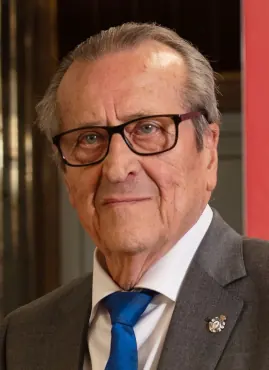
Dr. Francisco González de Posada
Calvo, for his part, publishes “Tobacco in the Canary Islands. History of a Dilemma: Economy versus Health,” in which he addresses the long history of tobacco cultivation in the archipelago, its great weight in the local economy and development, and the difficult balance between cultural and economic preservation and the protection of health, given the harmful nature of tobacco in any form of consumption, even occasional. In view of this, he calls for creativity, dialogue and commitment among the different social actors. “The objective must be to find ways of valuing and transmitting this cultural legacy without compromising public health. This balance, although we recognise it as difficult, is essential for a society that aspires both to protect its heritage and to improve the well-being of its citizens,” he states.
Finally, Alarcó contributes the work “The Healthcare We Have, the Healthcare We Want and the Healthcare We Deserve,” in which he calls for a change in the management model and the need to measure quality with new parameters, as well as the introduction of new technologies that optimise its efficiency and its essential public service. “The healthcare we want and the healthcare we deserve must be based on sustainability and equity, and therefore digitalisation is essential in order to create more health in an agile way. The systematic introduction of artificial intelligence as an extension of intelligent behaviour is essential, since it only brings benefits and is not going to replace doctors and healthcare professionals, but it can collaborate and improve action,” he affirms.
González de Posada is an engineer and holds a doctorate in Civil Engineering from the Polytechnic University of Madrid, a degree in Philosophy and Letters from the Pontifical University of Salamanca, and a degree in Physical Sciences from the Complutense University of Madrid. He was awarded the Medal of Honour for the Promotion of Invention and also served as Rector of the University of Cantabria. He is a full member of the Royal Academy of Doctors of Spain and a member of the World Academy of Art and Science, a corresponding member of the Royal Academy of Fine Arts of Cádiz, the Royal Academy of Fine Arts of San Fernando and the Royal Academy of Sciences, Fine Arts and Humanities of Écija, and an honorary member of the Academy of Medical Sciences of Cantabria, the Royal Academy of Valencian Culture, the Royal Academy of Medicine and Surgery of Cádiz and the Royal Academy of Medicine of the Canary Islands.