

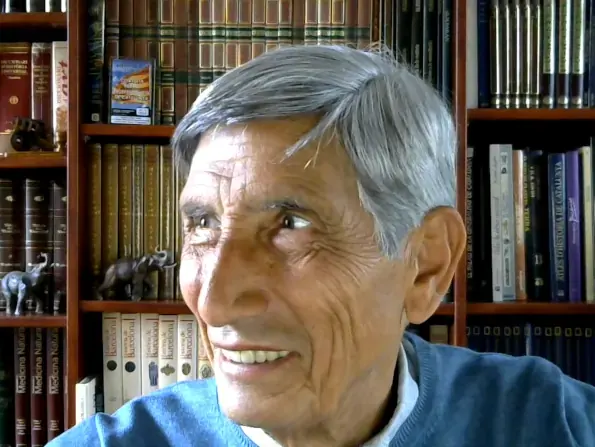
Mr. Enric Canela
Enric Canela, Emeritus Professor of Biochemistry and Molecular Biology at the University of Barcelona and collaborator of the Royal European Academy of Doctors (READ), shares with the academic community the latest articles published on his blog, enriccanela.cat, an outreach platform devoted to health and well-being, as well as his latest contributions to the newspaper El Punt-Avui, where he focuses on education and research, and the digital newspaper El Matí Digital, where he addresses current social issues. Specifically, these are the articles “Secrets of Nutrition,” “Coffee: What Does Science Say?”, “University Provision as Economic Policy” and “Environmental Hypocrisy,” published between June and July across the three media outlets.
In “Secrets of Nutrition,” the expert explains how the caloric contribution of food does not correspond exactly to the values shown on packaging labels, since these refer to gross kilocalories, which vary according to how food is cooked and even the temperature at which it is consumed. “Food packaging and wrappers always indicate the nutrient composition, in greater or lesser detail, and the amount of energy supplied. This information is given in kilocalories and joules, although we usually refer to calories. As presented, the data may be confusing for people who are not experts in the field. The stated values do not indicate how many net calories are actually provided to the person consuming the food,” he explains, noting that between 25% and 30% of the energy provided by proteins is lost during digestion, compared with between 6% and 8% for carbohydrates and between 2% and 3% for fats.
In “Coffee: What Does Science Say?”, Canela summarises the scientific evidence concerning coffee and caffeine consumption and the effects they have or may have on health. “In general, all studies indicate that moderate coffee consumption forms part of a healthy diet for most adults. Nevertheless, there are differences, and we need to understand more clearly why and in which individuals these benefits are more pronounced. The epidemiological studies that have attracted the greatest attention are those linking regular coffee consumption with longer life expectancy. They indicate that drinking between two and five cups a day is associated with lower overall mortality, reduced cardiovascular risk, a lower incidence of type 2 diabetes and a lower risk of several chronic diseases. It should be remembered, however, that these data come mainly from observational studies and therefore do not yet allow a causal relationship to be established,” he summarises.
 In “Environmental Hypocrisy,” the collaborator of the Royal Academy regrets the lack of active policies aimed at reducing the use of plastic packaging and preventing the growing and dangerous environmental pollution caused by microplastics and nanoplastics. “The European authorities draw up directives to phase out plastics, and there are campaigns to reduce their use, but these measures remain insufficient. They all establish lengthy deadlines so as not to jeopardise economic activity, probably including that of certain major global producers. Moreover, neither the Spanish nor the Catalan authorities have yet promoted measures ambitious enough to accelerate change. A very clear example is provided by bottles and drinks cans. In the past, consumers paid for glass containers, returned them empty and received new full ones. Other materials then arrived: management became more expensive, and it was cheaper to throw containers away. That is not sustainable,” he states.
Finally, in “University Provision as Economic Policy,” Canela highlights the mismatch between higher education provision, the real needs of the economy and the absence of planning capable of linking supply and demand. “Beyond the political debate, what is truly relevant is to identify the structural mismatches and, above all, to accept that this is not merely a question of the number of places available. The university system fluctuates between two rationales that do not always converge: student demand and the country’s real needs. Demand is almost inevitably concentrated in a small number of ‘star’ degrees, especially medicine and other health sciences. This phenomenon produces very high entrance grades and turns access into an extreme selection mechanism, a situation further accentuated by the single admissions district. Meanwhile, other fields with growing labour-market demand, particularly engineering and scientific and technological profiles, fail to attract enough students, resulting in structural shortages of professionals in sectors that are crucial to the economy,” he reflects.