


Mr. Jesús Alberto García Riesco
Jesús Alberto García Riesco, Colonel in the Spanish Army, member of the Spanish Association of Military Writers and collaborator of the Royal European Academy of Doctors (READ), analyses various aspects related to security, geopolitics and military history in the articles “American Disdain and European Weakness,” “The Continuing Relevance of the Rommel, Campins and Marshall Model of Military Education on the Transparent Battlefield” and “Key Insights and Lessons from the Iran War,” published over recent months in the digital newspaper La Crítica and subsequently reproduced on various specialist portals. The expert also took part in the 10th International Academic Meeting, held by the Royal Corporation between 15 and 20 March in various German cities under the general title “The Rhine as a Current of Knowledge: Cross-Border Dialogues,” with the lecture “Postmodernism and European Security,” in which he explained how postmodernity challenges the Enlightenment’s claim to universal knowledge and the view that science can attain truth, by considering history to be an ideological construction based on metanarratives.
In “American Disdain and European Weakness,” García Riesco addresses the historic shift that has taken place in Washington, which has replaced the so-called Truman Doctrine with what is now dubbed the “Donroe” Doctrine, disengaging from Europe’s security and seeking to replace the continent’s democratic project with an illiberal system to which it demands unconditional obedience. Faced with such a challenge, he argues, if Europe wishes to recover any status, it will have to define not merely what it opposes, but what it defends and, above all, how it intends to do so. “For eight decades, European leaders, forgetting that the first responsibility of any government is to guarantee the security of its citizens, outsourced security to Washington. This allowed them to maintain a privileged social contract that channelled substantial resources into pensions, education and healthcare. The awakening is proving traumatic because, faced with the new American paradigm, Europe is discovering that values are nothing without the will and the tools to defend them, that its institutions are obsolete and, above all, that it lacks the will to prevail because it believed in permanent peace and in the definitive triumph of democracy, without heeding the realism of Samuel Phillips Huntington: ‘The hope of a benign end to history is human. Expecting it to happen is unrealistic. Planning for it to happen is disastrous,’” he states.
 Moreover, in “The Continuing Relevance of the Rommel, Campins and Marshall Model of Military Education on the Transparent Battlefield,” the collaborator of the Royal Academy revisits the ideas of Miguel Campins, Erwin Rommel and George Marshall, who, in the early decades of the 20th century, set out in publications that remain fully relevant the need to adapt doctrine to a new battlefield. “European military academies face the challenge of training small-unit commanders to operate on a transparent battlefield that will require them to act in isolation when technology fails. Rommel, Campins and Marshall show us what education must be like to operate effectively in such a difficult and confusing environment: realistic, practical and delivered by instructors with combat experience,” the expert explains.
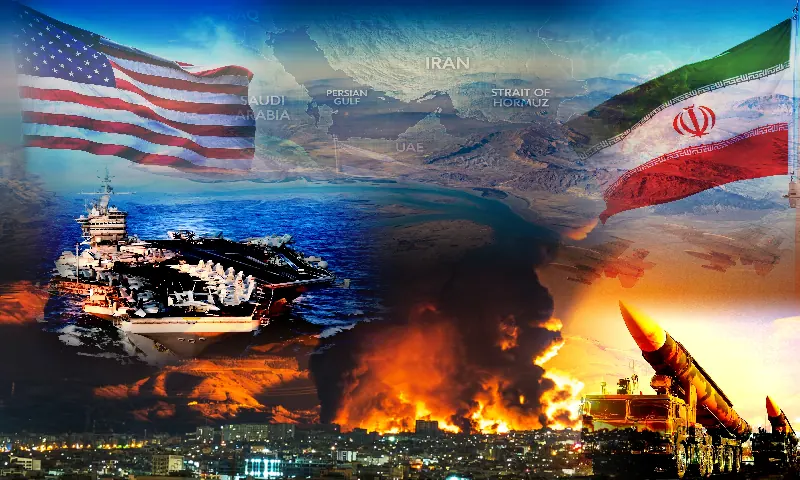
Finally, in “Key Insights and Lessons from the Iran War,” García Riesco argues that the current conflict being waged by the United States and Israel against Iran exposes a new Western strategic error, revealing the limits of their capabilities in the face of Iranian resilience and making it necessary to establish realistic strategies and adapt resources to new battlefields. “The mistake of Vietnam has been repeated in the Iran War. The United States and Israel planned for a swift and decisive victory, based primarily on air power, convinced that the adversary could not withstand a prolonged confrontation. However, the attacks have not degraded the enemy’s capabilities: Iran has made no significant concessions regarding its nuclear programme, has retained much of its ballistic-missile arsenal, its armed forces have not been neutralised, and its political regime has not changed. It has once again been demonstrated that weaker states do not necessarily need to defeat stronger military powers to succeed; simply by avoiding collapse, they achieve their objectives. Iran’s ability to strike neighbouring Gulf states with more than 5,000 missile and drone attacks, despite the Western air campaign, demonstrates ‘the limits of the expectation that a country can be bombed into submission,’ emphasises Pieter Wezeman,” he concludes.