

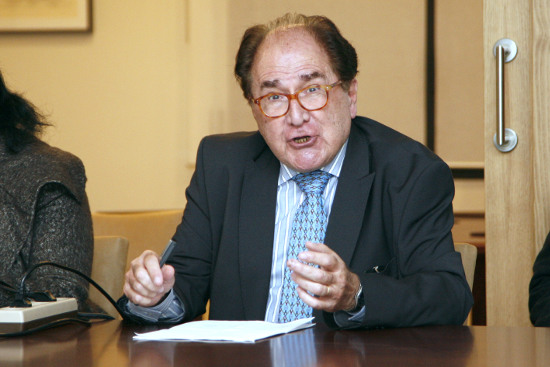
Dr. Pere Costa
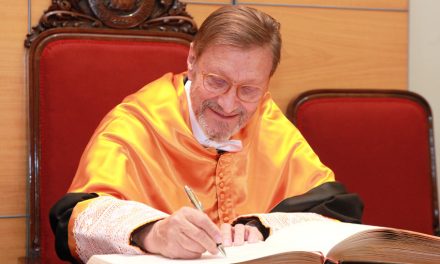
Pere Costa Batllori, Member of the Royal Academy of Veterinary Sciences of Spain and of the Royal Academy of Medicine of Catalonia, Member and Honorary President of the Academy of Veterinary Sciences of Catalonia, and Emeritus Member of the Royal European Academy of Doctors (READ), reflects on his vast academic, teaching and professional career and points to the challenges facing the primary sector in an interview published by the Catalan Institution for Agrarian Studies through its information channels on 23 April. At the age of 93, the expert highlights the profound transformation that Spanish livestock farming has undergone from the post-war period to the present day, evolving from a sector based on small rural holdings into one of the driving forces of Catalonia’s agri-food industry.
The academic recalls how, when he graduated in the 1950s, the veterinary profession was going through a difficult period, marked by a lack of job opportunities, outdated training and an underdeveloped livestock sector. As he explains, the progress of veterinary medicine was closely linked to the modernisation of farms, the arrival of investment, the genetic improvement of animals and the development of an increasingly sophisticated animal-feed industry. In this regard, he highlights the fundamental role played by professionals in the sector in improving animal health and food safety, and specifically underlines the importance of research in nutrition, the introduction of new vaccines and the improvement of production systems, factors that made it possible to increase the production of meat, milk and eggs while maintaining high health standards.
With regard to current debates on agri-food imports and the agreement between the European Union and Mercosur, Costa argues that products from third countries should comply with the same health and production requirements as those applied within the EU. He also considers it necessary to review certain European regulations to ensure a balance among safety, competitiveness and economic viability. As for global health risks, he acknowledges the possibility of new diseases emerging that could affect both livestock and people, but he states that the rigorous application of biosecurity protocols makes it possible to face these challenges with confidence. In this context, he is particularly sceptical about the so-called vertical pig farms developed in China, given that they pose significant health risks and high mortality rates.
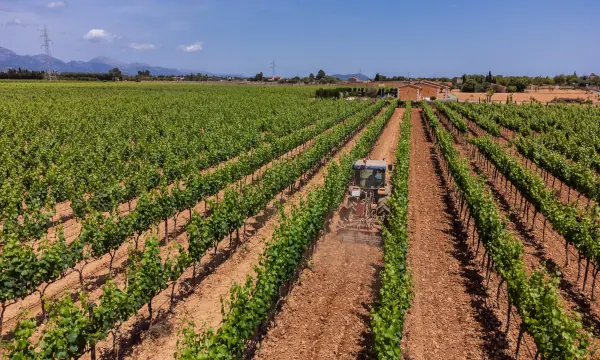 Looking ahead, Costa foresees a greater concentration of livestock production in large, highly technical farms, while small producers will tend to disappear. However, he rejects the idea that laboratory-grown meat could completely replace traditional livestock production, arguing that they are different products from both nutritional and conceptual perspectives. The expert also questions movements that promote a drastic reduction in meat consumption. In his view, animal protein remains an essential component of a balanced diet and has played a key role in humanity’s development. Although he admits that certain societies may choose to reduce their consumption for environmental reasons, he considers that there is a solid scientific basis supporting its nutritional value.
“Animal protein has extremely high nutritional value and is fully suited to the normal development of humanity. It has been an evolutionary process over many years that has brought us here. It may be possible in some societies to reduce its consumption for debatable environmental reasons, but it seems clear that optimal levels of animal protein intake contribute, to a great extent, to the proper development of a healthy life,” he concludes.
An international reference in animal nutrition, Costa Batllori is Emeritus Professor at the School of Agriculture of the Polytechnic University of Catalonia, Professor at the Faculty of Veterinary Medicine of the Autonomous University of Barcelona, member of the advisory board of the Institute of Agrifood Research and Technology of the Government of Catalonia, and member of the Catalan Institution for Agrarian Studies.