

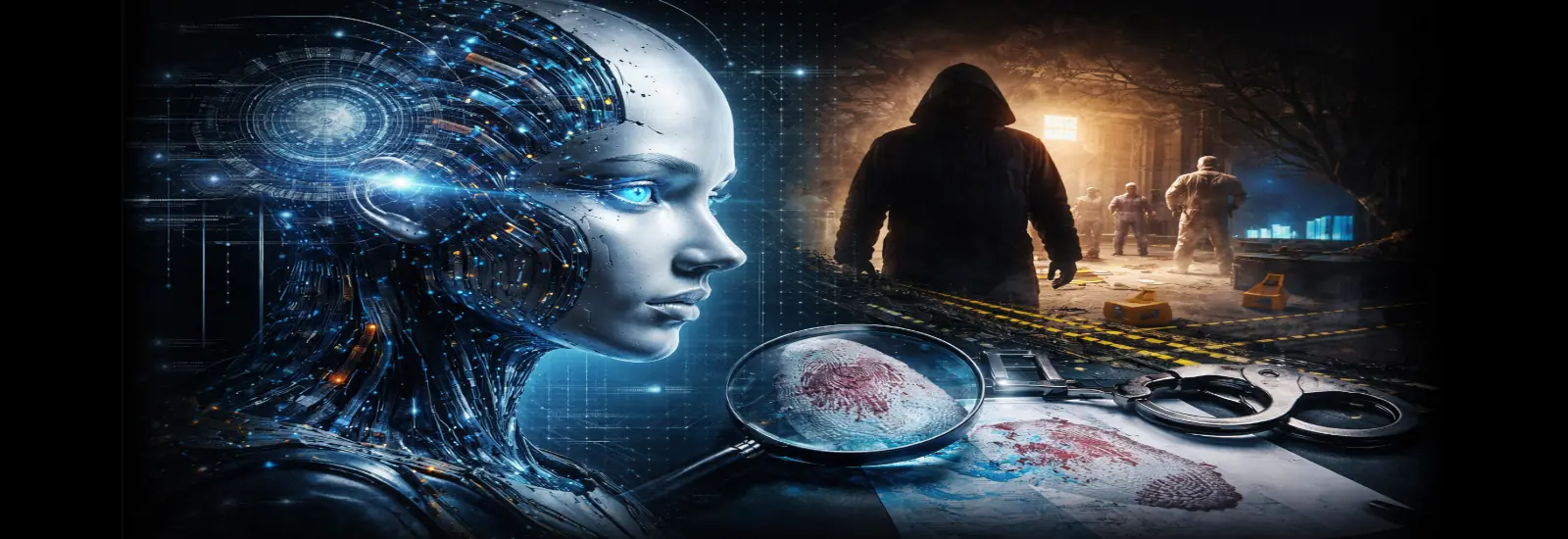
Bernat-Noël Tiffon, President of the European Higher Council of Doctors and Doctors Honoris Causa and Numerary Member of the Royal European Academy of Doctors (READ), has in recent days been the subject of a series of publications echoing his recent admission as a Numerary Member of the Royal Academy in various specialist media outlets, such as iymagazine and “Hoja Criminológica”, the journal of the Mexican Society of Criminology, as well as in the information channels of Abat Oliba-CEU University, where he teaches. The portal Confilegal, for its part, published an interview on 28 May in which the renowned expert in legal and forensic medicine explains the conclusions from his recent speech at the Royal Academy. Tiffon, who was already a Corresponding Member, was admitted as a Numerary Member on 16 April with the lecture “Artificial intelligence (AI) and criminal and forensic psychology: ally, rival, ethics and deontology? Are we on the right path?”, in which he analyses the role of AI in the expert and forensic field, revisiting and updating the subject he had already addressed in his first admission, in June 2024.
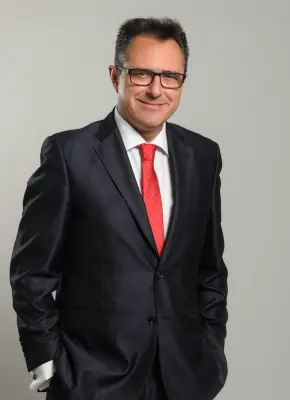
Dr. Bernat-Noël Tiffon
The digital newspaper iymagazine devotes one of its entries to highlighting both the admission ceremony, with images of the event, and the new member’s professional and scientific career. “Tiffon highlighted how artificial intelligence can be useful for analysing behaviours, assessing cognitive capacities and reconstructing criminological events. However, he stressed the importance of always maintaining human supervision, arguing that this technology should be considered a support tool, not a replacement for professional judgement,” the report notes.
“Hoja Criminológica”, for its part, devotes a section in its latest issue, corresponding to May, to the admission of Tiffon and Rocío Naveja, honorary member of the RAED, and Rector and founder of Universidad Humani Mundial in Mexico, which took place during the same session. The expert read the speech “Progressive structural criminological vulnerability: analysis of school disengagement as a criminal risk factor”. “Both presented admission speeches focused on contemporary issues of high impact in the criminological, forensic and criminal-policy fields. Tiffon addressed the role of artificial intelligence in criminal and forensic psychology, offering a critical analysis of its ethical, deontological and legal implications. His presentation highlighted how the emergence of AI has transformed social and professional dynamics, generating new challenges in forensic practice and in understanding criminal behaviour, while raising questions about whether its development is moving in the right direction. Naveja, for her part, focused her address on progressive structural criminological vulnerability, analysing school disengagement as a criminal risk factor. Based on the Alas Guanajuato model, she proposed a preventive strategy founded on school retention, early intervention and institutional coordination, highlighting the role of education as the main protective factor against antisocial trajectories,” explains the journal of the Mexican Society of Criminology.
Abat Oliba-CEU University focused its report on the figure of its renowned lecturer. “Throughout his career, Tiffon has developed extensive teaching activity both at Abat Oliba-CEU University and at other national and international institutions, contributing to the training of new generations of professionals specialised in legal and forensic psychology. The author of more than twenty books, he has also stood out for his outreach work in this field. During his lecture, Tiffon explained how AI can contribute to the analysis of behaviour, the assessment of cognitive capacities, and the reconstruction of criminological events, although he insisted on the need to always maintain human supervision and preserve professional judgement. In this regard, he argued that artificial intelligence should be understood as a support tool and never as a substitute for the specialist,” the report states.
Finally, Confilegal focuses on the academic’s latest work, “Criminal and Forensic Psychology, Artificial Intelligence (AI) and Black Boxes”, in which he develops the subject of his admission speech at the READ. “After years in the trenches of courtrooms, I have seen how technology has gone from being a support tool to becoming, almost, a promise of replacement. I was concerned that fascination with silicon would make us forget the complexity of the biological mind. The book arises from that urgency: to set ethical and scientific limits before justice becomes an automated and dehumanised process,” Tiffon states. “In forensic psychology, the ‘black box’ is opacity. Many of the algorithms already being tested to predict whether a prisoner will reoffend are opaque even to the judges themselves. We enter data and the programme gives us a percentage of dangerousness, but we do not know how it reached that conclusion. If we cannot understand the machine’s reasoning, how are we going to guarantee the right of defence? Justice that cannot be explained ceases to be justice,” he adds.

Dra. Rocío Naveja
Professor of Legal Psychology at Abat Oliba University, Tiffon also promotes the Academy of Psychological Forensic Instruction, an online training centre aimed at training professionals in the fields of legal, forensic and criminological psychology, which offers its courses in partnership with the Lafayette University Institute, a centre associated with the European University IMF Universitas Europaea-eUniv of the Principality of Andorra. Among his latest scientific activities, his participation also stands out in the Conference on Responsible Gaming, organised by the Catalan Centre for Social Addictions Association and held on 9 April at the Maritime Museum of Barcelona. The event, now in its 17th edition, addressed issues ranging from the profile of social addictions to the future of responsible gaming, with institutional, association and business representation. The academic delivered the lecture “Psychopathology of addictions and forensic consequences. Clinical and criminological analysis of behavioural addictions and their implications in the judicial sphere”.
He has intervened in criminological cases that form part of the contemporary history of Spanish crime reporting and have had a broad social impact. He has taught at universities in Spain and abroad and is the author of more than 20 books on the subject, as well as a recognised communicator of academic forensic psychology, serving as a lecturer, manager, and organiser of leading events and conferences in these fields. He holds national accreditation as an expert psychologist in legal psychology and forensic psychology from the General Council of Official Associations of Psychologists; he is a member of the American Academy of Forensic Sciences, the American Academy of Psychiatry and the Law, the Canadian Society of Forensic Science, the International Academy of Legal Medicine, the French Association of Criminology and the Mexican Society of Criminology. He has published the work “Saga Tiffon: from Romancist Surgery to Psychiatry and Forensic Psychology. The investigation of a three-century family historical, medical and social journey” (J.M. Bosch Editor), in which he reviews a long and intense family career devoted to medicine and psychology, as well as the aforementioned “Criminal and Forensic Psychology, Artificial Intelligence (AI) and Black Boxes” (J.M. Bosch Editor).