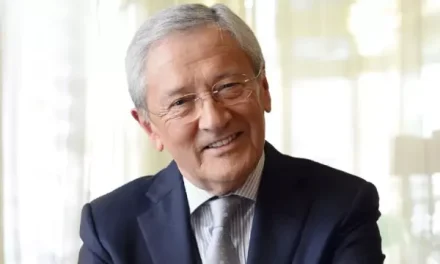


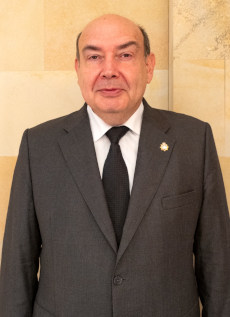
Dr. Carlos Cortina
Carlos Cortina, Delegate for Spain of the Dynastic Orders of the Royal House of Savoy and Numerary Member of the Royal European Academy of Doctors (READ), addresses in the article “Church of Santa Maria de l’Assumpció. 250 years since the start of its construction” the anniversary being celebrated these days by the city of Amposta to mark the beginning of the works on what is its main church, closely linked to the Order of Malta. In “General Chapter of the Royal Military Estate of the Principality of Girona and Brotherhood of Saint George”, he also recalls that this gathering was held on the feast day of Saint George, the corporation’s patron saint.
As the academic explains in his first article, sent to the READ for dissemination among the academic community, the celebration of the anniversary of the start of the construction of Santa Maria de l’Assumpció was presided over by the Bishop of Tortosa, Monsignor Sergi Gordo, who was accompanied by the parish priest, Ramon Font; the Mayor, Adam Tomàs; and the Delegate of the Sovereign Military Order of Malta in Catalonia, Federico Coll, Count of Carlet. The first works on the current church began in 1773, and the project was signed in 1776. The works, initially entrusted to architects from Tortosa and later to the Valencian Manuel Blasco, were interrupted repeatedly by wars, epidemics, and economic crises until their completion in 1875, although the façade remained unfinished. The church has a sober neoclassical style, with a single nave and side chapels, an octagonal bell tower and irregular stone walls that represent the diversity of the community. Its interior houses a notable triptych with scenes of the Annunciation, the Visitation and the Assumption of Mary.
During the solemn celebratory mass, held on 10 May, Bishop Gordo underlined the threefold dimension that the church has had throughout its history: spiritual, cultural and welcoming, Cortina continues. The ceremony featured the participation of the Lira Ampostina choir and the Colla Castellera Xiqüelos i Xiqüeles del Delta, which raised a four-person pillar before the high altar, symbolising the living stones of the community. The commemorative events continued throughout the weekend. On Friday, a confirmation mass and a fraternal dinner were held. On Saturday, participants took part in a tourist route through the Delta, recalling the historic donation of Amposta Castle to the Order of Malta in 1150 by Count Ramon Berenguer IV, visiting the Torre de la Carrova, the church of Poble Nou del Delta and the Museum of the Lands of the Ebro.
The event highlights Amposta’s close historical connection with the Order of Malta, whose eight-pointed cross still appears on the city’s coat of arms and flag. The Count of Carlet precisely represented this hospitaller tradition during the celebrations. “With this commemoration, Amposta honours not only the stone of its church, but especially the generations of people of Amposta who, over two and a half centuries, have found in Santa Maria de l’Assumpció a space of faith, comfort, identity and community. A church that, beyond its architecture, remains the living heart of the city,” the academic concludes.
As regards the celebration of the General Chapter of the Royal Military Estate of the Principality of Girona and Brotherhood of Saint George, Cortina explains that it was headed by the Veguer President, Francisco de Alós y de Bonilla, Marquis of Dou, and the chaplain, Joan Baburés. The events centred on a concelebrated mass in the cathedral, during which four ladies and ten knights, from twelve different noble houses, were admitted. The new members took their oath before the altar, sponsored by members of their families, reaffirming their commitment to the values of nobility, service and loyalty to the Crown. The ceremony, the academic details, included an emotional memorial for deceased brothers and sisters and, especially, a solemn remembrance of the more than 11,000 defenders who fell during the three sieges of Girona in the Peninsular War against the Napoleonic troops. The Royal Estate keeps this memory alive year after year in its main ceremony.
In his chronicle, Cortina explains how, after mass, those attending took part in a reception at the historic manor house El Prat de Sant Esteve d’en Bas, where a fraternal lunch was served. “With this celebration, the General Chapter reinforces the role of the Royal Military Estate of the Principality of Girona as a living institution that unites tradition, Christian faith, service to society and the preservation of historical memory, integrating new generations of the Catalan and Spanish nobility into its commitment to the ideals of honour, loyalty and charity,” the academic concludes.
Cortina has pursued his professional and research activities in the fields of ceremonial, protocol, and public relations, serving as Head of Institutional Relations and Protocol at various companies and public institutions. He is the author of reference works in the field of protocol, such as “Reglament de Protocol, Cerimonial, Honors i Distincions per als Ajuntaments” (2010). A founding member of the Catalan Association of Protocol and Institutional Relations, he has been distinguished with the Silver Medal and the Medal of Constancy of the Red Cross (1991 and 1992), the Official Cross of the Order of Civil Merit (2000), the Marquis of Mondéjar National Award for Ceremonial and Protocol (2001), the National Award for Protocol and Institutional Relations (2017), the Gold Medal of Pope Leo XIII for the Custody of the Holy Land (2019) and the Gold Benemerenza Medal of the Constantinian Order (2021).
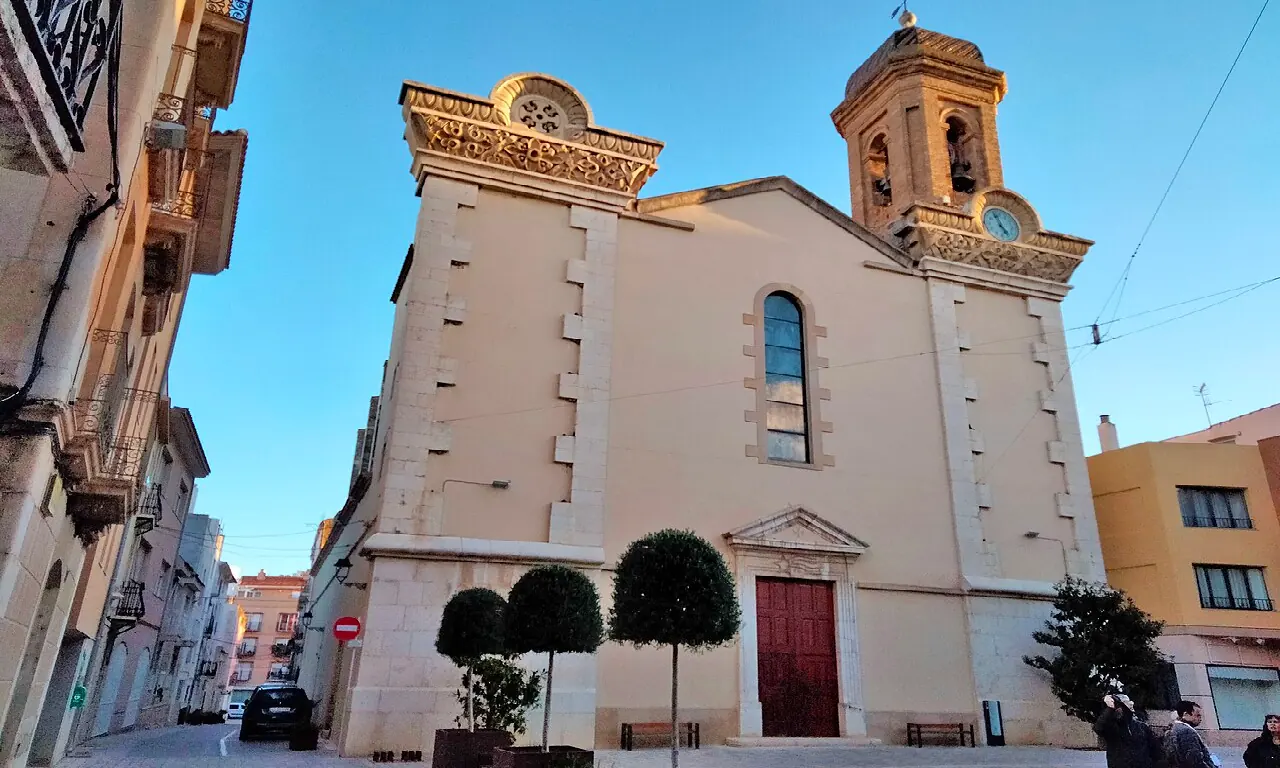
Santa Maria d’Amposta. Enric, CC BY-SA 4.0, via Wikimedia Commons