


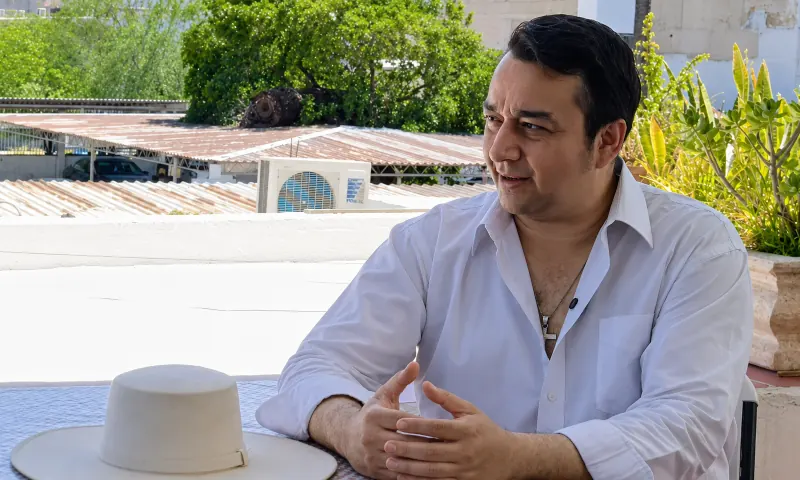
Enrique Sada
Mexican historian Enrique Sada, a regular contributor to the Royal European Academy of Doctors (READ), shares with the academic community the articles “The Mexican Foreign Service in decline”, “The heiresses”, “La Luz del Mundo, facing its victims”, “Blood in the Teocalli”, “The crimes of Francisco Villa: second round”, “Cortésian Mexico” and “Gonzalo Celorio: pride and identity”, published between April and May in the digital portal Código Libre and in the newspaper “El Siglo de Torreón”, in which he addresses various episodes of Mexican and international current affairs and their historical connections. During the same period, the expert also took part in the outreach channel “Rincones históricos”, hosted by Miguel Amaranto, to analyse, from the standpoint of scientific evidence, the role of Hernán Cortés 500 years after his incursion into present-day Mexico and the cultural diversity he encountered in a region dominated by the Mexica. Along the same lines, Sada is one of the signatories of the manifesto promoted by México Mestizo, the Héroes de Cavite Cultural Association and the Mexican historian Antonio Cordero against the political manipulation of history.
In “The Mexican Foreign Service in decline”, the historian denounces the degradation of Mexican diplomacy. “Among the very few former glories that used to identify the old post-revolutionary regime in Mexico was the Mexican Foreign Service, endowed with great trained cadres, most of them from the Matías Romero Institute. Unfortunately, this school and this mark of distinction have no longer existed since the previous six-year term. Although many attribute this debacle to the imposition of the journalist Isabel Arvide as Mexico’s ambassador to Turkey by former President Andrés Manuel López Obrador, this experience was followed by other less fortunate or questionable appointments,” he explains.
For his part, in “The Heiresses”, Sada highlights the double standards of many leaders who have become champions of equality and socialism in their political activity, while serving as clear examples of nepotism, lack of ethics and even criminality in the public sphere. “It is no secret that socialism is such a good business that it exclusively enriches, overnight, the heirs and relatives of the dictatorships where this system is imposed. Examples of this have been, for decades, the children of Fidel Castro, who as a tyrant plunged Cuba into the deepest misery for more than six decades, turning the former island into a concentration camp for its inhabitants, except for his children, to whom he left a fortune of more than 900 million euros that they now enjoy as part of the jet set in Spain and the rest of Europe. The dictator Hugo Chávez did nothing different with his daughter María Gabriela Chávez, who presents herself as the richest woman in Venezuela, with an estimated fortune of more than 4 billion dollars in Andorran accounts and residence in the United States, something also attributed to none other than Evaliz Morales, daughter of the former Bolivian dictator Evo Morales; just as it is to the daughter of former Argentine President Cristina Kirchner, Florencia Kirchner, under investigation after more than 6 million dollars were found stuffed into two bags in one of the bathrooms of her house,” he points out.
In “La Luz del Mundo, facing its victims”, the Royal Academy contributor addresses the dark and sinister relationships between the Mexican sect La Luz del Mundo and local power. “Joaquín González, originally from Colotlán, Jalisco, and a former member of the Chihuahuan neo-Pentecostal sect known as the First Apostolic Church of Faith in Christ Jesus, created in 1915 by Romana Carbajal, justified his own religion by claiming the appearance of a heavenly figure who made him change his name to Aaron and proclaim himself ‘apostle of Jesus Christ’ and ‘angel of the Apocalypse’, founding the La Luz del Mundo sect in Guadalajara, Jalisco, where shortly afterwards he built its enormous wedding-cake-shaped headquarters and even a working-class neighbourhood for its followers. Since then, this organisation, servile to the PRI in its day, acquired monumental political and economic importance thanks to its financing by the Government, while also accumulating serious accusations against the dynasty headed by its family leaders, ranging from money laundering, illicit enrichment, kidnappings, rapes, disappearances and even murders, reported throughout the 20th century,” he details.
Sada devotes “Blood in the Teocalli” to the recent incident at the Pyramid of the Moon in Teotihuacan, where an individual opened fire on tourists visiting the archaeological site, and to its various implications, from the violence surrounding Mexican society to the unfounded political links attributed to the shooting. “It did not take long for two pro-government media outlets, ‘Milenio’ and ‘El País’, to try to portray the murderer as a neo-Nazi or right-winger, whom even a storyteller writing for the latter newspaper described as ‘fascist far right’ in his column, launching into a tirade in which he also pontificated against the ‘manosphere’ and about how this overshadowed a supposed ‘historic decline in more than a decade’ of massacres in Mexico, only to be ridiculed once it was proven that the murderer boasted of photographs holding The Communist Manifesto and the edition of EZLN communiqués prefaced by Carlos Monsiváis and Elena Poniatowska.”
In “The crimes of Francisco Villa: second round”, the historian recalls the presentation of the second edition of the work “Crimes of Pancho Villa” by fellow historian Reidezel Mendoza. “Demythologising like few others, Mendoza’s work fills a series of unknown historical gaps, or gaps zealously silenced by those who live in the shadow of power, regarding the eventful life of this figure: from the myth with which he set out on the path of crime, namely the supposed — and false — defence of his sister’s honour, to his incursion into the ranks of Maderismo, less out of conviction than out of the convenience of going from being pursued by justice to becoming an implacable pursuer, and finally his return to the path of crime with the same or even worse cruelty than before after his absolute defeat on the fields of Celaya,” he states.
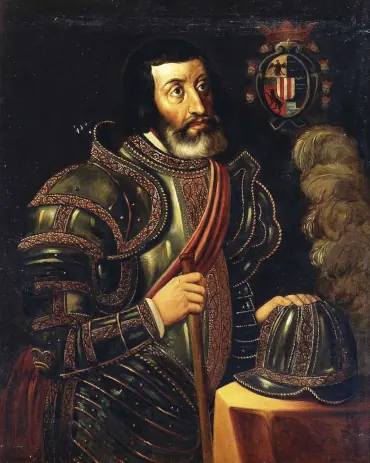
Hernán Cortés (Prado Museum, public domain)
On the other hand, in “Cortésian Mexico”, the expert focuses on the controversial visit to Mexico by Isabel Díaz Ayuso, President of the Community of Madrid. “Mexico as a country is a Cortésian product, whether or not those who, out of wilful ignorance, still subscribe to the catechism of the Ministry of Public Education or to the other lies of the so-called New Mexican School like it — the latter being responsible for the educational backwardness that afflicts us today, with everything that implies in terms of not knowing history or having common sense,” he argues.
Finally, in “Gonzalo Celorio: pride and identity”, Sada welcomes the awarding of the Cervantes Prize to the Mexican writer Gonzalo Celorio, an intellectual critical of his country’s government discourse. “During the award ceremony, Gonzalo Celorio took the opportunity to recall that the repeated demand for an apology from Spain, as had already been offered by King Juan Carlos I during the Summit of the Americas in 1991, has not only been a nonsense but also anachronistic, since it is not possible to request an apology for something that happened so many centuries ago, when nation states did not even exist as they do now, and even less so when there was already violence among the indigenous societies of that time themselves. He also dismisses this demand, as absurd as it is recurrent on the part of the ruling political class since 2019, as retrotopian, for judging those indigenous societies as a kind of utopian lost paradise, without addressing their reality,” he underlines.
The manifesto promoted by Antonio Cordero also defends a vision of Mexican history very different from the official one. “When they refer simplistically to ‘the atrocities of the Conquest’, we ask: which ones do they mean? We, the people of the shores of Texcoco, committed atrocities when we subjugated the Aztecs in the 13th century. As Mexica, we spread terror throughout Anáhuac, which explains why most Mesoamerican peoples later allied themselves with Hernán Cortés to free themselves from us. We committed atrocities when we were Spaniards in order to defeat Tenochtitlan, and we ordered horrifying atrocities as independence elites in the 19th century. We also conquered and mutilated ourselves in bloody civil wars and in the darkest episodes of the Revolution. Every war is atrocious, and we are the heirs of all those sides,” states the text also signed by Enrique Sada.
Read “The Mexican Foreign Service in decline”
Read “La Luz del Mundo, facing its victims”