



Dr August Corominas
August Corominas, Professor of Human Physiology at the University of Murcia and the Autonomous University of Barcelona, and Emeritus Member of the Royal European Academy of Doctors (READ), shares with the academic community the article “Geostrategia de las tierras raras”, in which he addresses one of the key aspects of current geopolitics and the new poles of global power. The academic has recently contributed to this publication with the articles «El secreto de la longevidad en las ‘zonas azules’», «Atención a las caídas, de noche y de día», «La buena vida y la vida buena», «Vida biológica y vida cuántica», «Hospitales inteligentes», «Cosmonáutica y medicina espacial», «El maltrato y su gestión», «Biología cuántica», «El negro de Banyoles (bosquimano u hotentote)», «Polidactilia», «Adolescencia, edad crítica de la vida humana», «Las sirenas, ilusión de navegantes y hombres de mar», «Alimentación bíblica: alimentos puros y alimentos impuros», «Enfermedades raras», «Los famélicos en Gaza» , «Sexología en la adolescencia y en la somatopausia (andropausia y menopausia)», «Ciberataques, ciberguerra y ciberseguridad», «Refugiados» y «La maldad humana». He is also the author of one of the chapters of the book Vitality in Ageing. If you wish, you can live more years in good health, published by the Royal Corporation with the support of Vichy Catalán.
Geostrategy of Rare Earth Elements
Rare earth minerals (also known as rare earth elements or REE) are a group of 17 chemical elements that include the 15 lanthanides plus scandium and yttrium. These elements are essential in the manufacturing of many electronic devices, magnets, batteries and other advanced technologies.
The term rare earths dates back to the 19th century, when these minerals were first identified but not yet fully understood. In 1794, Swedish chemist Carl Axel Arrhenius discovered a black mineral called ytterbite, which contained an unknown substance. This mineral was found in the locality of Ytterby, Sweden, hence the names of several elements such as ytterbium and terbium. In 1842, Swiss chemist Friedrich Wöhler isolated the first rare earth element, cerium, from a mineral called cerite.
Throughout the 19th century, other rare earth elements were discovered. However, despite scientific advances, these elements were considered “rare” because they were difficult to find in concentrations sufficient for commercial or industrial interest. The first identification of a rare earth element, ceria, was followed by the isolation of others such as lanthanum and neodymium.
As the 20th century progressed, interest in rare earth elements increased, especially due to their importance in electronics and defence technologies. In the 1960s, with the rise of permanent magnet technology and electronic devices, exploitation of these elements intensified.
The 1980s were a turning point for rare earth demand, as their use surged in the manufacturing of permanent magnets, rechargeable batteries and particularly in the consumer electronics industry. Elements such as neodymium and dysprosium became essential for producing hard drives, mobile phones and other devices.
From the 1990s onwards, China began to dominate global rare earth production. By the early 2000s, China controlled more than 90% of the world’s supply, giving it significant influence over international markets and a strategic advantage. This became a geopolitical issue, especially in the context of supply chains for electronic devices and advanced technologies, prompting countries such as the United States, Japan and the European Union to seek alternatives to secure their supply.
Despite high global demand, rare earth mining and processing are environmentally destructive. Rare earth mines produce large quantities of toxic waste and extraction often results in severe environmental impacts. In recent years, interest has grown in developing more sustainable extraction and recycling methods, as well as exploring unconventional sources such as deep-sea sediments.
Main uses of rare earth minerals:
- Electronics: LCD screens, mobile phones, televisions, computers.
- Electromagnetism: Neodymium magnets essential for high-efficiency electric motors, hard drives, and wind turbine generators.
- Batteries: Used in rechargeable batteries for electric vehicles and portable electronic devices.
- Military technology: Used in communication systems, radars, and satellites.
- Catalysts: Employed in petroleum refining and catalytic converters for vehicles.
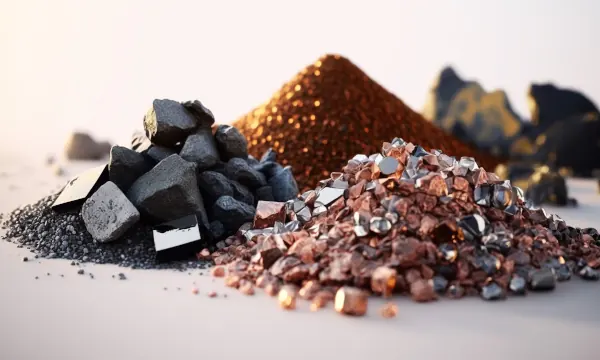 Ukraine possesses a significant quantity of critical minerals and rare earth elements essential for modern technology and renewable energy. According to Ukrainian government data, the country hosts deposits of 22 of the 34 minerals identified as critical by the European Union, including rare earths such as lanthanum, cerium, neodymium, erbium and yttrium.
However, exploitation of these resources has been hindered by several factors. It is estimated that up to 53% of the total value of Ukraine’s critical minerals lies in territories occupied by Russia, mainly in the regions of Donetsk and Luhansk. Additionally, historical underinvestment in the rare earth mining sector has resulted in insufficient extraction and processing infrastructure. Rare earth extraction also poses significant environmental risks, requiring sustainable technologies and rigorous environmental assessments.
Despite these challenges, growing global demand for critical minerals has encouraged Ukraine to explore international partnerships to develop its mining sector. However, the viability of such projects depends on regional stability, infrastructure investment and the implementation of responsible extraction practices.
Conclusion:
The history of rare earth minerals reflects their evolution from obscure and seemingly unimportant elements to key components in global technological development. Today, their importance continues to grow due to their fundamental role in clean energy technologies, electronics and defence. However, the dominance of production by certain countries and the environmental challenges associated with extraction have generated increasing concern within the international community, which is striving to diversify supply and reduce environmental impact.