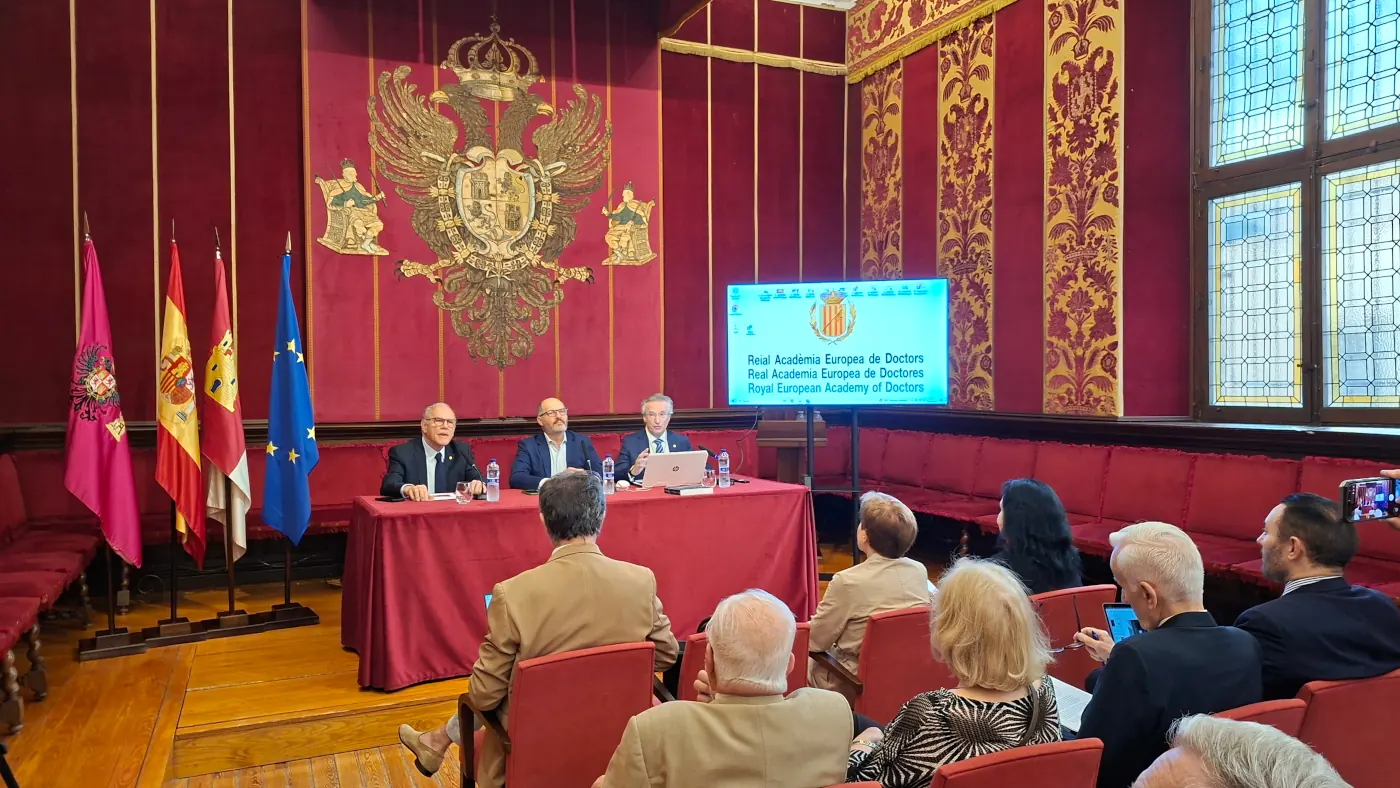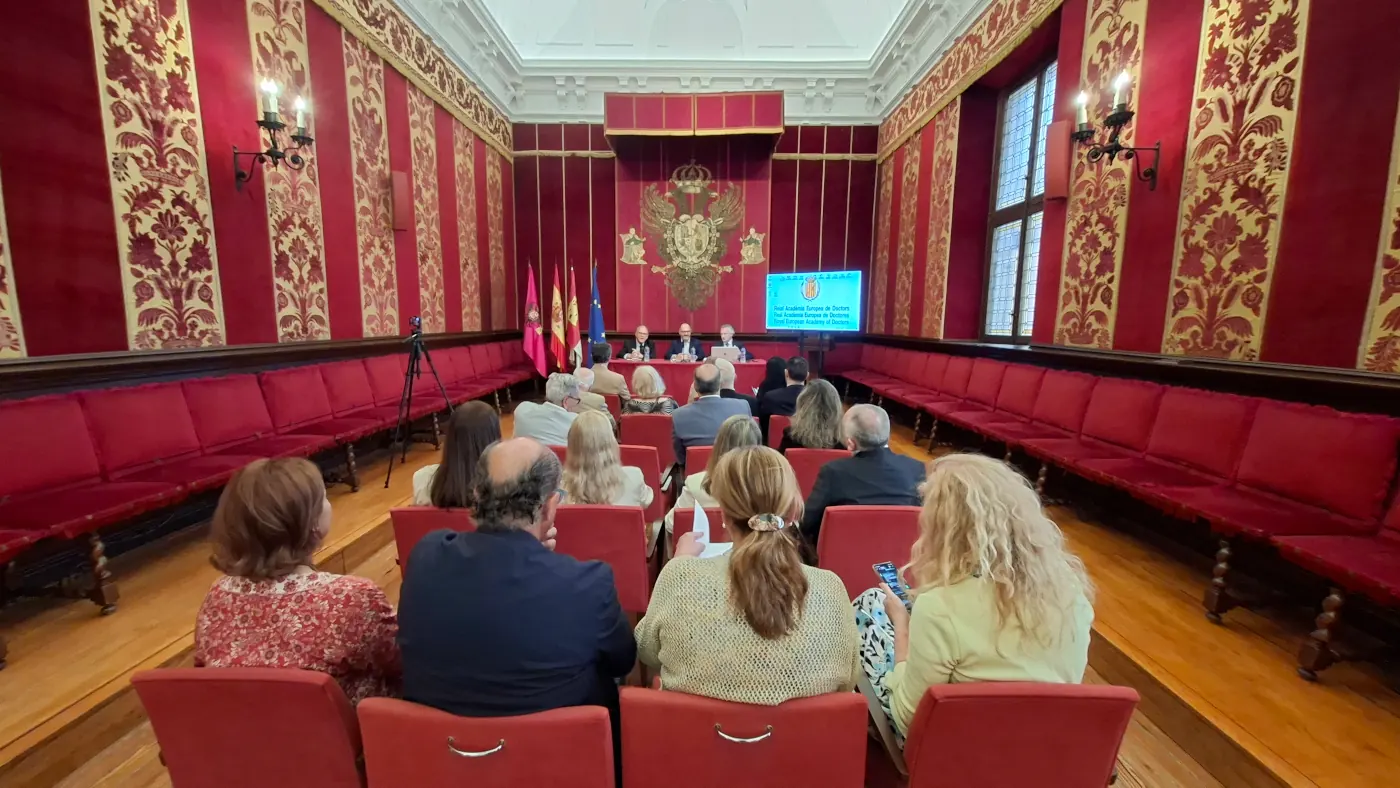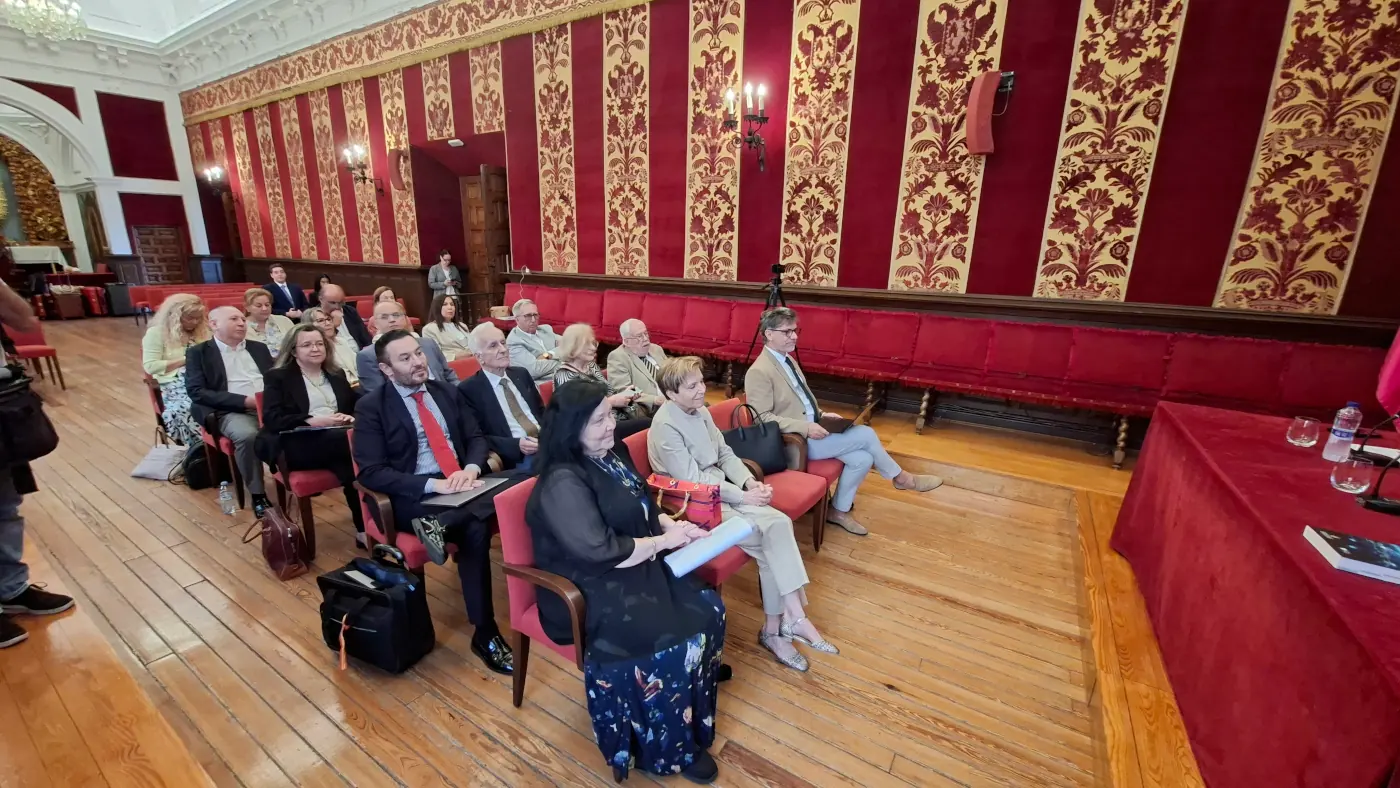


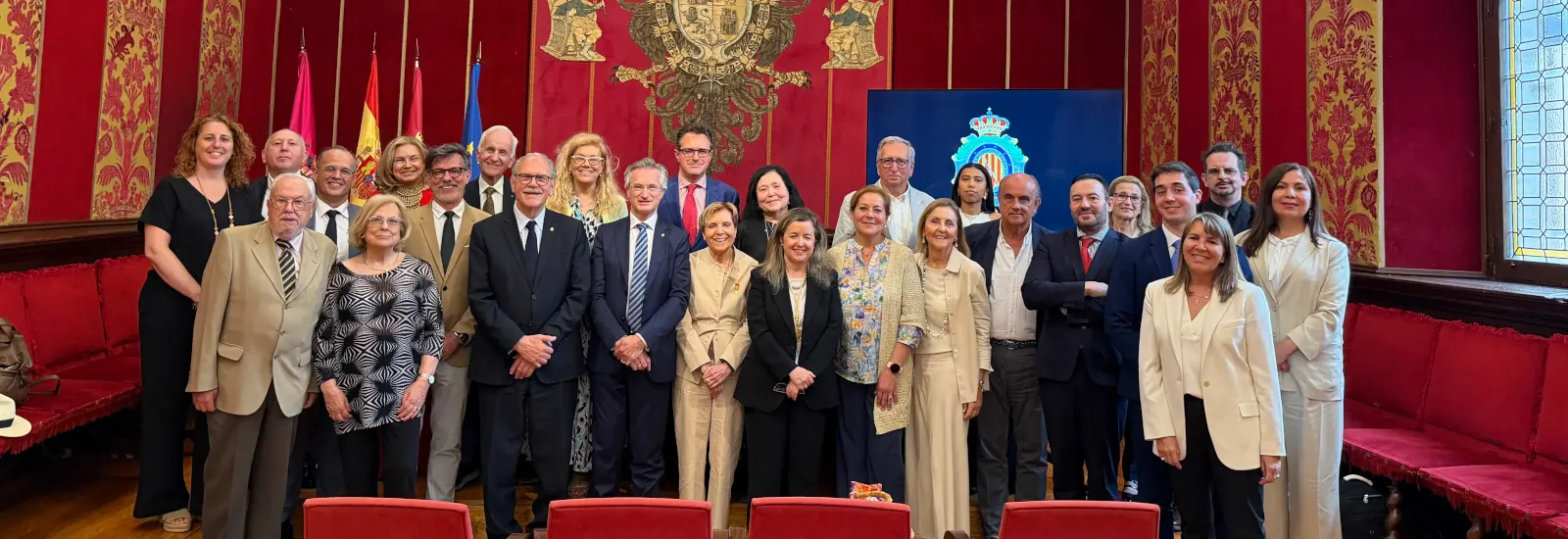
The Royal European Academy of Doctors (RAED) and the Pro Royal European Academy of Doctors Foundation held on 5 June, in the Chapter Hall of the Toledo City Council, the National Congress that hosted the presentation of the latest edition of the project Vital Challenges for a New Era. The event was held under the title “Vital Challenges for a New Era 2026. Geopolitics of Change. Power, Technology and Society”, and was led by Alfredo Rocafort, professor of Financial Economics and Accounting at the University of Barcelona and full academician and president of the Governing Board of the Royal Corporation, and Felipe Hernández Perlines, professor of Business Organisation at the University of Castilla-La Mancha and full academician of the RAED, host of the event together with José Manuel Velasco, deputy mayor and councillor for Tourism, Housing and Relations with the University of Castilla-La Mancha, where he is also a lecturer in Private International Law. The academic event was followed by the traditional summer lunch of the Royal Academy, held at the Restaurante Museo Alcázar de Toledo.
After the initial presentation of the project, now in its sixth edition and including the publication of an extensive monograph with all the contributions by academicians and experts of major international scientific standing, the first part of the event was moderated by Felipe Hernández Perlines. The speakers who presented their publications were Maria Àngels Calvo, full academician and vice-president of the Royal Corporation, with the paper “Between biosecurity and geopolitics: a lesson from the 21st century”; Joaquim Gironella, full academician and also vice-president of the Governing Board, with “The great technological revolution: artificial intelligence”; Rafael Urrialde, full academician and also vice-president, who presented “Food and climate sovereignty: the new fronts of the 21st century”; María Ángela Jiménez, full academician, with the paper “Purpose as a catalyst for sustainable innovation: comparative analysis of the CSRD, Omnibus I, IFRS S1 and S2 reporting frameworks”, and Esther Subirá, full academician and member of the RAED Governing Board, who spoke on “Territorial ageism and European reconfiguration”.
The session was completed, in a second part directed and moderated by Rafael Urrialde, by Marcela González Gross, full academician, with “Health, ageing and quality of life in the era of longevity”; Ignacio Bonasa, extraordinary ambassador for Ibero-America of the Royal European Academy of Doctors, who spoke on “Leading with soul in times of uncertainty”; Bernat-Noël Tiffon, full academician, with “Murder and concealment of the body out of desperation”; José María Baldasano, also a full academician of the RAED, with the study “Influence of climate denialism on current global warming”; Consuelo Sánchez-Castro, corresponding academician, with “Europe’s strategic crossroads: between autonomy, irrelevance and the reconfiguration of the international order”; Antonio Zapatero, full academician of the Royal European Academy of Doctors, who presented “The challenges of the National Health System 2026-2035”; Jaume Antich, also a full academician, with “Artificial intelligence and criminal law”, and Felipe Hernández Perlines himself, who closed the session of presentations with the paper “Innovating with purpose: beyond economic profit”. The closing lecture was delivered by Rafael Urrialde.
From the multidisciplinary perspective that the project has embraced since its origins, Vital Challenges 2026 focuses on the emergence of a new multipolar order and the irruption of artificial intelligence and the ethical, social and ecological challenges associated with this new era from an integrative and forward-looking perspective, with the aim not merely of interpreting the present but of guiding the future with responsibility, knowledge and awareness, as Rocafort highlighted in his presentation. “History shows that periods of greatest uncertainty have also been those in which humanity has demonstrated the greatest capacity for innovation and self-improvement. Europe has known how to reinvent itself at critical moments in its past. Today, more than ever, it needs to combine the wisdom of its legacy with the boldness of a renewed vision. The future is not predetermined. It will depend on our ability to understand the transformations underway, anticipate their implications and act with prudence and responsibility. Vital Challenges 2026 is, in essence, an invitation to take on that challenge,” stated the president of the Royal European Academy of Doctors.
The book that gathers the contributions of this latest edition of the RAED’s most ambitious project is divided into three major sections: “Emergencies and the rise of world power”, “The great technological revolution: artificial intelligence” and “The human condition in the digital era”. The first includes the chapters “Great powers and territories in transformation”, with seven specific papers, and “The struggle between globalisation and sovereignties”, with eight studies; the second includes the chapters “Artificial intelligence and the limits of knowledge”, with six outstanding scientific contributions, and “Applied AI: creativity, law and sustainability”, with seven papers; finally, the third brings together the chapters “Vital ecosystems: health, education and values” —six studies— and “Strategies for the future: innovation, leadership and sustainability”, with nine specific research papers.