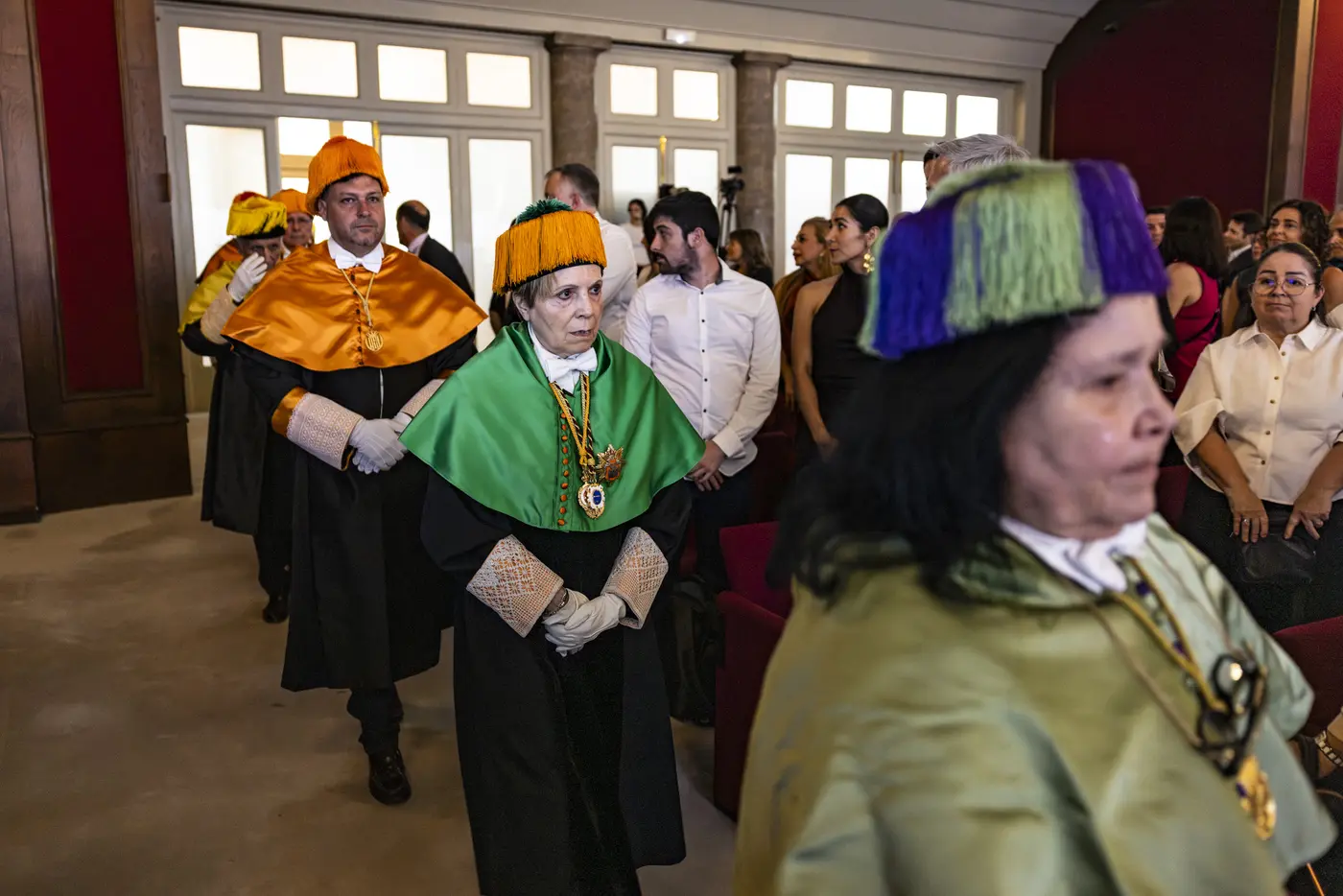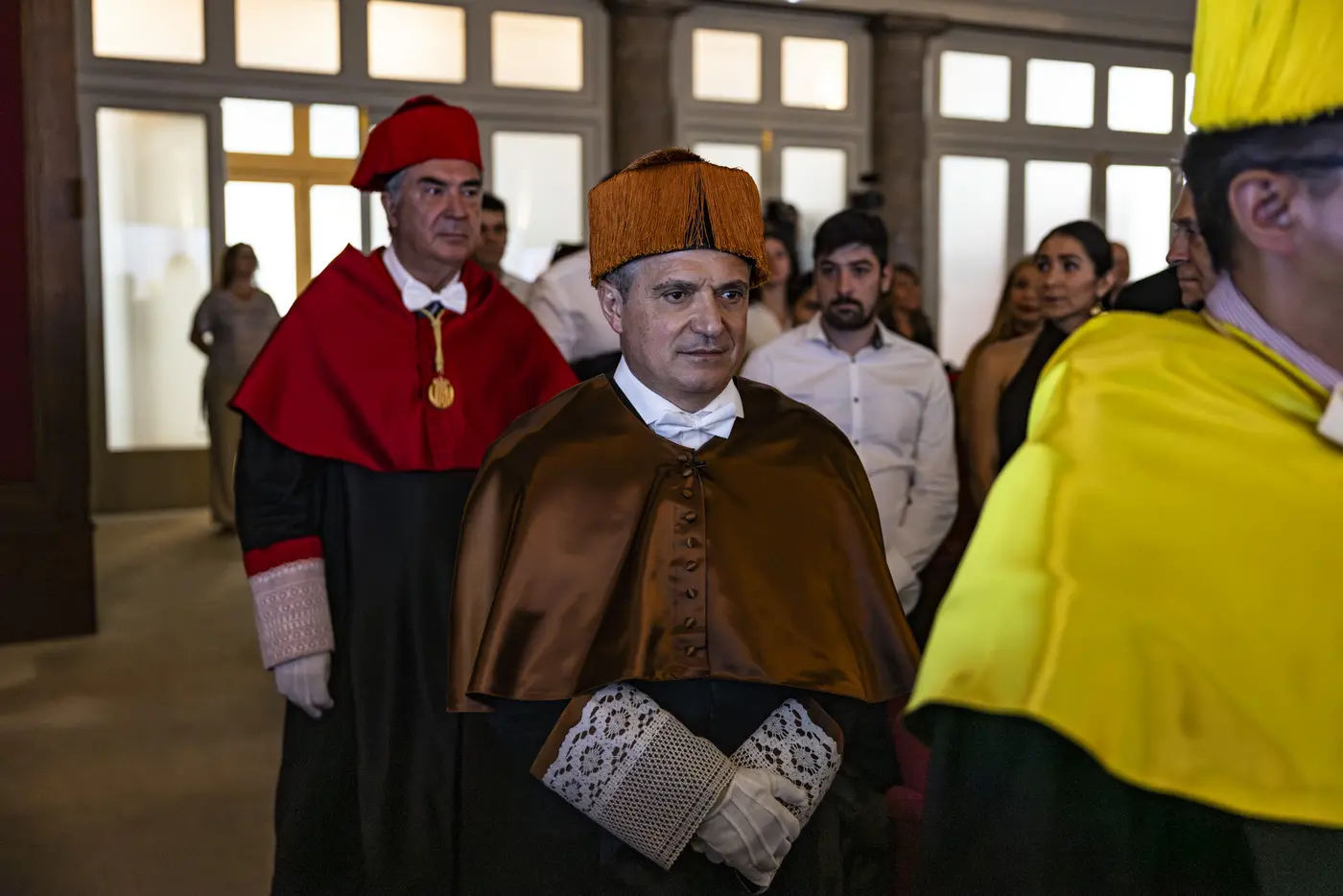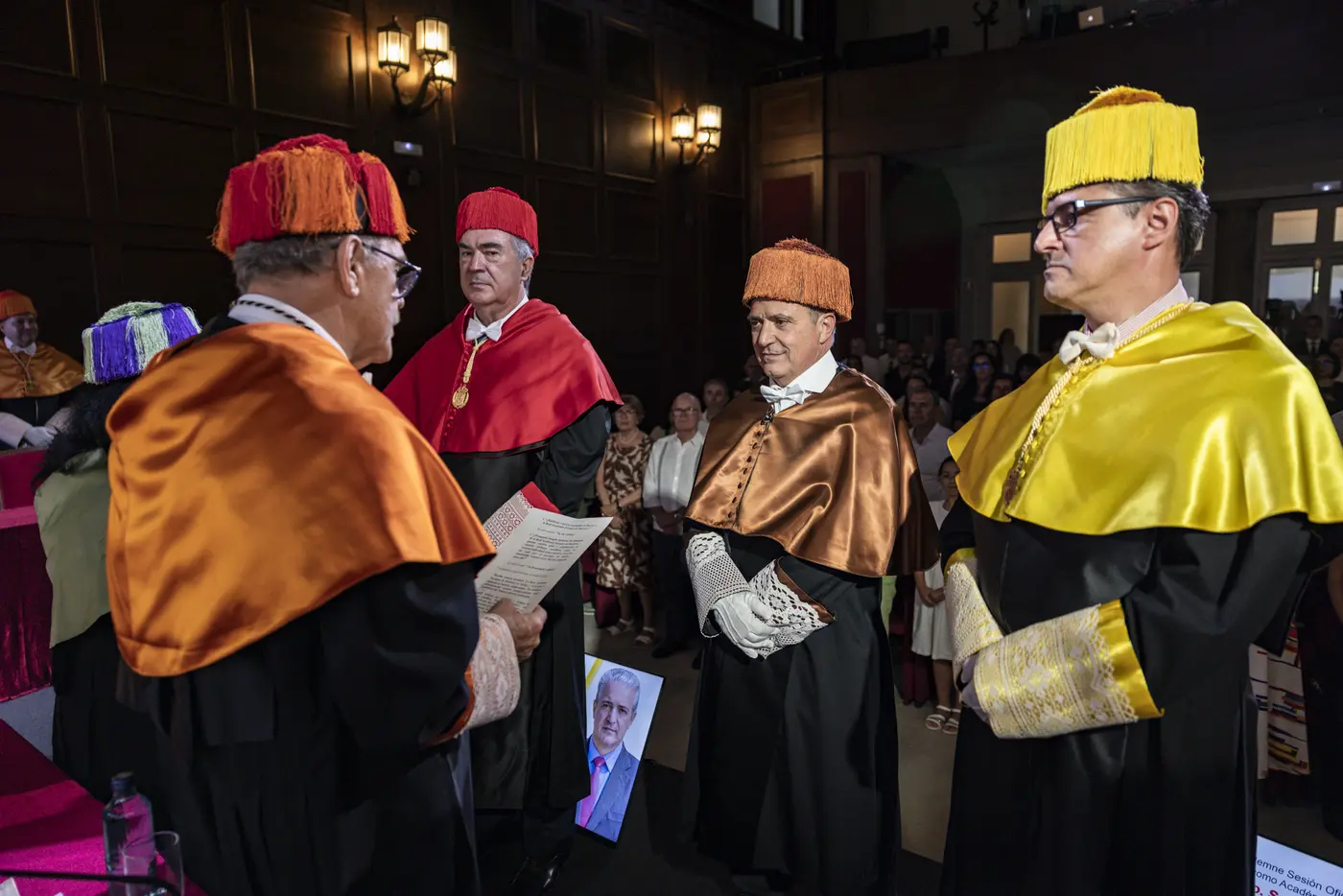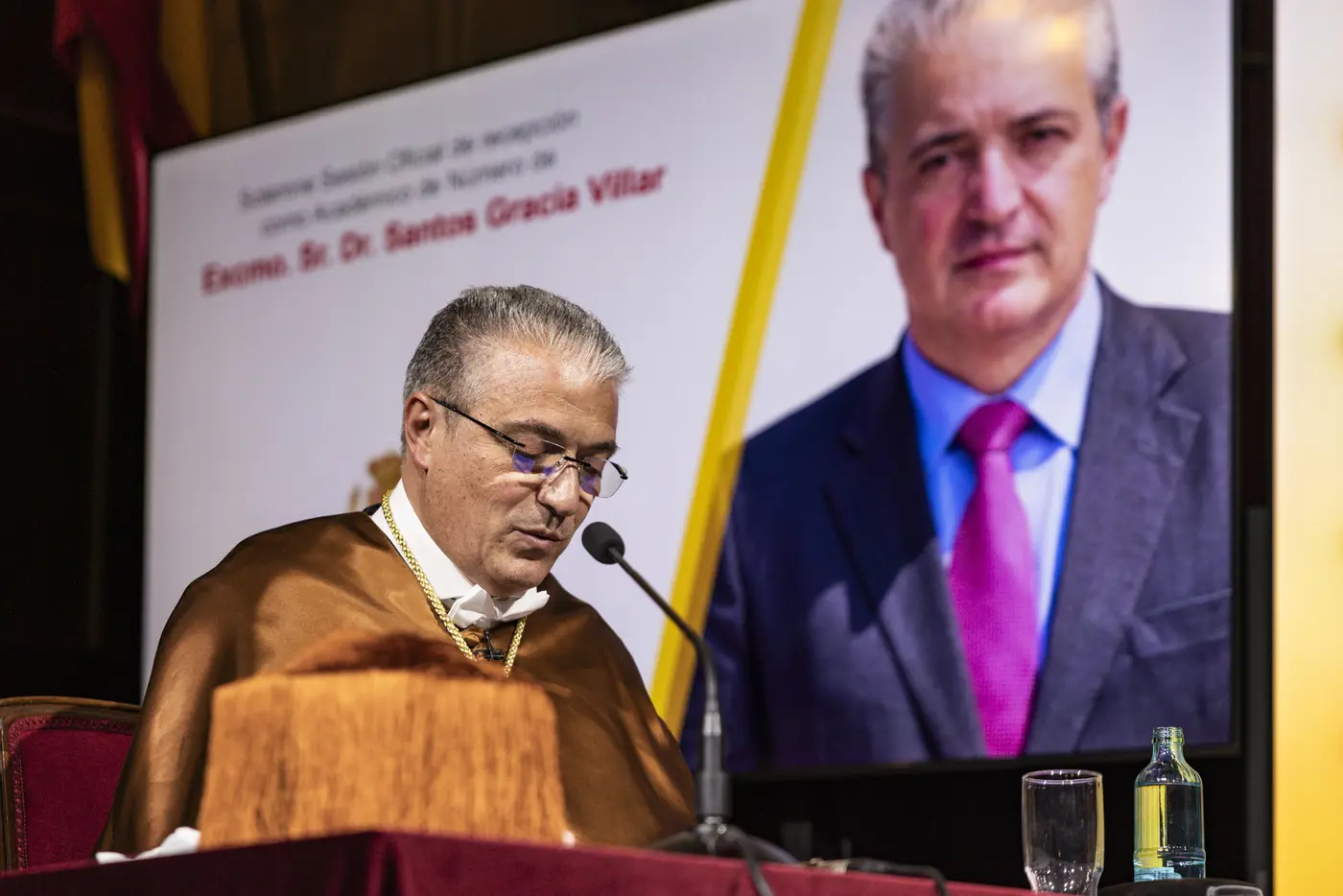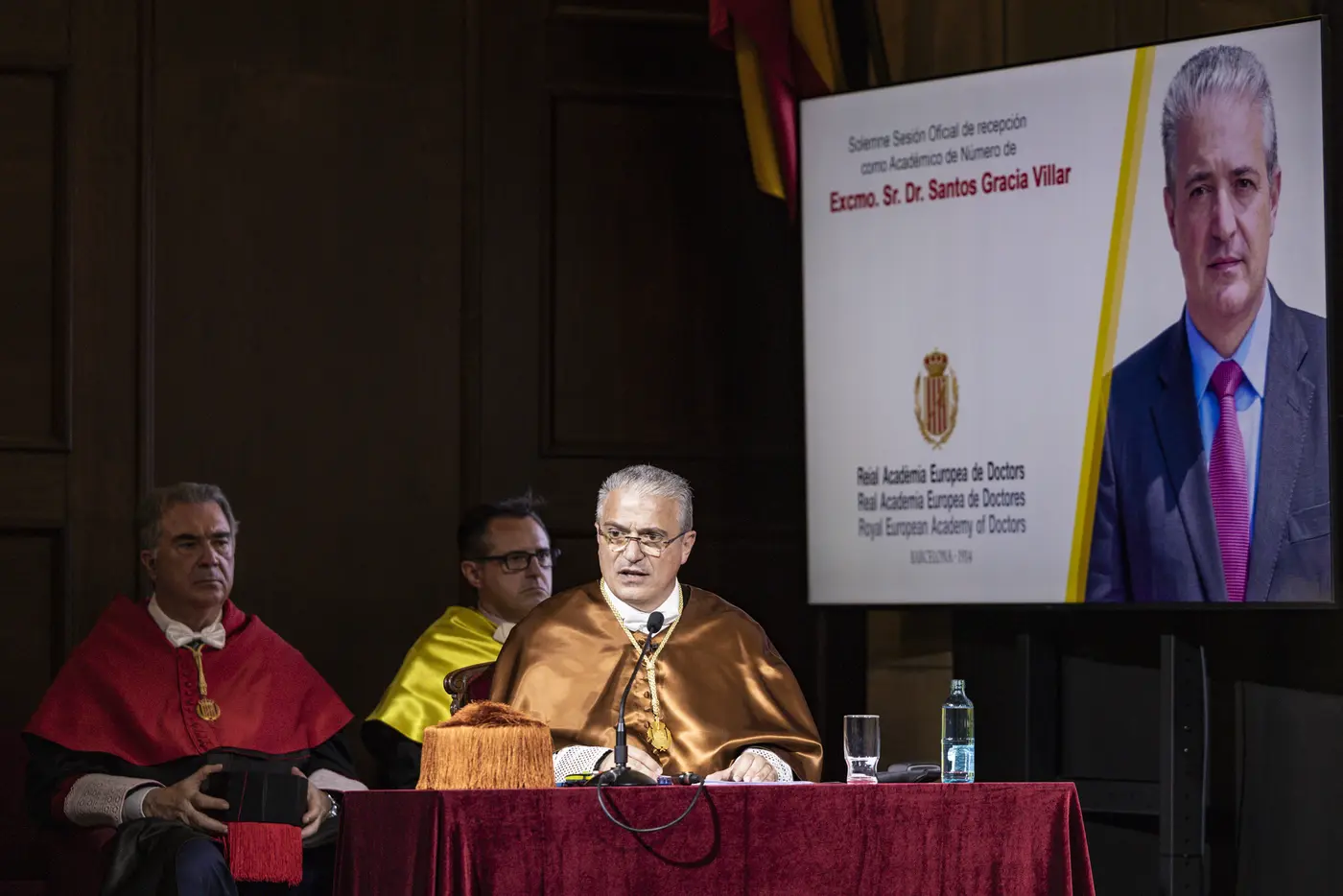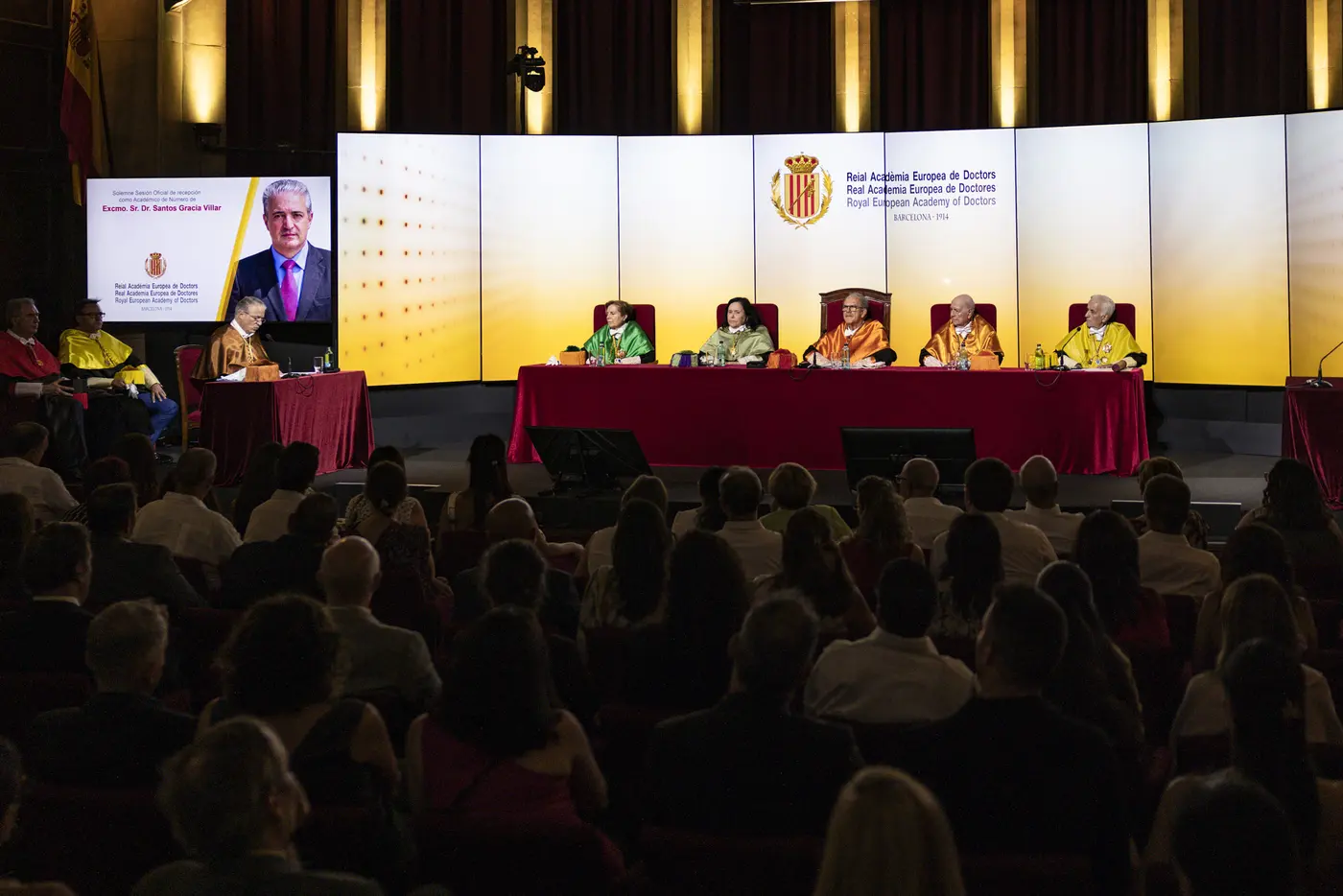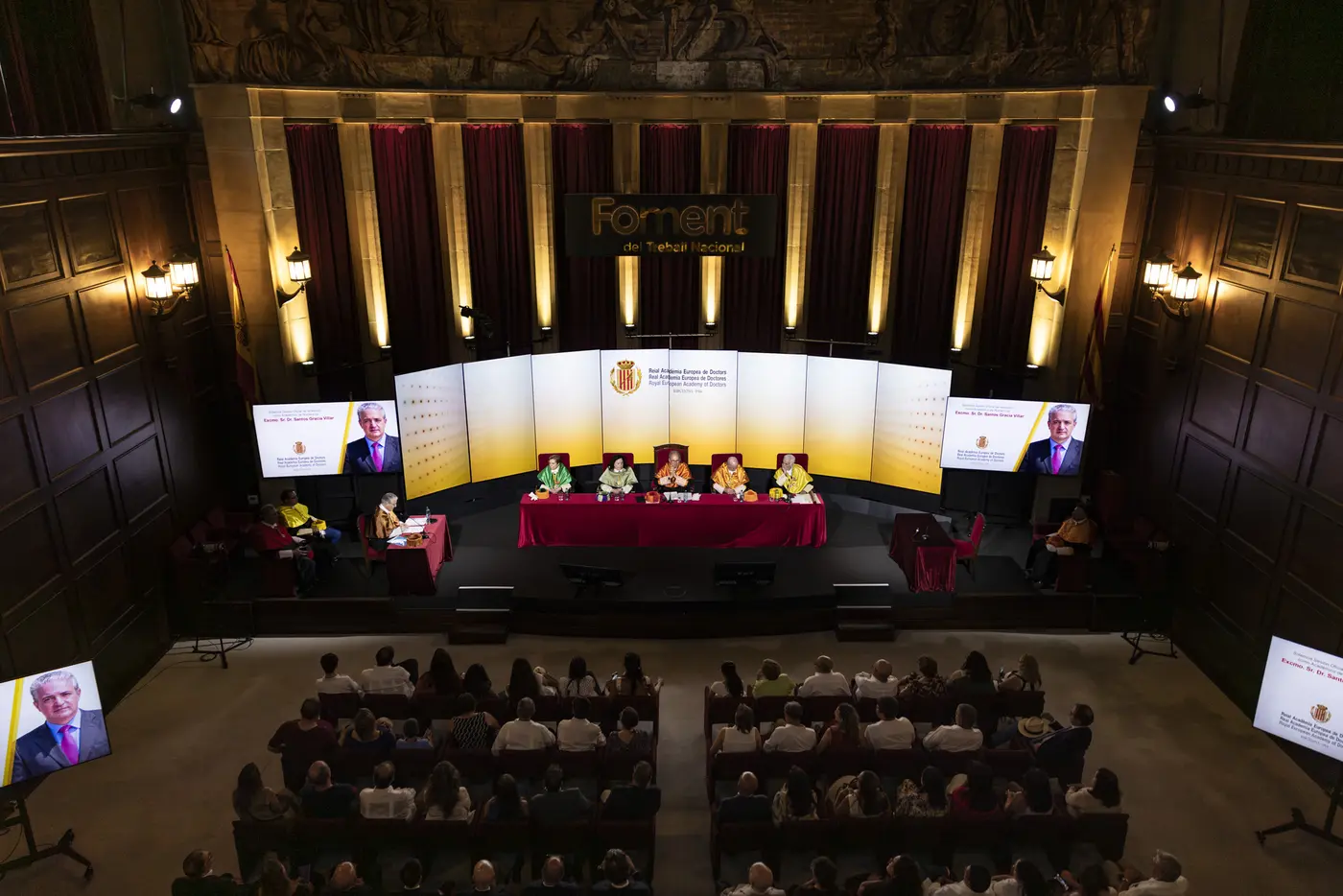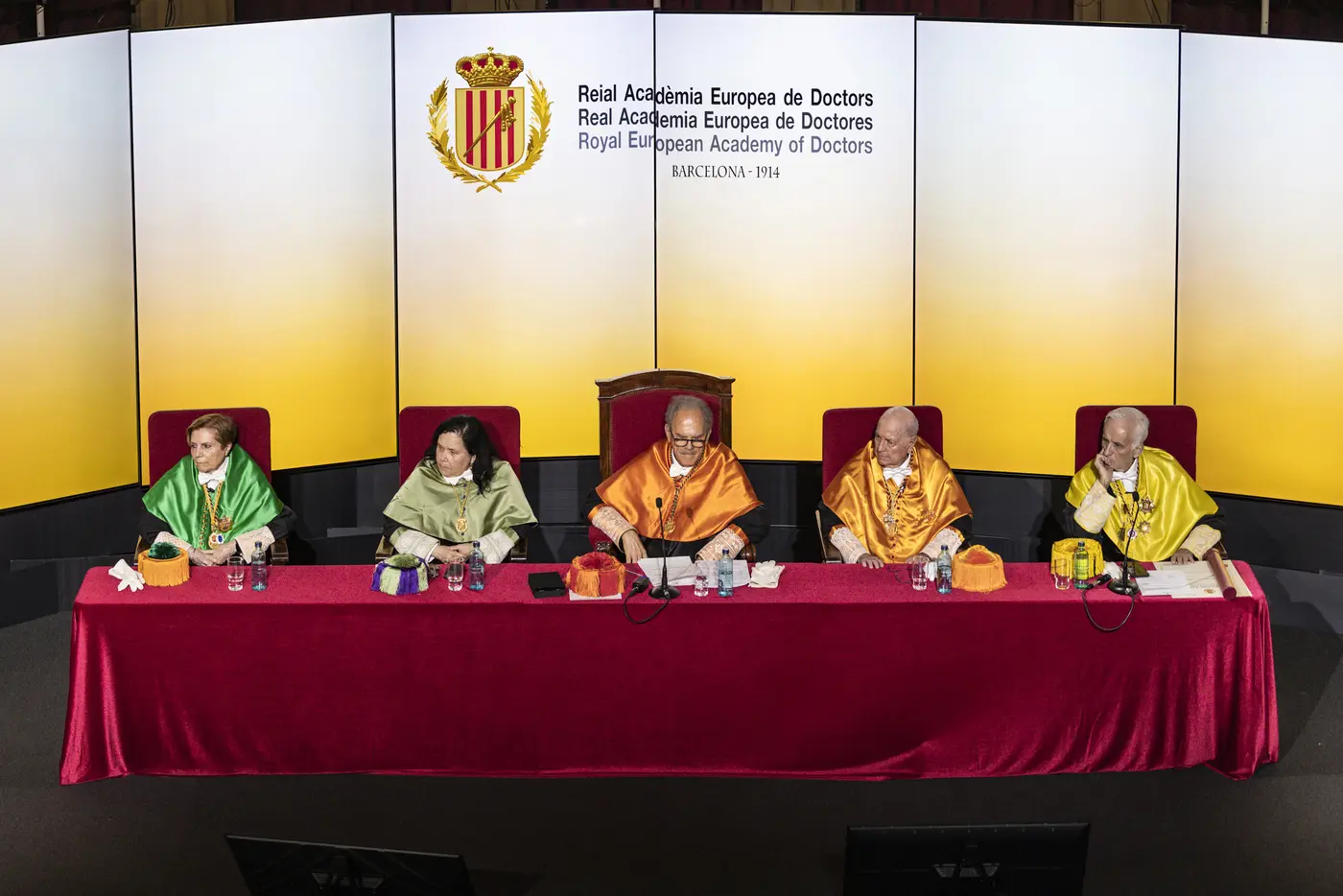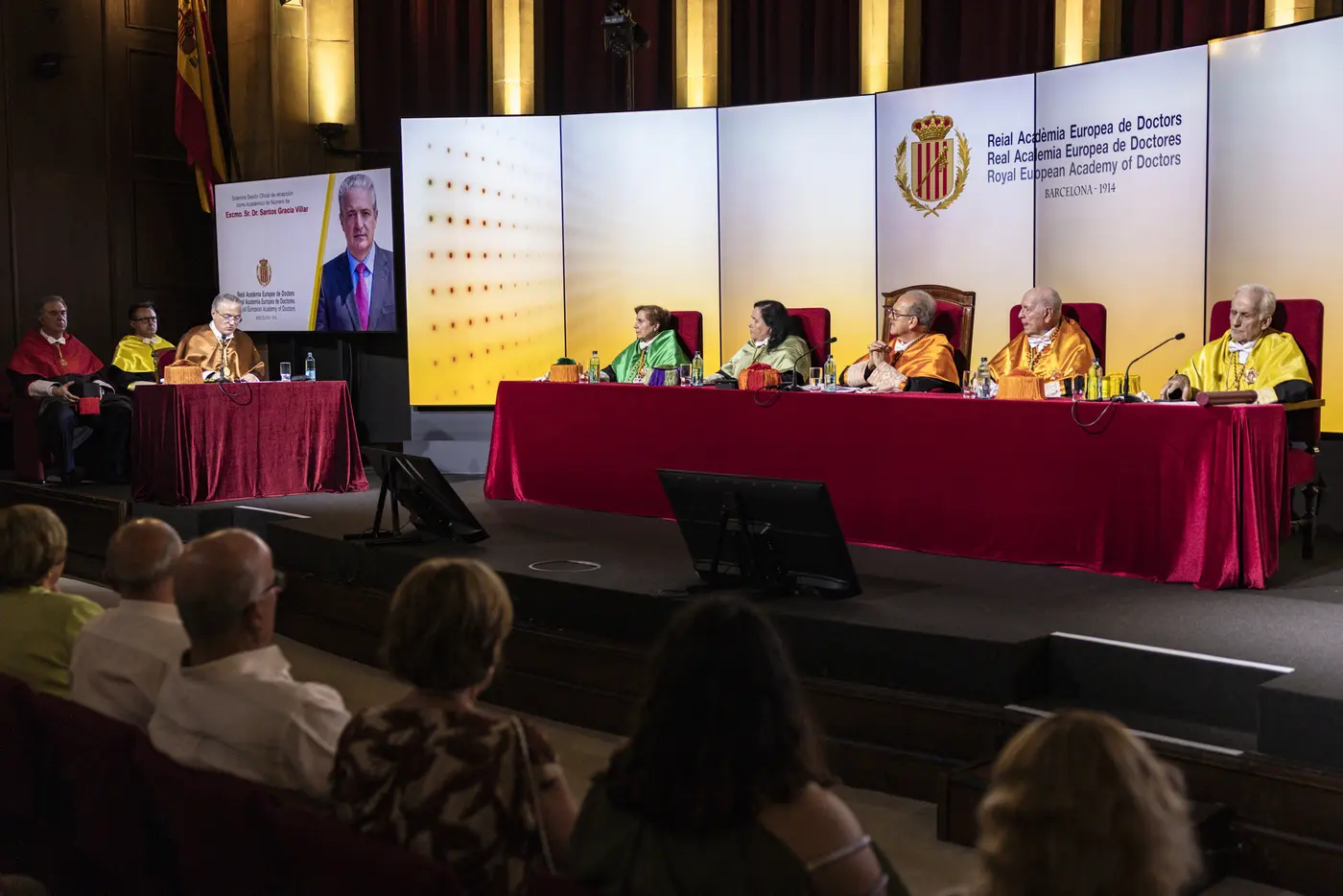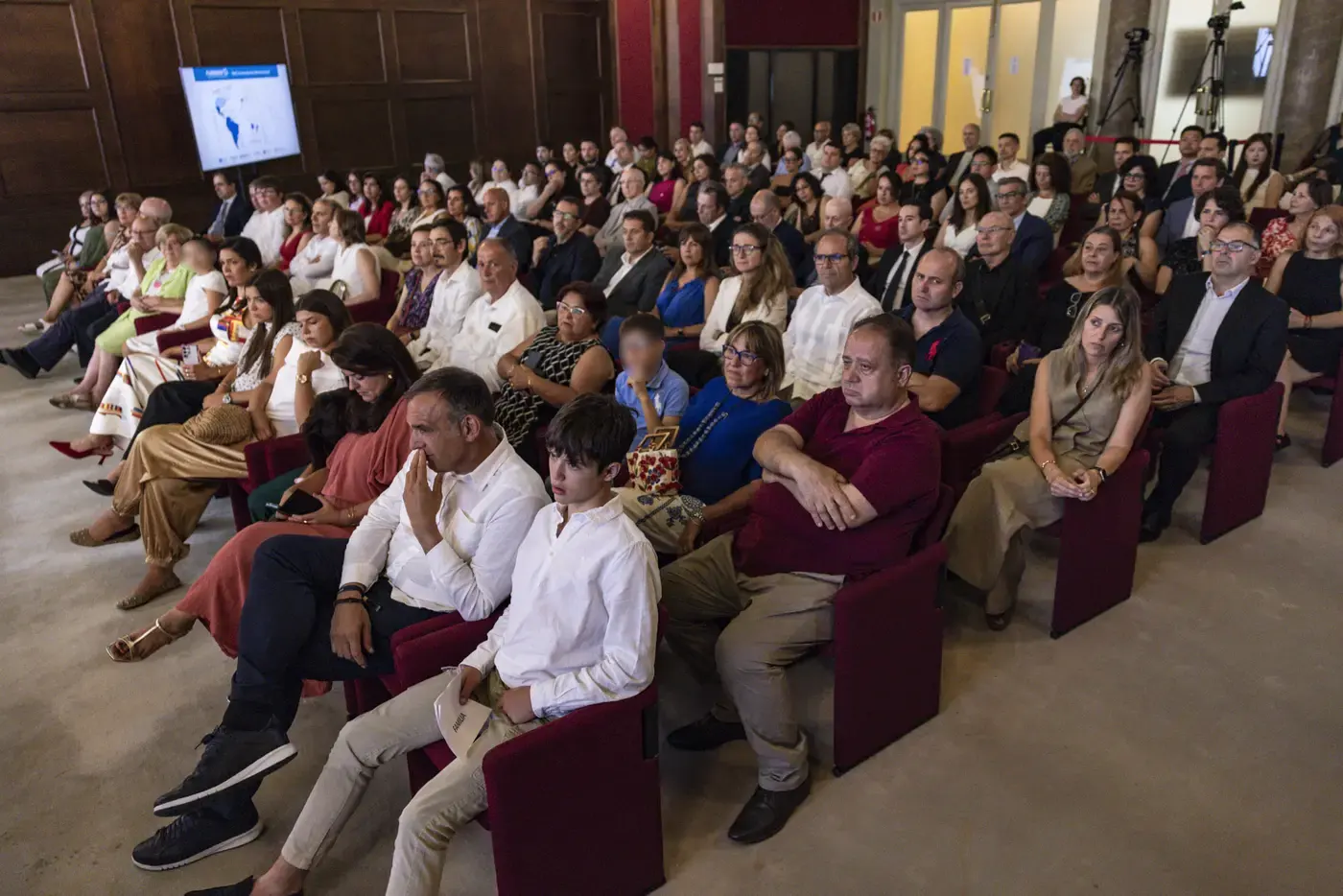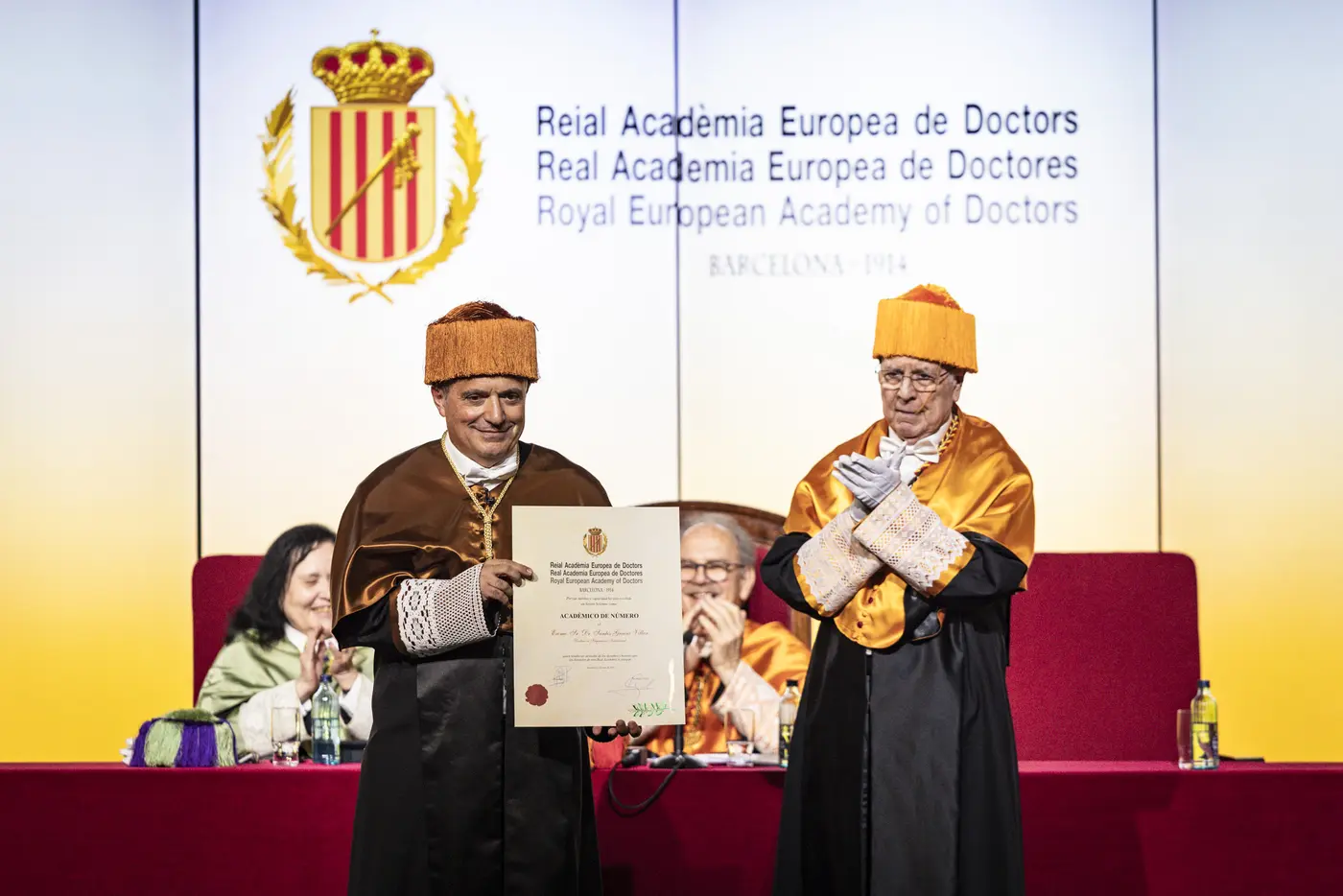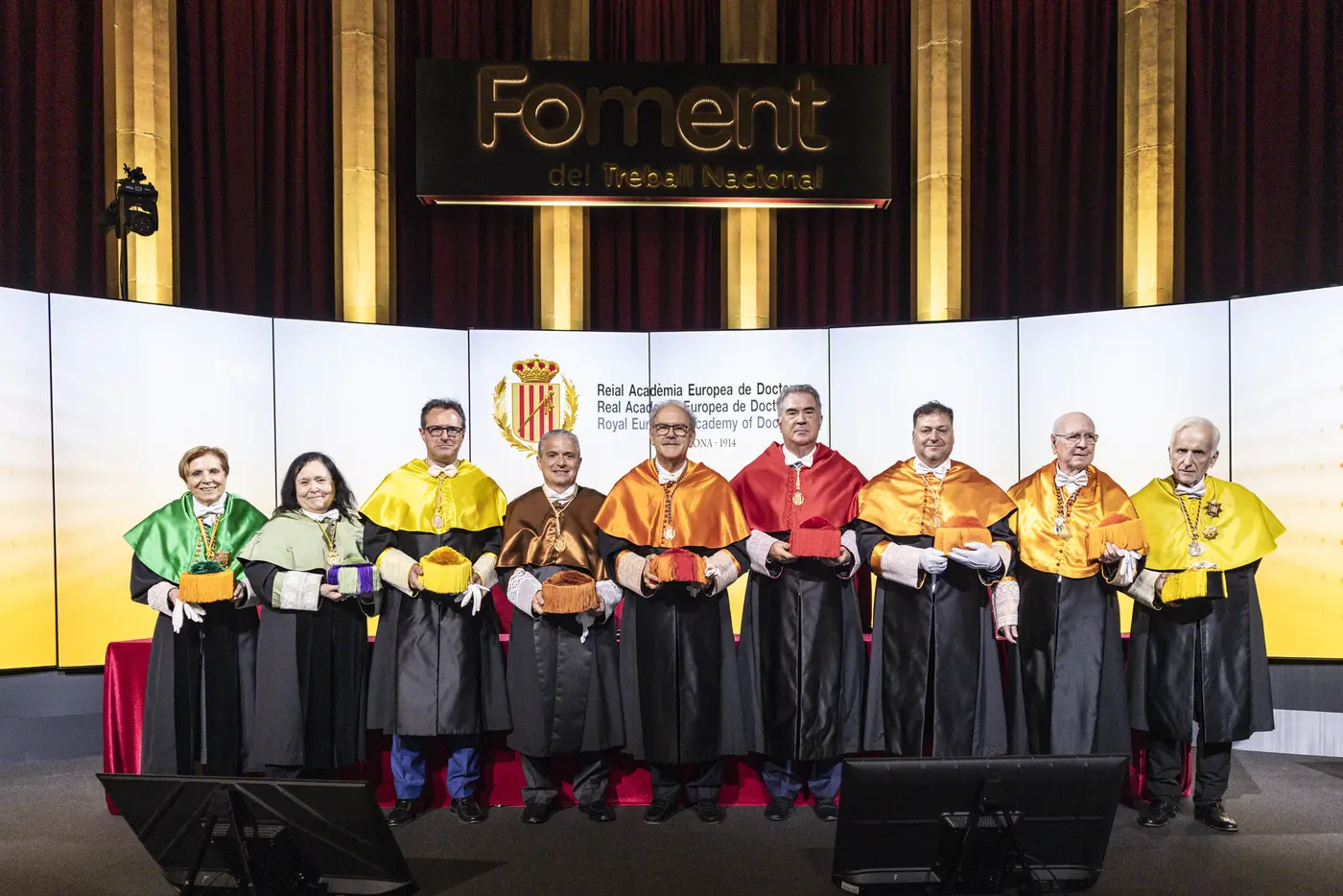



Santos Gracia, Doctor in Industrial Engineering, was admitted as a full academician of the Royal European Academy of Doctors (RAED) during a solemn ceremony held last Monday, 22 June, at Foment del Treball Nacional, the Academy’s academic headquarters. The new academician delivered the admission address “University education as an instrument for the development of peoples and for the articulation of multinational communities. The Funiber project”, in which he presented the work of the Ibero-American University Foundation (Funiber), which he himself chairs and which is present in 35 countries. He was answered on behalf of the Royal Corporation by the full academician and president of the Governing Board, Alfredo Rocafort. The session could be followed by streaming through the RAED’s YouTube channel, where it can be viewed.

Dr. Santos Gracia
The expert gave a concise account of Funiber’s experience over almost three decades of work in favour of accessible, transnational higher education at the service of social progress in the Ibero-American and Pan-Iberian sphere. The Foundation’s initial objective, he explained, was to fill postgraduate training gaps in Ibero-American universities through academic collaboration and the emerging use of the internet. Over time, the initiative evolved into a broad international university network. For the new academician, the aim of the project is to democratise access to higher education by removing economic and geographical barriers while making the most of each model, face-to-face and virtual, in which it carries out its activity. In this regard, the project combines an advanced virtual campus with printed materials distributed even in areas with low connectivity and has created both online and face-to-face universities of its own.
Gracia underlined the Foundation’s social responsibility, materialised in a broad scholarship programme aimed at disadvantaged sectors, and its commitment to human development in countries with precarious productive systems, denouncing what he described as the “social tragedy” of thousands of talented young people being excluded from higher education for economic reasons. As for Funiber’s cultural context, the new academician noted that the project was born with a Pan-Iberian vision that has consolidated it as the first university platform in the so-called Iberophone space, promoting pioneering programmes in Pan-Iberian and Ibero-American studies. The new academician linked this work to an academic and cultural diplomacy that strengthens shared identity and contributes to a more equitable globalisation. In addition to education, the Ibero-American University Foundation carries out intense cultural activity, with travelling exhibitions that are always free of charge, as well as scientific-technical activity and the promotion of entrepreneurship. Its sustainability is based on operational efficiency and on balancing action in upper-middle-income countries with support for more modest regions.
In his response address, Rocafort outlined the professional and scientific career of the new academician and highlighted his ability to design a new university model and put it into practice. He also pointed to future avenues of collaboration between the Royal Academy and Funiber. “Santos Gracia has not limited himself to reflecting on the role of the university, but has created university structures. He has not limited himself to defending international cooperation, but has articulated an extensive network of professors, students and institutions. Nor has he been content merely to denounce the economic and geographical barriers that hinder access to higher education, but has promoted programmes, scholarships, technological resources and organisational solutions precisely aimed at overcoming them. This coherence between what is conceived, what is defended and what is achieved constitutes one of the most outstanding features of his personality. His career shows that a vision only acquires true relevance when it can be translated into structures, teams and results that endure,” he stated.
A pioneer in the design and implementation of distance and blended learning models, Santos Gracia has adapted academic programmes to the technical needs of multiple developing countries and has consolidated international cooperation networks between Europe, Latin America, Africa and Asia, promoting the creation of university networks that share an ecosystem of mutual collaboration. He is the author and co-author of numerous scientific articles in high-impact journals and technical books. He has received the Officer’s Cross of the Order of Isabella the Catholic in recognition of the Foundation’s social commitment and of his work in promoting access to higher education through a broad scholarship programme across Spanish- and Portuguese-speaking countries.
Admission address: “University education as an instrument for the development of peoples and for the articulation of multinational communities. The Funiber project”