

Frigdiano Álvaro Durántez, Director of the Chair of Ibero-American and Iberophone Studies of the Ibero-American University Foundation and collaborator of the Royal European Academy of Doctors (READ), reflects on the role of the Spanish language as an international language in the article “Spanish, a Natural Esperanto,” published on 11 April in the prestigious “La Tercera” section of the newspaper “ABC.” The expert also took part in the 33rd edition of the Philosophy Meetings organised by the Gustavo Bueno Foundation, held between 27 and 29 March at the Foundation’s headquarters in Oviedo, under the title “Dialectics of Empires and Dialectics of States.” In addition to participating in the opening session together with Gustavo Bueno Sánchez, President of the Gustavo Bueno Foundation, he also took part in the round table “International Relations and Geopolitics.”
In his article, Durántez argues that, in the face of the hegemony of English as a global language, Spanish is configured as a kind of common-use language because of its neutrality, logic and ability to preserve cultural diversity, to the point of comparing it with Esperanto, the artificial language created in 1887 by Ludwik Lejzer Zamenhof with the aim of becoming a neutral and easy-to-learn language, but which in its case never managed to displace natural languages because of its lack of cultural and identity roots. Since 1945, English has consolidated its dominance in political, military, economic and scientific power, as well as in cultural and media spheres, driven by Anglophone strategies that threaten the linguistic and cultural balance of humanity. Faced with this reality, Durántez maintains that Spanish offers the ideal conditions to serve as a counterweight. Unlike English, Chinese, Russian or French, it does not depend on a single hegemonic state, and it represents a diverse Hispanic civilisation with Amerindian, Iberian and Afro-descendant roots.
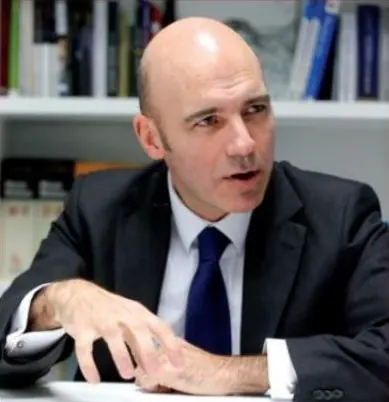
Dr. Frigdiano Álvaro Durántez
Among the strengths of Spanish highlighted by the READ collaborator in his article are the fact that it is the world’s second mother tongue, behind Chinese and ahead of English, the leading Romance language, the third most used language on the internet, and the fact that it is the official language in around twenty countries spread across several continents. In addition, he points out, it is the principal language of Iberophony and has a high degree of intelligibility with Portuguese, together encompassing some 900 million people. Its phonetics, spelling and grammar are also clear and logical: it is written as it is spoken and pronounced as it is written, which makes it, in Durántez’s view, a natural Esperanto from a philological, cultural and political point of view.
The writer concludes that Spanish is already a global common good at the service of linguistic diversity and calls for the design of active strategies to promote it as a de facto co-official language in the United States, in the foreign projection of powers such as China and Russia, in Africa, in international organisations, in cyberspace and in the development of artificial intelligence. To this end, he proposes collaboration among the Instituto Cervantes, the Royal Spanish Academy, the academies of the Spanish language, civil society, and political and diplomatic coordination among Spanish-speaking countries and other interested parties to preserve cultural plurality. “It is essential to ensure political and diplomatic coordination with the other Spanish-speaking countries and with those that are not, for this is a matter of genuine world interest; because Spanish, for all the reasons indicated, has already become a true global common good at the service of the cultural and linguistic diversity of all humanity,” he concludes.