

 August Corominas, Professor of Human Physiology at the University of Murcia and the Autonomous University of Barcelona, and emeritus member of the Royal European Academy of Doctors (RAED), shares with the academic community the article “The positive impact of artificial intelligence on medicine”, in which he examines the effects of this disruptive technology on medical practice and patient care while warning of the overriding importance that the human factor must continue to have. The academic has recently contributed to this publication the articles “The secret of longevity in the ‘blue zones’”, “Beware of falls, by night and by day”, “The good life and a life well lived”, “Biological life and quantum life”, “Smart hospitals”, “Cosmonautics and space medicine”, “Abuse and its management”, “Quantum biology”, “The Negro of Banyoles (Bushman or Hottentot)”, “Polydactyly”, “Adolescence, a critical stage in human life”, “Sirens: the illusion of sailors and seafarers”, “Biblical food: clean and unclean foods”, “Rare diseases”, “The starving people of Gaza”, “Sexology in adolescence and the somatopause (andropause and menopause)”, “Cyberattacks, cyberwarfare and cybersecurity”, “Refugees”, “Human wickedness”, “The geostrategy of rare earths”, “Conscience and omission: the wretchedness of the ruler”, “Plasticosis”, “Humanisation”, “The Island of Doctor Moreau and the ‘therians’”, “Astatine, a new element of technological importance” and “The Corominas family: more than two centuries of medical vocation”. He is also the author of one of the chapters in the book Vitality in ageing: if you wish, you can live longer in good health, published by the Royal Academy with the support of Vichy Catalán.
The positive impact of artificial intelligence on medicine
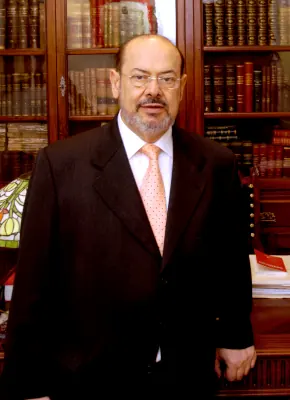
Dr August Corominas
Artificial intelligence (AI) represents one of the most important transformations in the history of medicine, comparable to the advent of the microscope, antibiotics or genomics. Its positive impact is already visible and will probably become even more profound in the coming decades. Its principal advantages include:
1. Faster and more accurate diagnosis
AI can analyse thousands of medical images in a matter of seconds. Examples include:
- Radiology (CT scans, MRI scans and X-rays).
- Mammography.
- Dermatology.
- Ophthalmology.
In some cases, AI has already achieved levels of accuracy comparable to those of human specialists.
2. Personalised medicine
Every person is biologically unique. AI makes it possible to integrate:
- Genetics.
- Laboratory test results.
- Lifestyle habits.
- Environmental factors.
It can thus help devise treatments tailored to each individual patient.
3. Discovery of new drugs
Pharmaceutical research that previously required 10 or 15 years can be accelerated considerably. Examples include:
- Searching for new molecules.
- Simulating drug interactions.
- Identifying possible adverse effects.
4. Disease prevention
AI is particularly useful in preventive medicine. It can detect:
- Cardiovascular risk.
- Diabetes.
- Dementia.
- Certain cancers before the first symptoms appear.
5. Support for healthcare professionals
AI does not replace the doctor, but it assists the doctor. Among other things, it can:
- Draft reports.
- Review the scientific literature.
- Analyse large databases.
- Organise medical records, allowing more time to be devoted to the patient.
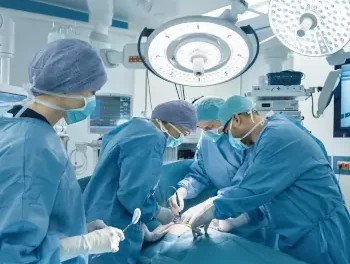
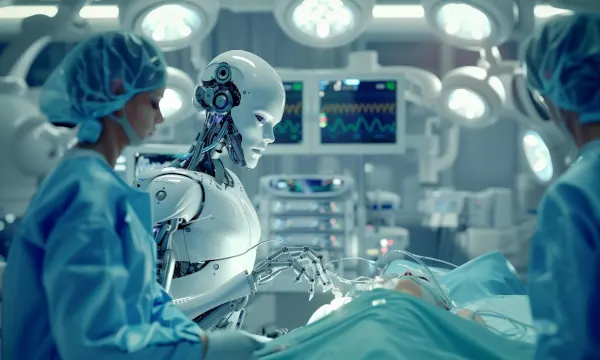
6. Assisted surgery
Surgical robots are becoming increasingly precise. Benefits include:
- Fewer complications.
- Less postoperative pain.
- Faster recovery.
- Greater precision in complex procedures.
7. Public health and epidemiology
AI can provide early detection of:
- Epidemic outbreaks.
- Emerging zoonoses.
- Environmental risk factors, a field closely connected with environmental pathology and planetary health.
The future (2030-2050)
Smart hospitals. These centres will be permanently connected to:
- Sensors.
- Digital medical records.
- Clinical AI, with many alerts generated automatically.
Doctors augmented by AI. The doctor will remain indispensable, but the role will evolve towards:
- Clinical interpretation.
- Humanisation.
- Ethical decisions.
- The doctor-patient relationship, with AI acting as a permanent consultant.
Predictive medicine. We will move from curing disease to:
- Predicting it.
- Preventing it.
- Delaying it before it manifests itself.
Astromedicine. AI will be essential in lunar missions, human settlement on the Moon and future missions to Mars. It will monitor:
- Vital signs.
- Nutrition.
- Psychological status.
- The effects of microgravity in real time.
Longevity and ageing. AI will accelerate research into:
- Biomarkers of ageing.
- Regenerative medicine.
- Stem cells.
- Cellular senescence.
- The possible extension of healthy lifespan.
Principal risk
The great danger is not AI, but medicine without humanism. No algorithm can replace:
- Empathy.
- Compassion.
- Comfort.
- Accompaniment of the terminally ill.
- Human relationships.
A hospital is not merely a technological centre; it is also a centre of humanity.
Final reflection
The medicine of the future will probably be built on an alliance between human intelligence, artificial intelligence and medical humanism. AI will contribute memory, speed and computing power. The doctor will continue to contribute judgment, prudence, experience, values and humanity.