

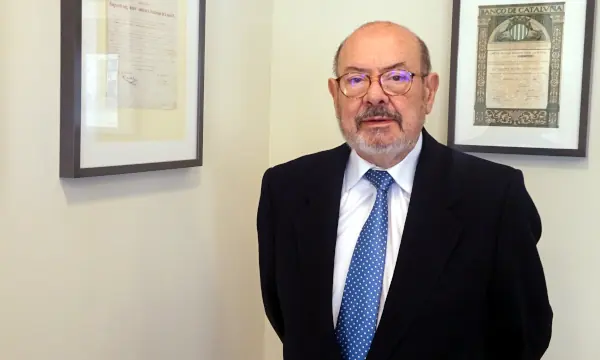
Dr. August Corominas
August Corominas, Professor of Human Physiology at the University of Murcia and the Autonomous University of Barcelona, and emeritus member of the Royal European Academy of Doctors (READ), shares with the academic community the article “The Island of Doctor Moreau and the ‘therians,” in which he reflects on human and animal identity. The academic has recently shared in this publication the articles “The Secret of Longevity in the ‘Blue Zones’”, “Beware of Falls, by Night and by Day”, “The Good Life and the Life Well Lived”, “Biological Life and Quantum Life”, “Smart Hospitals”, “Cosmonautics and Space Medicine”, “Mistreatment and Its Management”, “Quantum Biology”, “The Black Man of Banyoles (Bushman or Hottentot)”, “Polydactyly”, “Adolescence, a Critical Age in Human Life”, “Mermaids, the Illusion of Sailors and Seafarers”, “Biblical Diet: Pure Foods and Impure Foods”, “Rare Diseases”, “The Starving in Gaza”, “Sexology in Adolescence and in Somatopause (Andropause and Menopause)”, “Cyberattacks, Cyberwarfare and Cybersecurity”, “Refugees”, “Human Evil”, “Geostrategy of Rare Earths”, “Conscience and Omission: the Misery of the Ruler”, “Plasticosis” and “Humanisation”. He is also the author of one of the chapters of the book “Vitality in Ageing. If You Wish, You Can Live More Years in Good Health,” published by the Royal Corporation with the support of Vichy Catalán.
The Island of Doctor Moreau and the ‘therians’
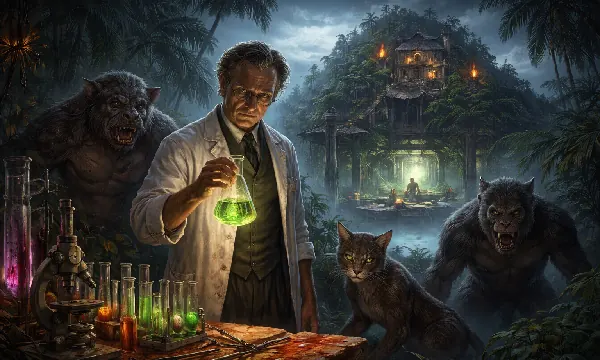 Yes. In “The Island of Doctor Moreau” (1896) by Herbert George Wells, the main intention goes beyond telling a horror or science fiction story. Wells uses the island and the doctor’s experiments to criticise and reflect on several themes.
The novel’s main intentions are a critique of science without ethics, since the character of Doctor Moreau represents the scientist who experiments without moral limits and Wells questions whether science should have ethical boundaries; a reflection on what it means to be human, given that the creatures created by Moreau, half animal and half human, show how fragile civilisation is and raise the question of what truly distinguishes us from animals; a social critique of Victorian society, in which the author also suggests that the social norms that make us civilised may be artificial and fragile; and a warning about power and control, since Moreau tries to impose laws on his creatures, symbolising authoritarian control and the consequences of playing God.
In short, the novel is not only about monsters or experiments but also about the limits of science, human nature, and morality. A very fitting reflection at a time when “therians” have become fashionable, people who feel a deep, spiritual or psychological connection with an animal, identifying themselves inwardly as such.