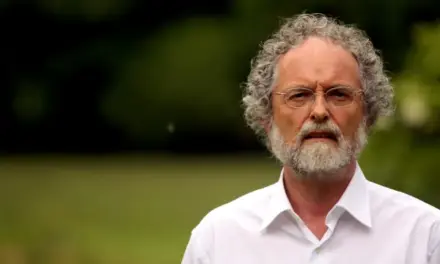


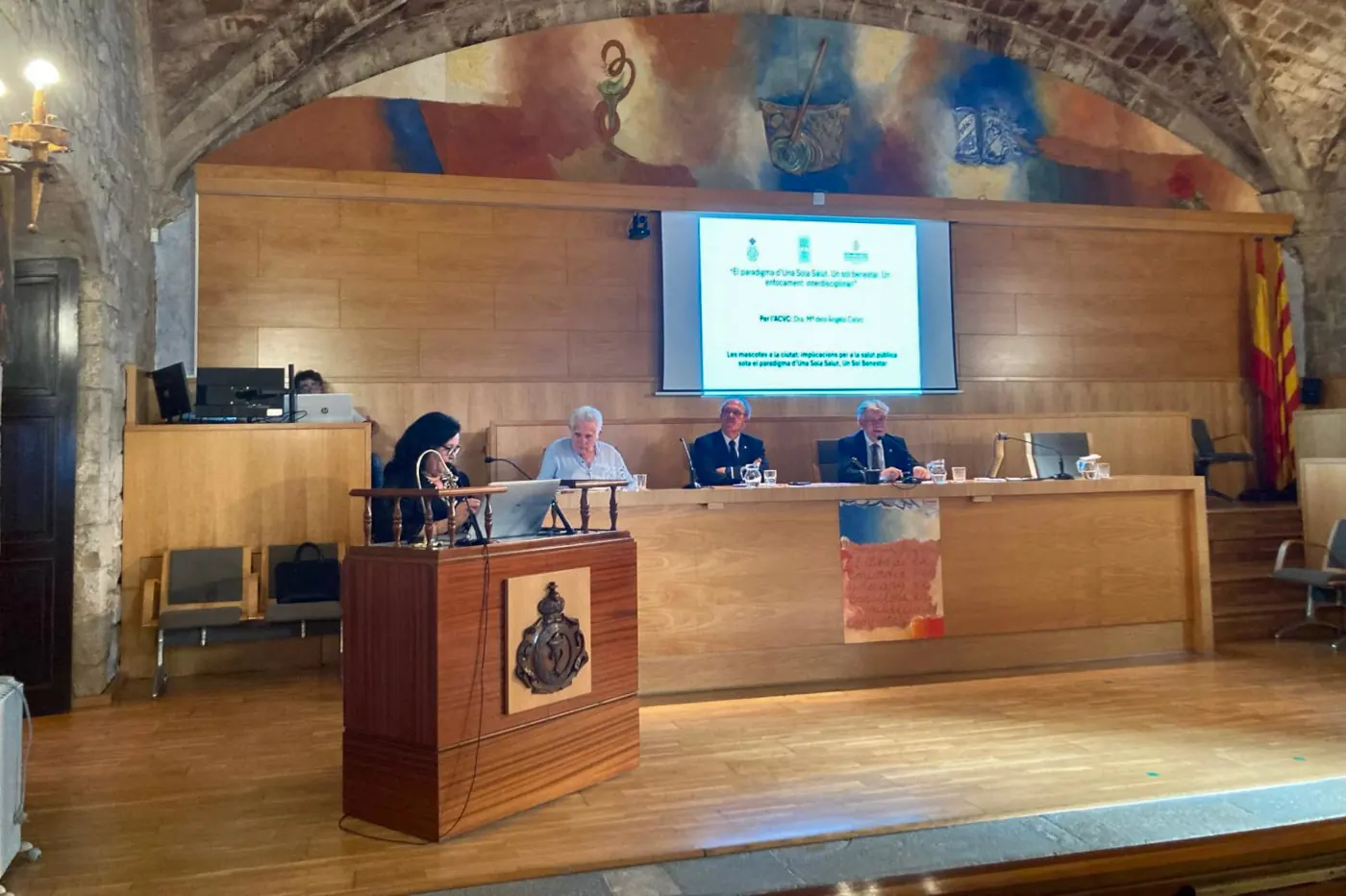
Alfredo Rocafort, Professor of Financial Economics and Accounting at the University of Barcelona, Numerary Member of the Academy of Veterinary Sciences of Catalonia and Numerary Member and President of the Governing Board of the Royal European Academy of Doctors (READ); Maria Àngels Calvo, Professor at the Faculty of Veterinary Medicine of the Autonomous University of Barcelona, President of the Academy of Veterinary Sciences of Catalonia and Numerary Member and Vice-President of the READ; and Miquel Salgot, Emeritus Professor at the Faculty of Pharmacy and Food Sciences of the University of Barcelona and Numerary Member of the Royal Academy of Pharmacy of Catalonia, took part last Monday, 15 June, in the Joint Round Table organised by the Royal European Academy of Doctors and the Pro Royal European Academy of Doctors Foundation together with the Academy of Veterinary Sciences of Catalonia, within the framework of the Week of the Academies. The session was held in collaboration with the Department of Justice and Democratic Quality of the Government of Catalonia, the “la Caixa” Foundation, and the Association of Manufacturers and Distributors-AECOC.
The event was held at the headquarters of the Royal Academy of Pharmacy, of which Calvo is also a Numerary Member, under the title “The paradigm of One Health. One Welfare. An interdisciplinary approach”. The session was chaired and moderated by Joan Permanyer, who also acted as host in his capacity as President of the Royal Academy of Pharmacy. The speakers presented their latest studies on the subject before opening a multidisciplinary dialogue. Rocafort spoke on the “Legal framework of One Health and One Welfare: rights and responsibilities”; Calvo presented the paper “Pets in the city: implications for public health under the paradigm of One Health and One Welfare”; while Salgot addressed the topic “Water in the paradigm of the One Health concept”.
The President of the READ focused his address on the rights and responsibilities that must help shape a sustainable global health model, in which the protection of people, animals and the environment is inseparable and complementary. For Rocafort, the segregated management of human, animal and environmental health has proven insufficient, particularly after major recent health crises such as COVID. These health threats begin with the way in which production systems, livestock farming, agriculture and our relationship with nature are still organised, and both their incidence and their harmful effects show that traditional responses are no longer enough to combat them.
Calvo, for her part, focused on the growing presence of pets in large cities, where they can outnumber children and often provide companionship for elderly people, and on their implications for public health, showing the need for an integrative approach that combines animal and community welfare. The expert analysed current legislation on the ownership and care of domestic animals, the concept of animal welfare established by the World Organisation for Animal Health, the role played in this context by veterinary professionals and the compulsory nature of vaccinations, recalling that the new legal framework provides for the creation of new bodies such as the State Council for Animal Protection, the Scientific Committee for the Protection and Rights of Animals, the drafting of a State Animal Protection Plan and the launch of various registers for domestic animals.
Finally, Salgot highlighted the vital importance of water and its management within the One Health paradigm, stressing the fundamental role of proper sanitation in environmental health and disease prevention. The expert emphasised the need to regard wastewater as a resource, which requires its appropriate treatment, especially in a context such as the Mediterranean and in view of the challenge posed by the climate crisis.