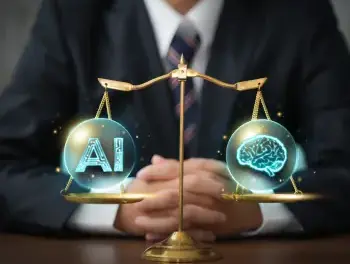



Antoni Garrell, president of HM Hospitales and honorary academic of the Royal European Academy of Doctors (RAED), reflects in the article “Is Artificial Intelligence an Enemy of Sustainability?”, published on 9 July in Crónica Global, a channel of the digital newspaper El Español, on the limits that AI currently faces as a result of its heavy energy dependence. The expert has been analysing this disruptive technology from different perspectives in his latest publications and, in his induction speech to the Royal Corporation, “The Second Digital Revolution: Are the Digital Economy and Artificial Intelligence Leading Us into a New Era of Humanity?”, delivered last November, he addressed the profound changes it is generating, highlighting both the opportunities and the challenges involved.
For Garrell, artificial intelligence has become the symbol of progress in the 21st century, but its rise collides head-on with the planet’s physical limits, echoing the conclusions of the forum “Science, Business and Society Facing the Challenges of the Sustainable Transition”, which the Royal Corporation held last June under his own leadership. “The time has come to become aware of the unsustainability of AI along its current development path and to accept that artificial intelligence systems must be evaluated not only by the quality of their answers or their accuracy, but also by the energy, water and material resources they need to operate,” he says. In fact, every conversation with a model, every image generated and every training process requires computing capacity housed in increasingly large data centres.
The expert cites in his article data from the International Energy Agency, which show that the data centres used by AI consumed around 415 terawatt-hours in 2024: 1.5% of global electricity, equivalent to the combined consumption of Spain and Portugal. Cooling uses, according to various estimates, around one trillion litres of water a year, the volume required by 1.8 million people. The figure is especially significant in regions with recurrent droughts. Added to this is the mining of critical materials, whose extraction destroys ecosystems, pollutes aquifers and generates toxic waste.
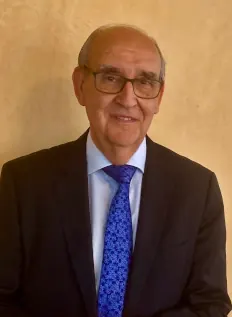
Dr. Antoni Garrell
Garrell does not deny AI’s potential to optimise industrial processes, cut emissions or accelerate the ecological transition. The problem, he argues, is the prevailing growth model: increasingly large and powerful models, often deployed with more computing power than each task requires. Along this development path, artificial intelligence ceases to be an ally of sustainability and becomes one of its greatest challenges. The Green AI movement proposes precisely the opposite: evaluating systems not only by their accuracy, but by the energy, water and materials they consume. The paradigm shift he advocates requires moving away from pursuing scale alone and instead backing more efficient, transparent and responsible systems. True progress, he says, will not consist of an intelligence capable of doing more, but of one capable of achieving the same results with far fewer resources and while respecting environmental limits. The scientific community, he acknowledges, is aware of the problem and is working in that direction. The political question is another matter, he concludes, since priorities and interests still need to be regulated.
Garrell is an industrial engineer from the Polytechnic University of Catalonia, holds a master’s degree in Management and Administration and completed doctoral studies in Decision Support Systems. A specialist in innovation and the knowledge economy, he has developed an extensive professional career in both computer technology and organisational and strategic management and has held various executive positions in companies such as Arthur Andersen, La Caixa, the La Salle University and Technology Foundation and the Textile Design Foundation. Since 2021 he has chaired HM Hospitales. He has served on several company boards of directors and advisory boards and has held institutional positions, including president of the Circle for Knowledge and of the Executive Council of the Ramon Llull University Foundation. In the academic sphere he has taught and lectured at international universities and is the author of more than 850 articles on technical, economic and opinion topics, as well as the author or co-author of around ten monographs on digital technology, multimedia and industry. He was also founder of the technology magazine “INPUT”. His two latest books are “Industry 4.0 in the Digital Society” (2019) and “Smart and Sustainable Products and Services” (2021).