

Dr. August Corominas
August Corominas, Professor of Human Physiology at the University of Murcia and the Autonomous University of Barcelona, and Emeritus Member of the Royal European Academy of Doctors (READ), shares with the academic community the article “The Corominas family: more than two centuries of medical vocation”, in which he reviews the history of his own family saga. The academic has recently shared in this publication the articles “The secret of longevity in the ‘blue zones’”, “Beware of falls, by night and by day”, “The good life and the virtuous life”, “Biological life and quantum life”, “Smart hospitals”, “Cosmonautics and space medicine”, “Abuse and its management”, “Quantum biology”, “The black man of Banyoles (Bushman or Hottentot)”, “Polydactyly”, “Adolescence, a critical age in human life”, “Mermaids, the illusion of sailors and seafarers”, “Biblical diet: pure and impure foods”, “Rare diseases”, “The starving people of Gaza”, “Sexology in adolescence and somatopause — andropause and menopause”, “Cyberattacks, cyberwarfare and cybersecurity”, “Refugees”, “Human evil”, “The geostrategy of rare earths”, Conscience and omission: the misery of the ruler, “Plasticosis”, “Humanisation”, “The Island of Doctor Moreau and the ‘therians’” and “Astatine, a new element of technological importance”. He is also the author of one of the chapters of the book “Vitality in ageing. If you wish, you can live more years in good health”, published by the Royal Academy with the support of Vichy Catalán.
The Corominas family: more than two centuries of medical vocation
In the history of Catalan medicine, there are some families that have maintained the same vocation for generations: service to the sick and to the community. Among them, the Corominas family stands out, linked for more than two hundred years to the practice of medicine, especially in the Pla de l’Estany region and in the city of Banyoles.
The documented origin of this medical tradition dates back to the 19th century with Antoni Corominas Biern, born in 1817 in Besalú. After studying at the University of Barcelona, he obtained his medical degree in 1845. He practised in various thermal and health centres, such as the spas of Banyoles, Argentona and Caldes de Malavella, places where 19th-century medicine combined traditional clinical practice with hydrothermal therapies. With him began what could be described as an authentic family Galenic lineage, a medical continuity transmitted from generation to generation.
His son, Abdó Corominas Sabater, born in 1845 in Banyoles, continued the family’s medical tradition, consolidating the Corominas family’s presence in the region’s healthcare. During the late 19th and early 20th centuries, the family maintained close relationships with local clinical practice and healthcare institutions in Catalonia.
In the following generation, Candi Corominas Illa appears, born in 1880 in Banyoles. A graduate in medicine in 1902 and awarded his doctorate in Madrid in 1903, he carried out important work as a municipal doctor and health inspector, taking part in the modernisation of public health at a time marked by the fight against infectious diseases and the improvement of urban hygiene.
A contemporary of this period was also Frederic Corominas Pedemonte, born in 1878, a paediatrician and doctor of medicine in 1901, who developed part of his career in Barcelona and came to hold responsibilities in the city’s healthcare institutions over time, embodying the classical ideal of medicine: to serve life and alleviate human suffering. His activity reflects the progressive specialisation of Catalan medicine during the 20th century.
Another outstanding figure was Josep Maria Corominas Planellas, a doctor in Banyoles and Serinyà, who combined his medical practice with intense scientific and cultural activity as a researcher into Catalan prehistory and director of the Banyoles Regional Archaeological Museum. His figure illustrates the close relationship between medicine, culture and humanism that characterised many doctors of his time.
Over more than two centuries, the Corominas family has lived and practised its profession in very diverse historical contexts: from 19th-century rural medicine to contemporary scientific medicine. Throughout this long journey, several generations have devoted their lives to caring for the sick, improving public health and advancing the cultural progress of their surroundings.
This continuity constitutes not only a family tradition but also an example of professional and social commitment. The history of the Corominas family shows how a medical vocation can be passed down as a moral and humanistic legacy.
Doctors of the Corominas family since 1800
-
Antoni Corominas Biern
He was born in 1817 in Besalú. He studied medicine at the University of Barcelona and completed his degree in 1845. He was a doctor and director of several medical spas: Banyoles, Argentona, Caldes de Malavella and Fuensanta de Gayangos. He marked the beginning of the family’s medical saga.
-
Abdó Corominas Sabater
He was born in 1845 in Banyoles. Son of Antoni Corominas Biern. He was also a doctor and continued the family tradition in Banyoles.
-
Candi Corominas Illa
He was born in 1880 in Banyoles. He graduated in medicine in 1902 and obtained his doctorate in Madrid in 1903. He was a municipal doctor and health inspector. He belonged to the second generation of Corominas doctors.
-
Federico Corominas Pedemonte
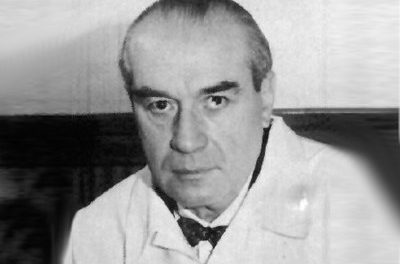
He was born in 1878 in Banyoles. He was a paediatrician and doctor of medicine in 1901. He was head of service at the Maternity Hospital of Barcelona and a member of the Royal Academy of Medicine of Barcelona.
-
Josep Maria Corominas Planellas
Doctor in Banyoles and Serinyà. He was also an archaeologist and director of the Banyoles Regional Archaeological Museum. He was a researcher into Catalan prehistory.
The current generation of the Corominas family
In recent decades, the family’s scientific and medical tradition has remained alive through various professionals working in clinical, university, and healthcare settings.
-
August Corominas
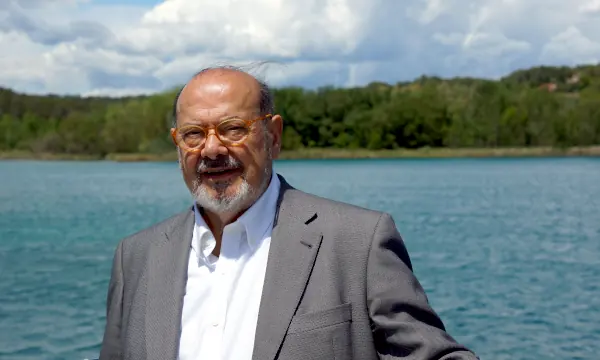
August Corominas, university professor of Physiology and Biochemistry, represents the continuity of scientific thought within the family. His academic activity has focused on training medical students and on instilling scientific rigour, maintaining the intellectual tradition inherited from previous generations. He is a Corresponding Member of the Royal Academy of Medicine of Catalonia.
-
August Corominas Macías
Dr August Corominas Macías is a vascular surgeon dedicated to the diagnosis and surgical treatment of diseases of the circulatory system. His work belongs to the highly specialised medicine that characterises contemporary surgery.
-
Héctor Corominas
Héctor Corominas is a specialist in rheumatology, a professor at the Autonomous University of Barcelona and head of service at Hospital de Sant Pau in Barcelona. His work combines clinical practice, university teaching and research into rheumatic diseases.
-
Begonya González
Begonya González is a specialist in digestive tract pathology, with particular expertise in modern diagnostic techniques such as small-bowel endoscopy and other diagnostic modalities for digestive disorders.
-
Bartra Corominas
A family medicine doctor, he represents the closest and most community-based dimension of the saga.