


Francisco González de Posada, Professor of Physical Foundations at the Polytechnic University of Madrid and honorary member of the Royal European Academy of Doctors (READ), considered that the truly decisive factor in the evolution of humanity is to be found not in recurring geopolitical crises, climate change or artificial intelligence, but in the transformation that human reproduction has undergone since the appearance of the pill and other contraceptive methods. He made this argument in the lecture “The Current Geopolitical (Dis)Order and Its Hidden Variables for Understanding the Future,” which he delivered during the 10th International Academic Meeting held by the Royal Corporation between 15 and 20 March in various German cities under the general title “The Rhine as a Current of Knowledge: Cross-Border Dialogues.”
For the expert, the real paradigm shift experienced by humanity is sociobiological in nature: the liberation of women from reproduction, initiated in 1959 with the approval of the pill. This phenomenon, which he informally termed the “pill shock,” represents for the academic a new historical age and amounts to a kind of evolutionary Achilles’ heel. Not only because of its demographic implications, but also because, in González de Posada’s view, the separation between sexuality and procreation has structurally altered the social foundations of society. Among its main consequences, the speaker pointed to the expansion of sexual freedom, demographic decline in the West, the transformation of the family model, the loss of cultural identities and the rise of feminism. He also warned of potential political effects, including tensions in democracies and changes driven by immigration.
“The ‘pill shock’ was the sign that humanity had entered a new age: the one corresponding to the liberation of women from what had until then been the biological servitude consequent upon sexual activity: conception, pregnancy, childbirth and motherhood. Liberal Europe, which has, in principle, embraced feminism in its entirety and radicalism, absolute freedom in sexual relations together with the right not to conceive and the right to abortion, is open to immigration, even though this may simultaneously imply a process of loss of racial, cultural and religious identity, and has come under the sway of the ‘pill shock,’” he stated.

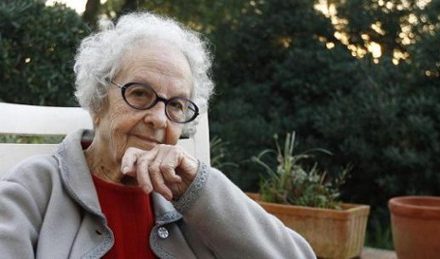
Dr. Francisco González de Posada
The honorary academician concluded that this change, seldom taken into account in traditional geopolitical analyses, constitutes a key variable for understanding the future, since it directly affects the biological and social basis of humanity. “Humanity has been struck at its Achilles’ heel, and the capacity for natural reproduction has been superseded by the constructed concepts of freedom, dignity, responsibility and individual right,” the speaker concluded.
González de Posada is an engineer and holds a doctorate in Civil Engineering from the Polytechnic University of Madrid, a degree in Philosophy and Letters from the Pontifical University of Salamanca, and a degree in Physical Sciences from the Complutense University of Madrid. He was awarded the Medal of Honour for the Promotion of Invention and also served as Rector of the University of Cantabria. He is a full member of the Royal Academy of Doctors of Spain and a member of the World Academy of Art and Science, a corresponding member of the Royal Academy of Fine Arts of Cádiz, the Royal Academy of Fine Arts of San Fernando and the Royal Academy of Sciences, Fine Arts and Humanities of Écija, and an honorary member of the Academy of Medical Sciences of Cantabria, the Royal Academy of Valencian Culture, the Royal Academy of Medicine and Surgery of Cádiz and the Royal Academy of Medicine of the Canary Islands. He is also a member and President of the Academy of Sciences, Engineering and Humanities of Lanzarote.