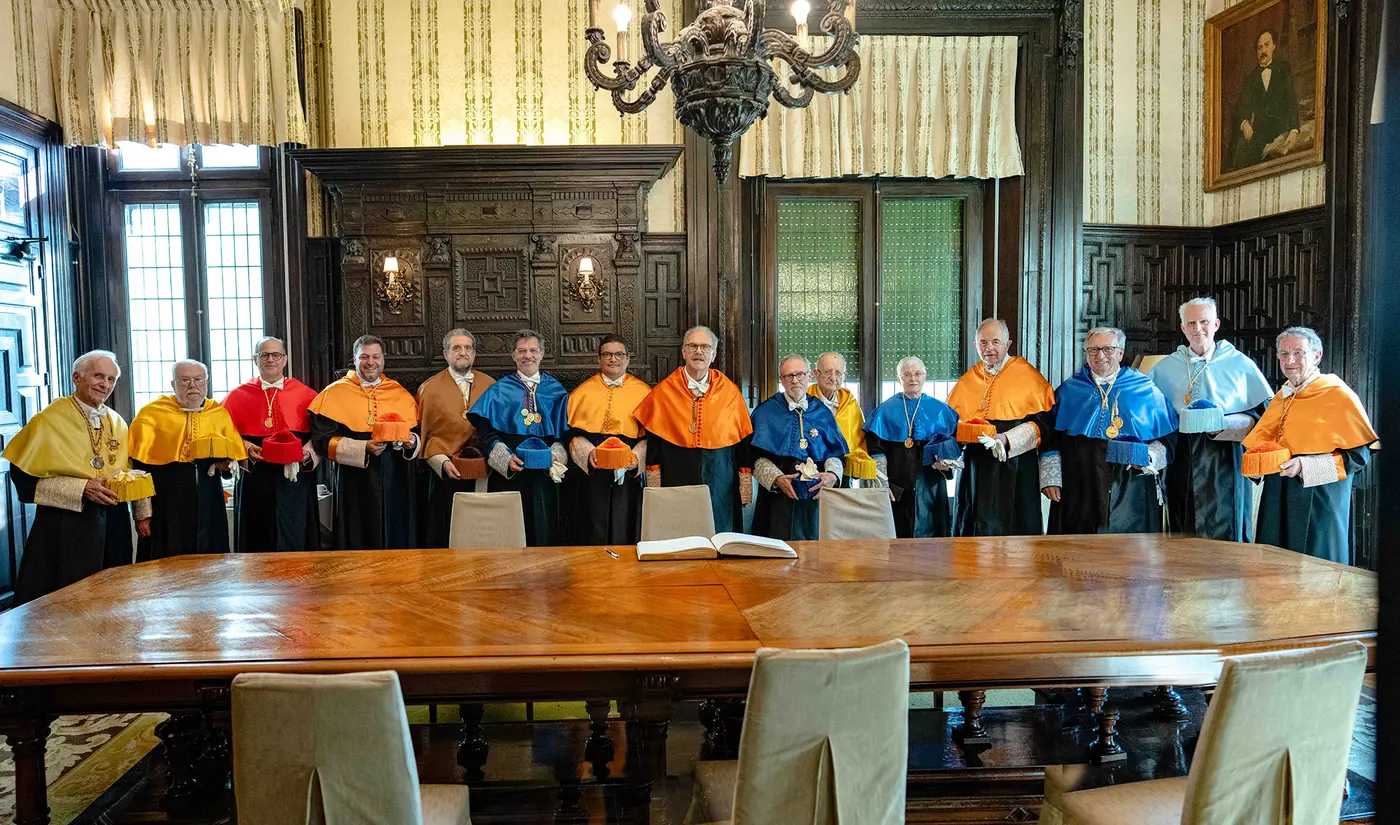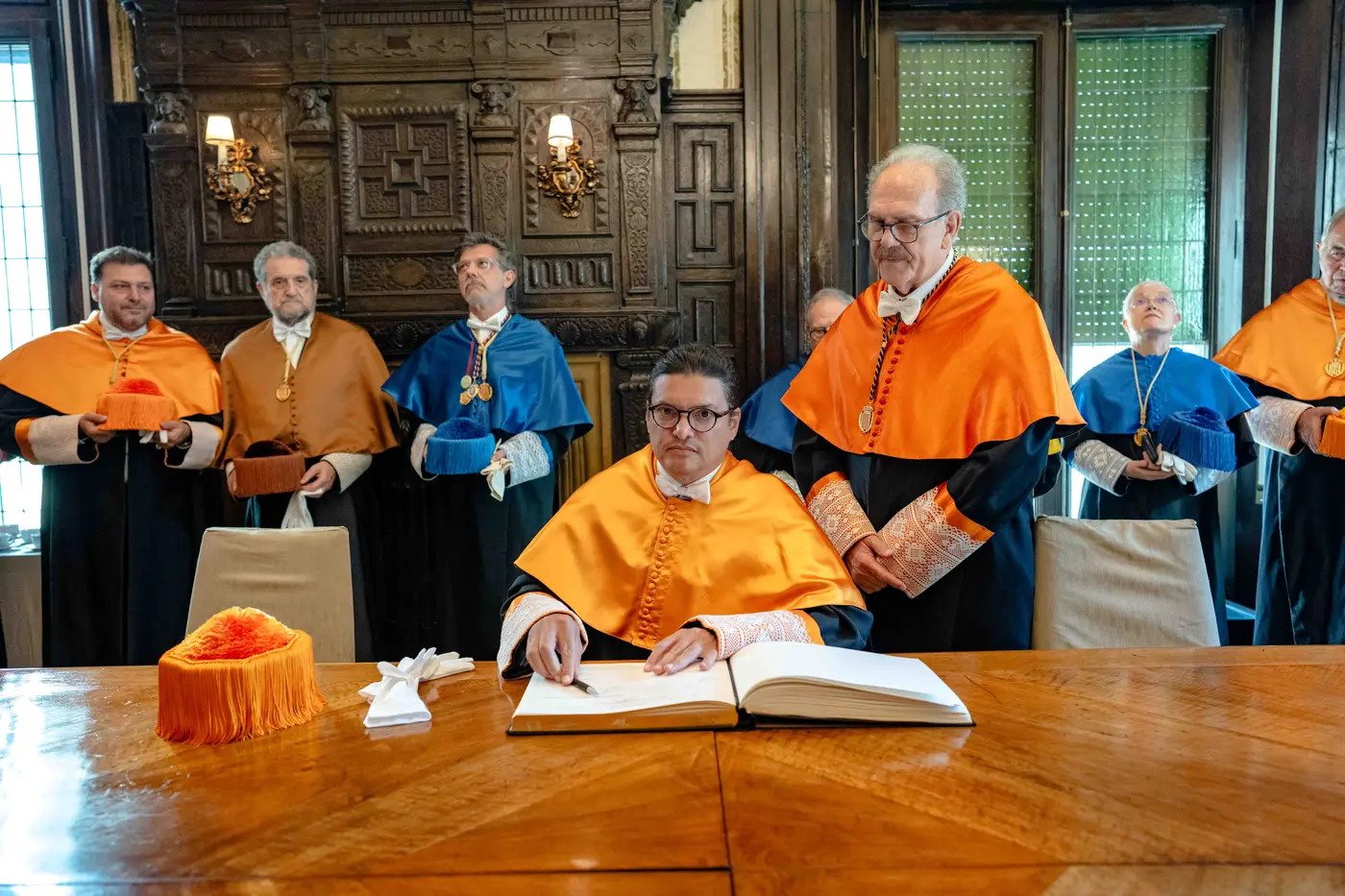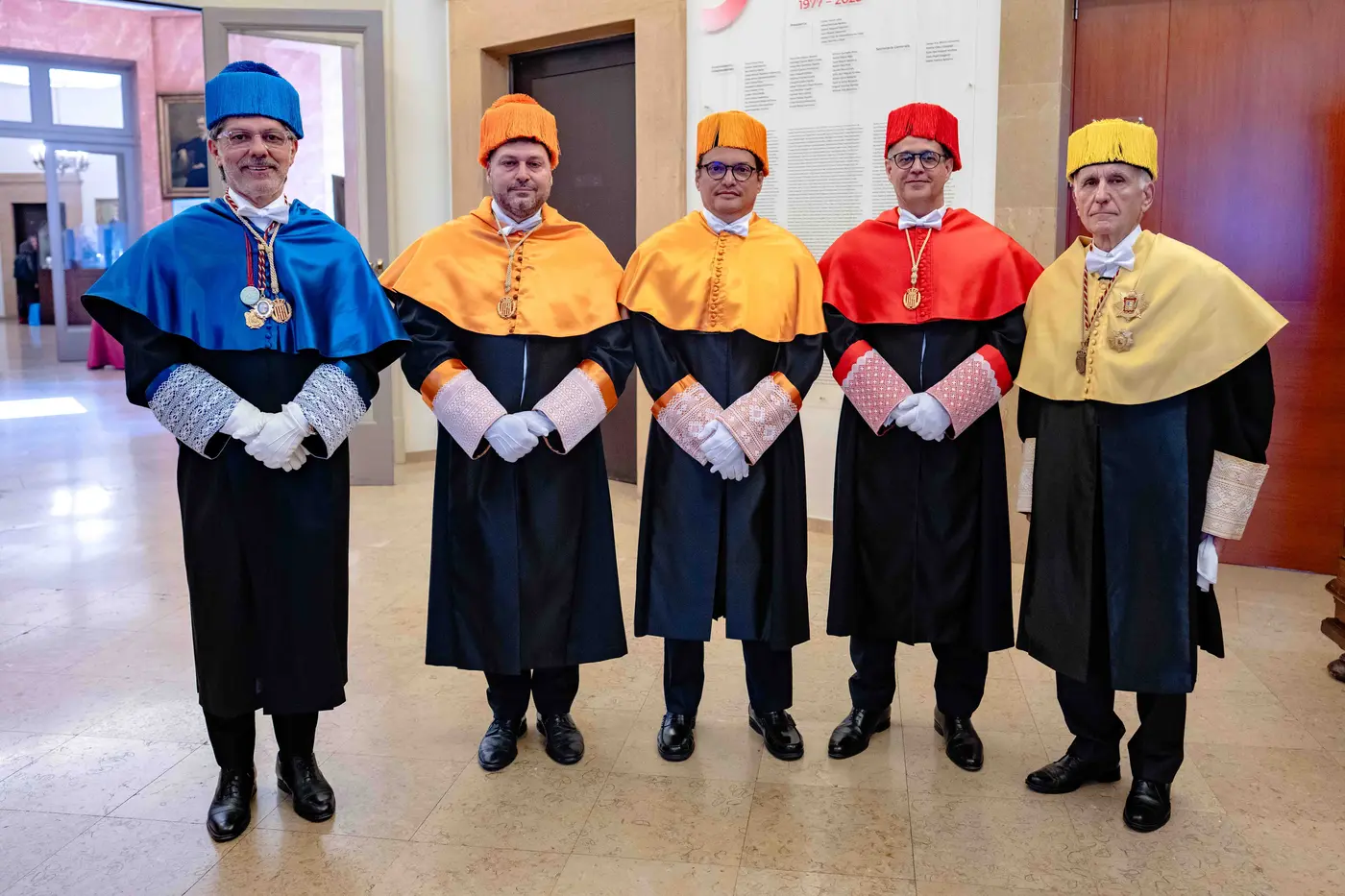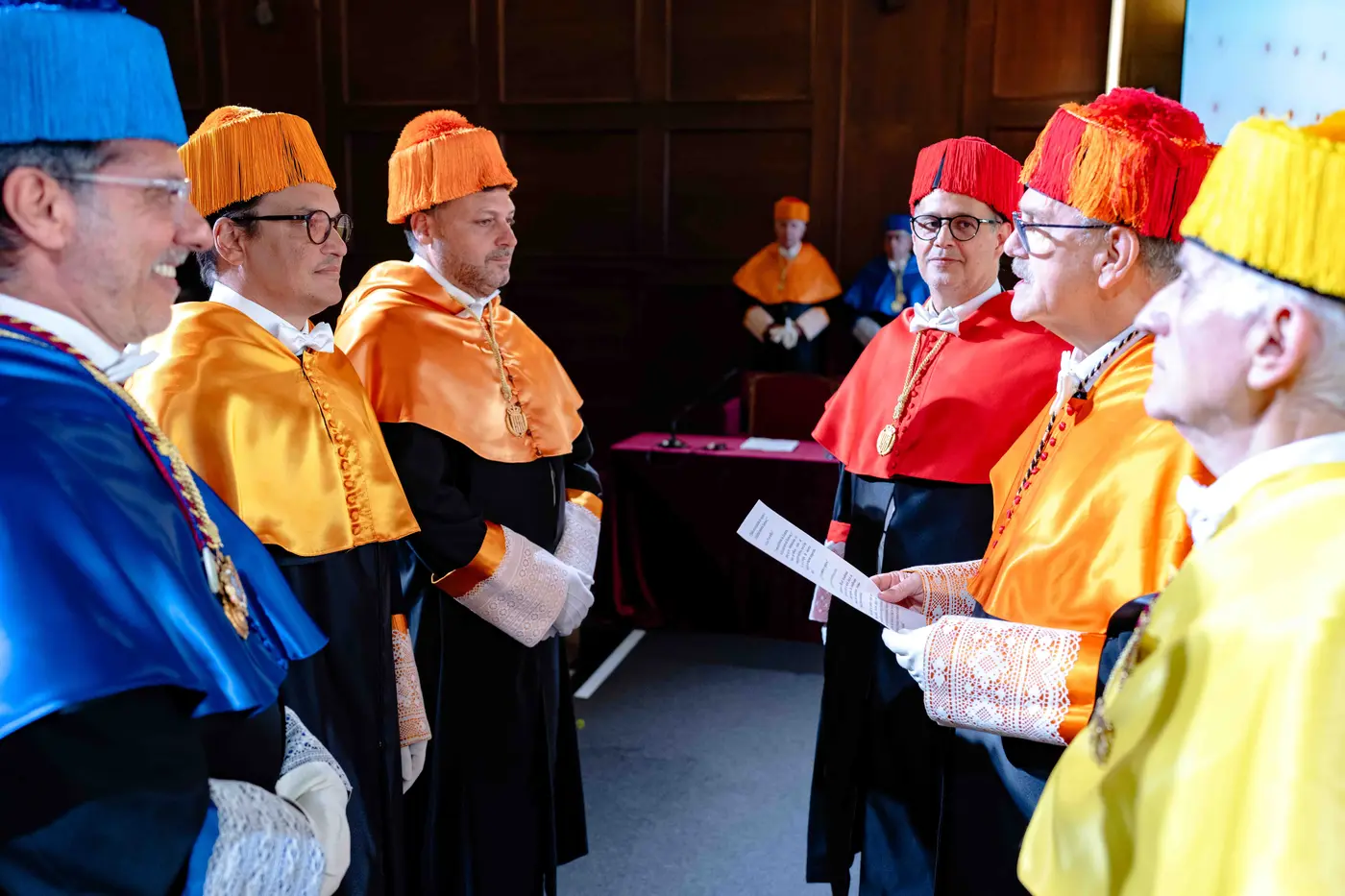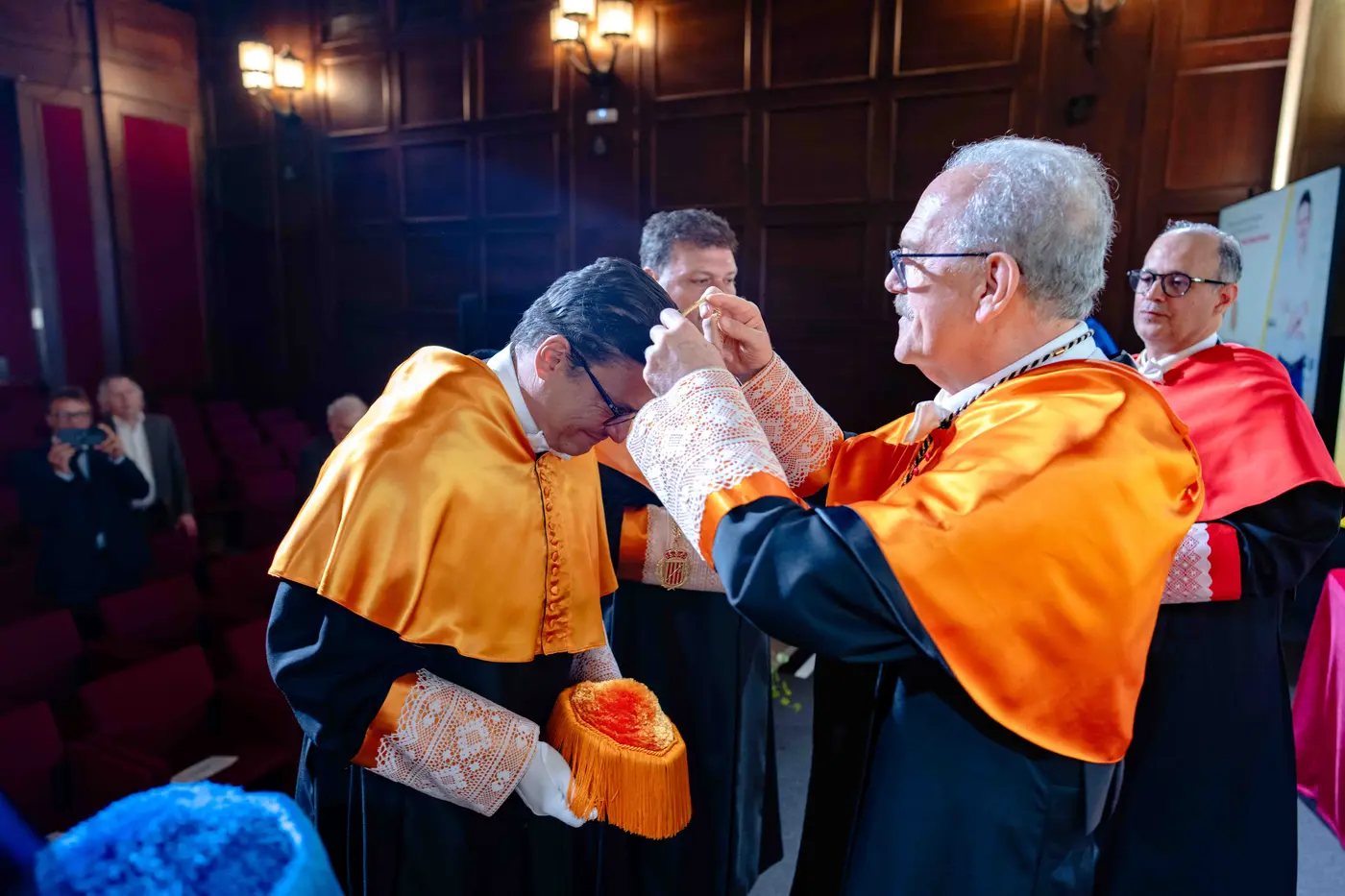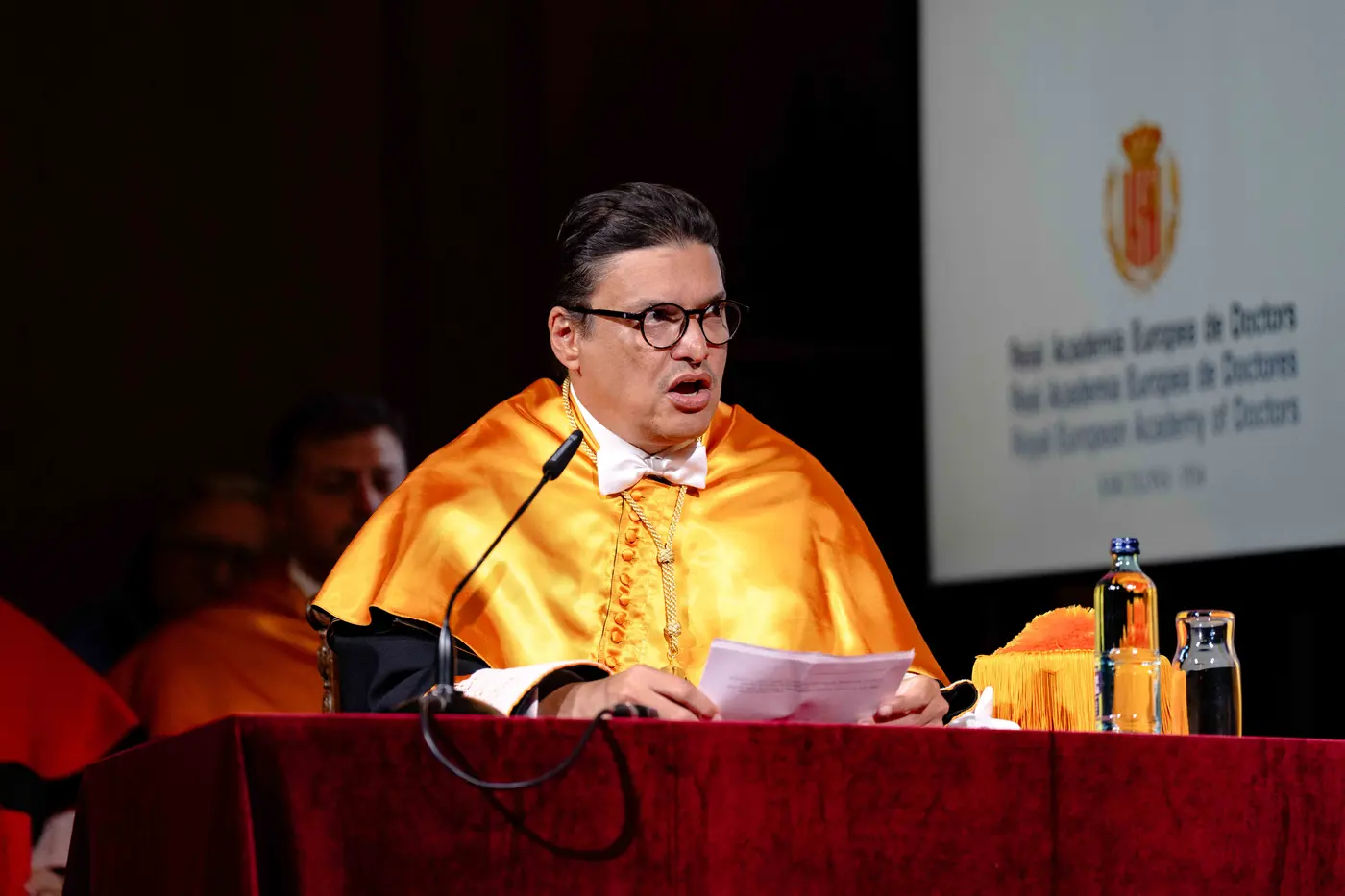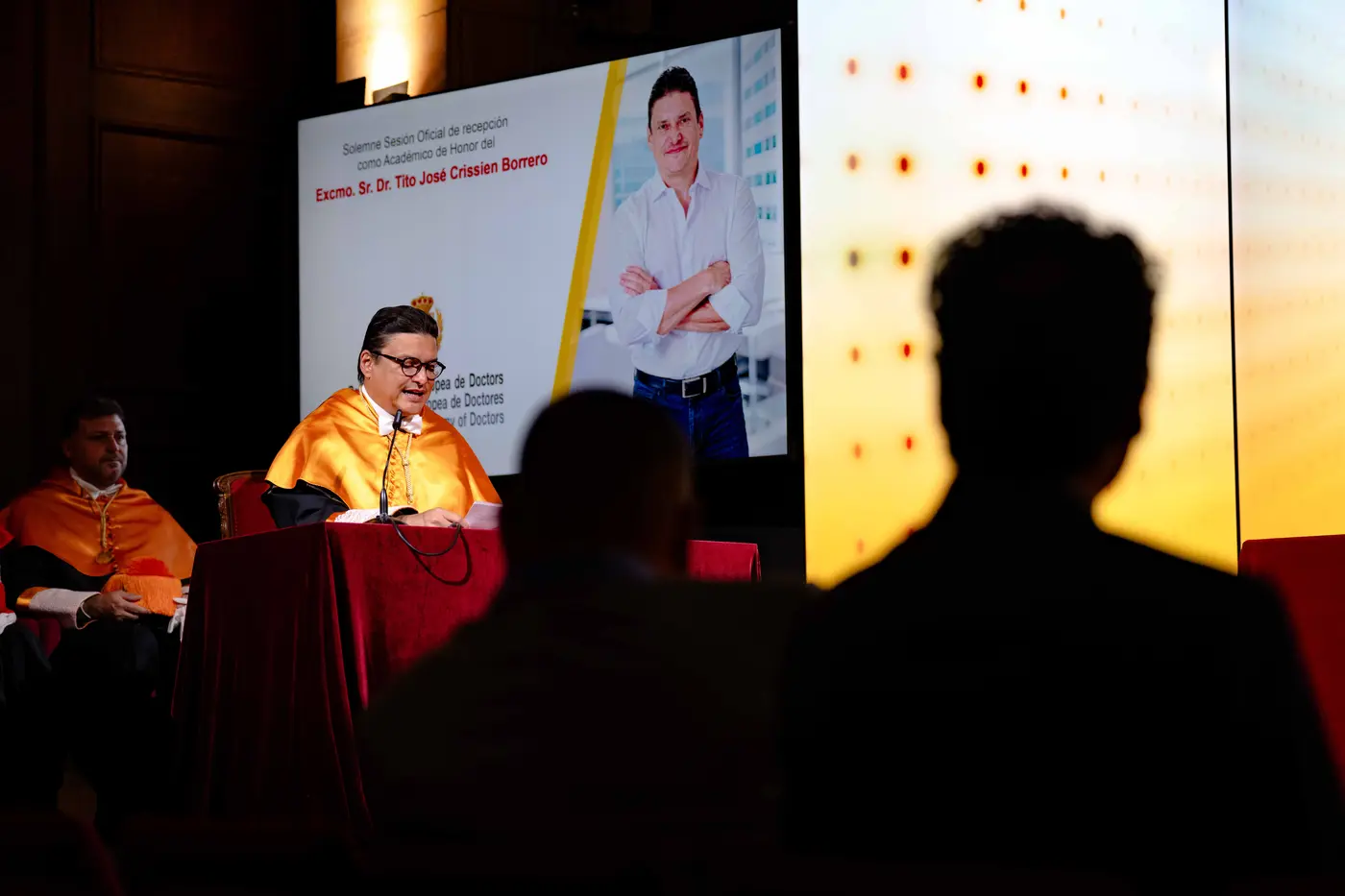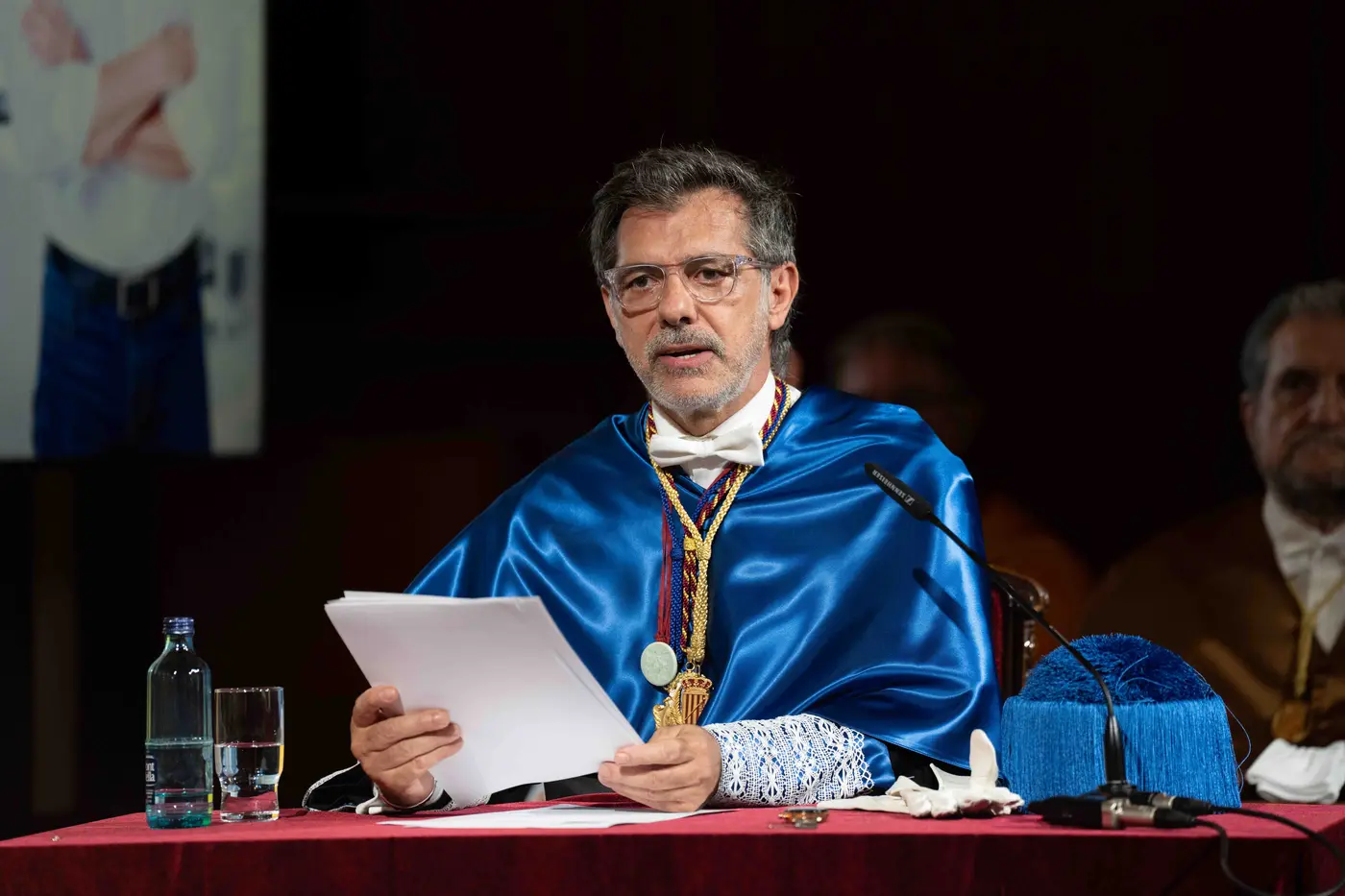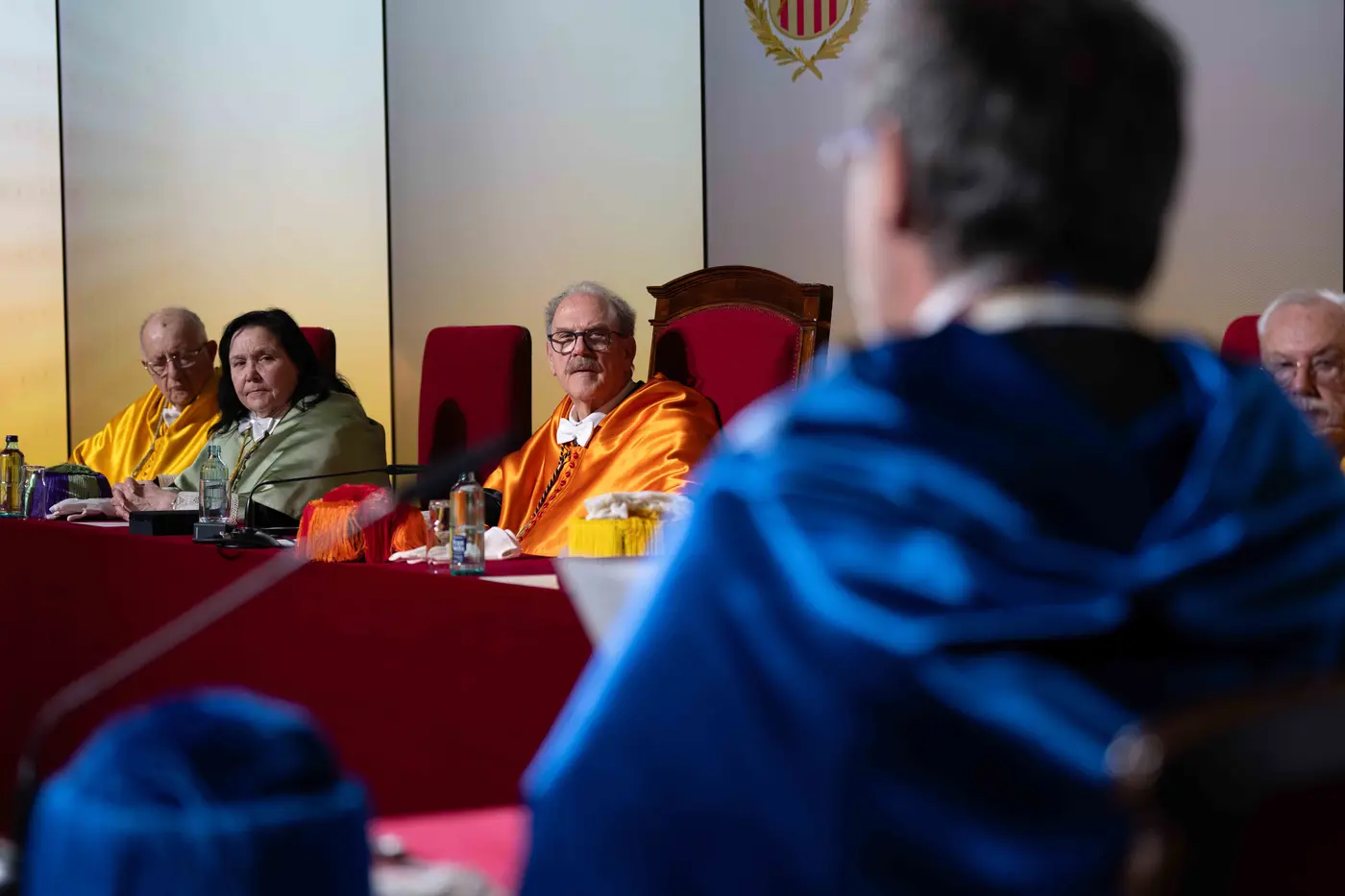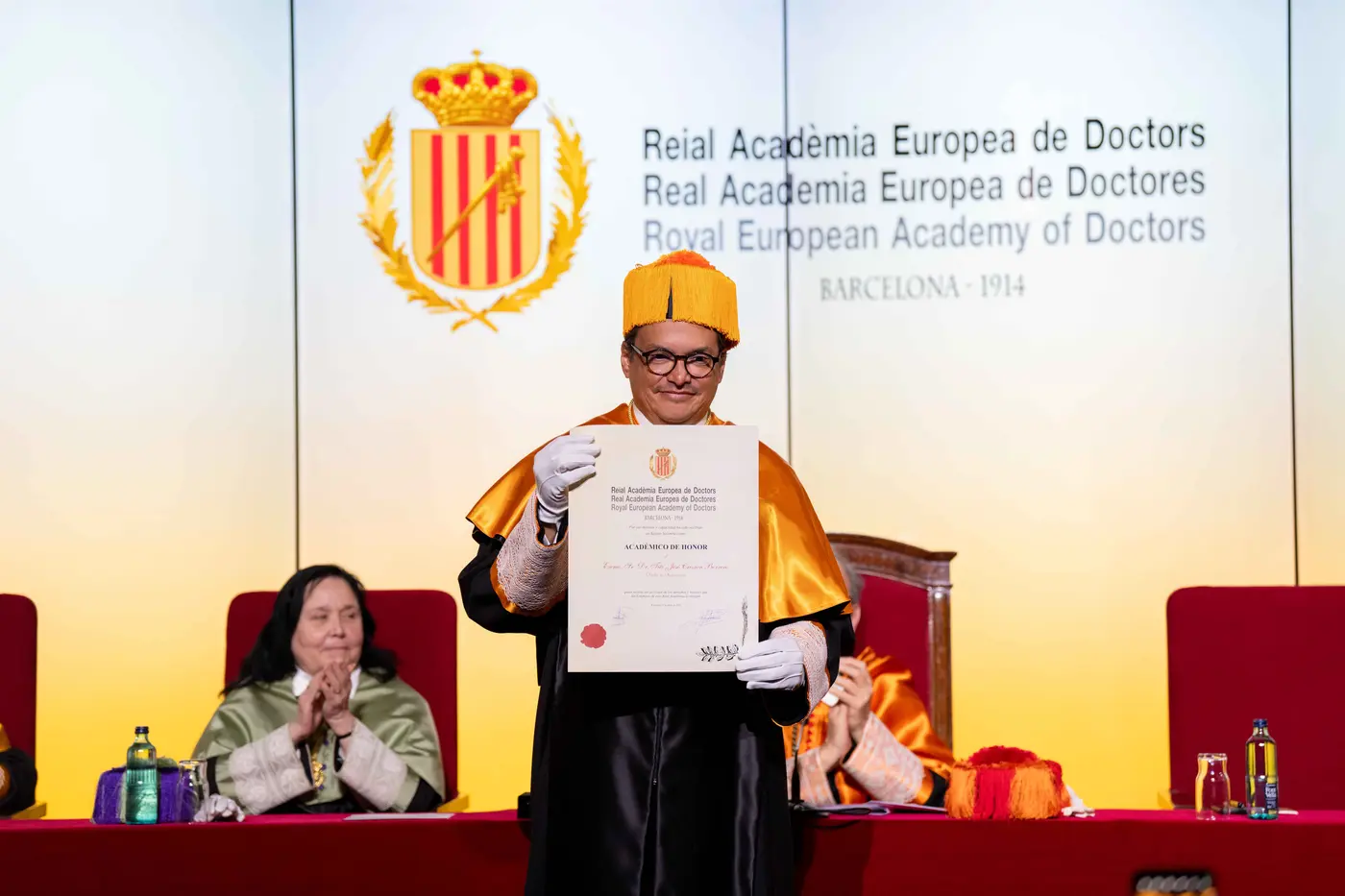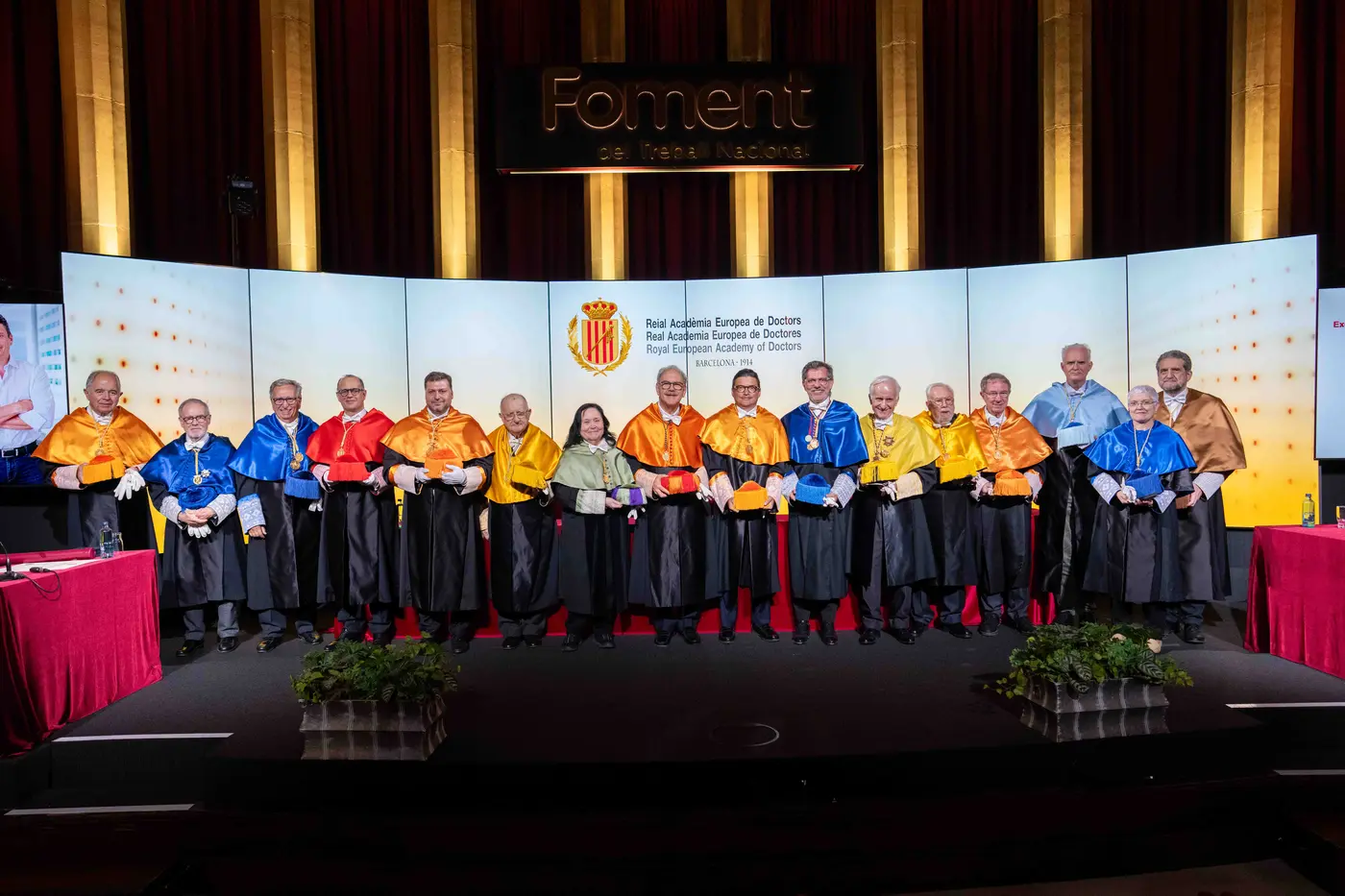



Tito José Crissien, former Minister of Science, Technology and Innovation of Colombia and PhD in Innovation, was admitted as an Honorary Member of the Royal European Academy of Doctors (READ) in a solemn ceremony held last Wednesday, 6 May, at Foment del Treball, the Academy’s headquarters. The new member read his admission speech, “From the transmission of knowledge to the creation of value: the emergence of the Third Generation University”, in which he addressed the challenges facing universities in Latin America and proposed a new model he called the Third Generation University, which places the creation of economic value as its main institutional mission. The response on behalf of the Royal Academy was delivered by the Numerary Member and Vice-President of the Governing Board Rafael Urrialde. The session was streamed on the READ’s YouTube channel, where it can be viewed.
Dr Tito José Crissien
In a concise diagnosis of higher education in the region, the new member began with the premise that, over the last two decades, university enrolment in the region has more than doubled, rising from 21% to 52% and approaching levels seen in developed economies. These figures, however, have failed to transform social reality as they have in other regions that once had indicators similar to those of Latin America, since gaps in skilled unemployment persist, graduate salary levels have been declining and the number of young people who neither study nor work remains high. In response to this reality, Crissien presented his disruptive proposal, stating that Latin America no longer needs more universities that produce knowledge, but institutions that create tangible economic and social value.
For the expert, who has extensive knowledge of the region’s academic world, the dominant university models — the Humboldtian university focused on research, Burton Clark’s entrepreneurial university and Wissema’s Third Generation University, oriented towards the economic valorisation of knowledge — remain insufficient to respond to this social reality, since they prioritise scientific production as the main driver of development, leaving the training of productive talent in second place. In contrast, he proposes this third-generation university model, committed to training highly qualified talent capable of entering the labour market, addressing real problems, and generating economic and social value.
By way of example, the new Honorary Member presented the model of Iditek University, which, under the philosophy “studying while working, working while learning”, offers a curricular model focused on addressing concrete, real problems, co-financing with the productive sector, and sustainability linked to its results. “Latin America does not need more universities. It needs different universities. The quantitative expansion of enrolment, without qualitative transformation of the institutional model, is producing a generation of young people with degrees but without career paths; with knowledge but without the capacity to create value; with expectations but without viable futures; with credentials but without the skills to transform their economic and social realities,” the expert concluded.
Crissien is a senior researcher in the Colombian Science and Technology System, a member of the Board of Directors of the Colombian Association of Universities and of the Departmental Science Council of Atlántico. He has been recognised with the Tayrona Order, in the rank of Cruz José Benito Vives de Andreis, for his contributions to the Magdalena region in educational matters and projects, and with the Barrancas de San Nicolás Medal, awarded by the District Council of Barranquilla. He is the author of numerous books and articles on organisational leadership, education, sustainability, entrepreneurship, knowledge appropriation and generation, technological development and innovation, and human resources management.
Admission speech “From the transmission of knowledge to the creation of value: the emergence of the Third Generation University”