

Ana María Díaz
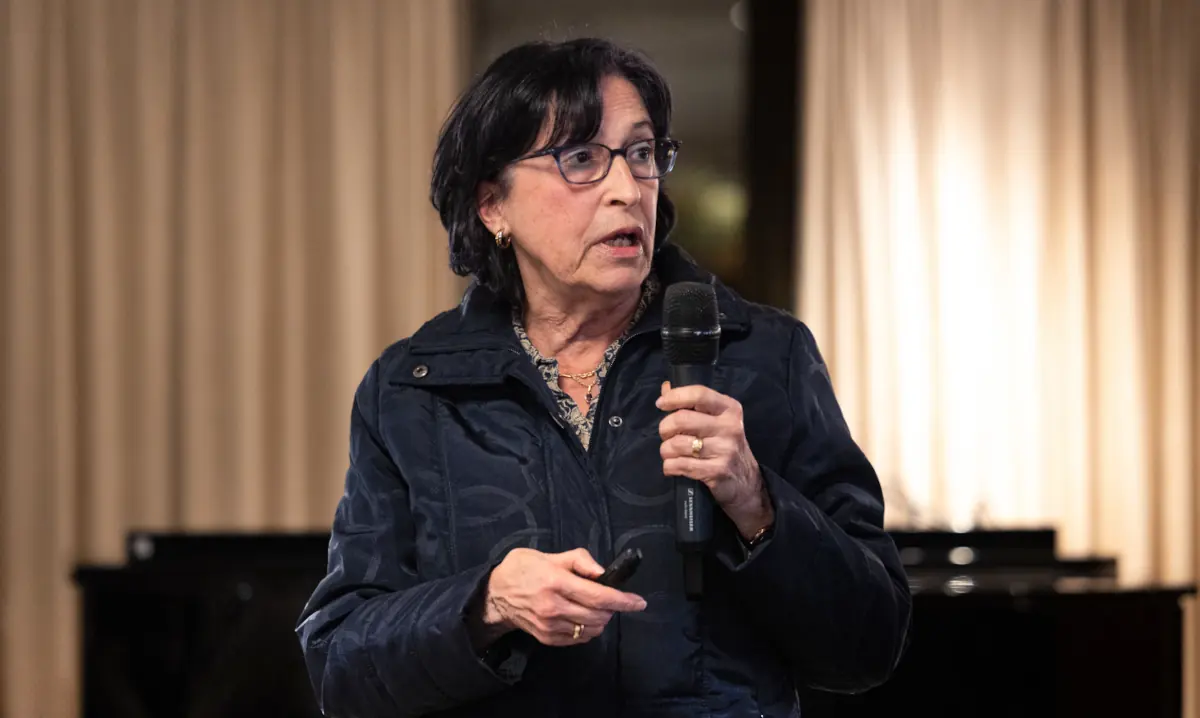
Ana María Díaz Pérez, full member of the Royal Academy of Medicine of the Canary Islands, corresponding member of the Royal Canarian Academy of Fine Arts of San Miguel Arcángel and member of the Institute of Canarian Studies, addressed the impact of artificial intelligence on artistic creation from an interdisciplinary perspective in the lecture “AI in Creative Thought. Benefits and Drawbacks,” which she presented during the 10th International Academic Meeting held by the Royal Corporation between 15 and 20 March in various German cities under the general title “The Rhine as a Current of Knowledge: Cross-Border Dialogues.” For the expert, although AI is a useful tool, it cannot be equated with human creativity.
In her presentation, Díaz Pérez began with an analysis of brain structure and organisation in accordance with the views of the renowned Canarian neurologist Miguel Ángel Hernández Pérez, who has researched the creative process in brain regions and concluded that, although it has long been claimed that creativity resides in the right hemisphere, recent studies conclude that it is manifested through the active interrelation of three main creative neural networks spanning the whole brain, since different areas connect and disconnect during the creative process. This relationship makes it possible to generate, assess, and develop ideas, especially in states of mental calm.
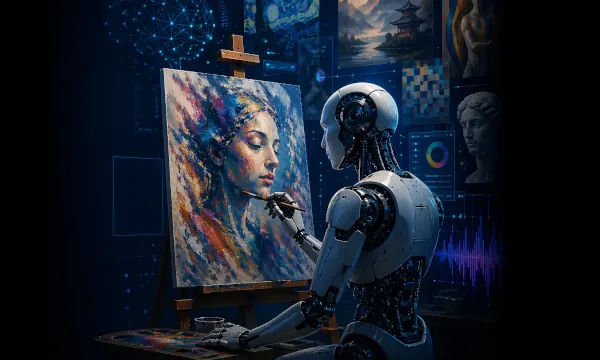 In light of this process, the expert pointed out that artificial intelligence has a far simpler approach to the creative process, merely replicating previous models, although it can be very useful both for the ideas it generates and for its capacity and speed of development. She nevertheless warned of its shortcomings, at least in current generative AI tools. “Artificial intelligence produces results that appear original by analysing countless examples on the basis of patterns provided by humans; however, AI has no emotions, no sensations and no message it wishes to convey, since what it creates it does through an instruction, not because, as happens with the artist, it feels the need to express itself, which is what is known as a lack of Intention,” she stated.
In warning of the risk of a lack of originality and homogenisation in AI, the speaker presented a curious experiment: commissioning the same illustration from a generative artificial intelligence tool and from the renowned illustrator and full member of the READ, Paula Plaza, who was also present at the International Event. The result, both in its execution and in its intentionality, was clearly in favour of the human creation. “Artificial intelligence is not really intelligence, regardless of how much it continues to be refined, nor is it artificial, since it is a human production that works, in this case, with the artist’s creative thought, even though humanity continues to insist on building a thinking and superintelligent robot,” Díaz Pérez concluded.