


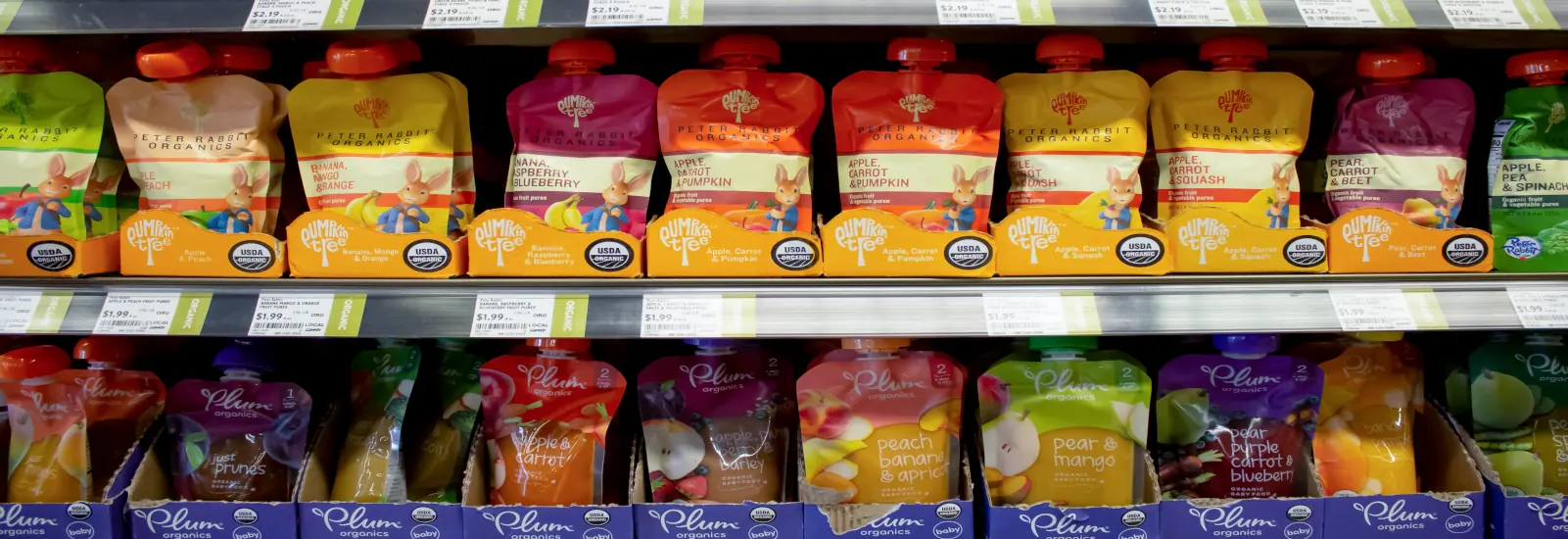
Rafael Urrialde, lecturer in the Department of Genetics, Physiology and Microbiology at the Complutense University of Madrid and in the Department of Pharmaceutical and Health Sciences at CEU San Pablo University, President of the Scientific Committee of the Spanish Society of Sports Medicine, Secretary of the Spanish Nutrition Foundation, honorary member of the Spanish Academy of Nutrition and Food Sciences, and full member and Vice-President of the Royal European Academy of Doctors (READ), reflects in the information channels of Science Media Centre Spain, a leading independent international science communication office, on a study recently published in the scientific journal Archives of Disease in Childhood, which argues that baby food pouches with spouts resemble sugary drinks or smoothies more than nutritious foods.
After analysing around 300 infant food products marketed in the United Kingdom and intended to complement the diet from six months of age, the report concludes that most of these products tend to contain more sugar, have a lower nutritional density than breast milk or formula, and have a texture that is too liquid, thereby limiting the development of chewing skills. The authors argue that regulation and labelling should distinguish more clearly between food and drink. Drawing on his latest research into food safety and labelling, Urrialde considers the study to be of interest, although he believes that its geographical scope, limited to the United Kingdom, restricts its validity.

Dr Rafael Urrialde
The expert recalls that the European Union already has specific regulations governing these products, including recommended ages for their introduction (+4, +6, +8 and +12 months) depending on composition and texture, and requiring products intended for children under 12 months to have a very fine texture in order to reduce the risk of choking. The sugars they contain come from fruit, cereals or dairy products; once blended, they are considered free sugars, just as when they are prepared at home. Comparing these sugars with the lactose in milk, he adds, is not appropriate because neither digestibility nor composition is equivalent. In his conclusion, Urrialde maintains that the study should be interpreted only within the British context. In practice, these products should be used as a complement to breast milk or formula, and the introduction of complementary feeding from four months onwards should be gradual and supervised by a paediatrician, with particular attention paid to texture.
A recognised expert in food regulation, Urrialde is the author and co-author of scientific publications related to nutrition education. He was Head of Health and Food Safety at Puleva Food, Director of the Health and Food Division at the Spanish Consumers’ Union, Technical Coordinator of the magazine Ciudadano, Director of Health and Nutrition at Coca-Cola Iberia, an analysis technician at the Institute of Refrigeration of the Spanish National Research Council, and a collaborator with the Chair of Plant Physiology at the Faculty of Biological Sciences of the Complutense University of Madrid.