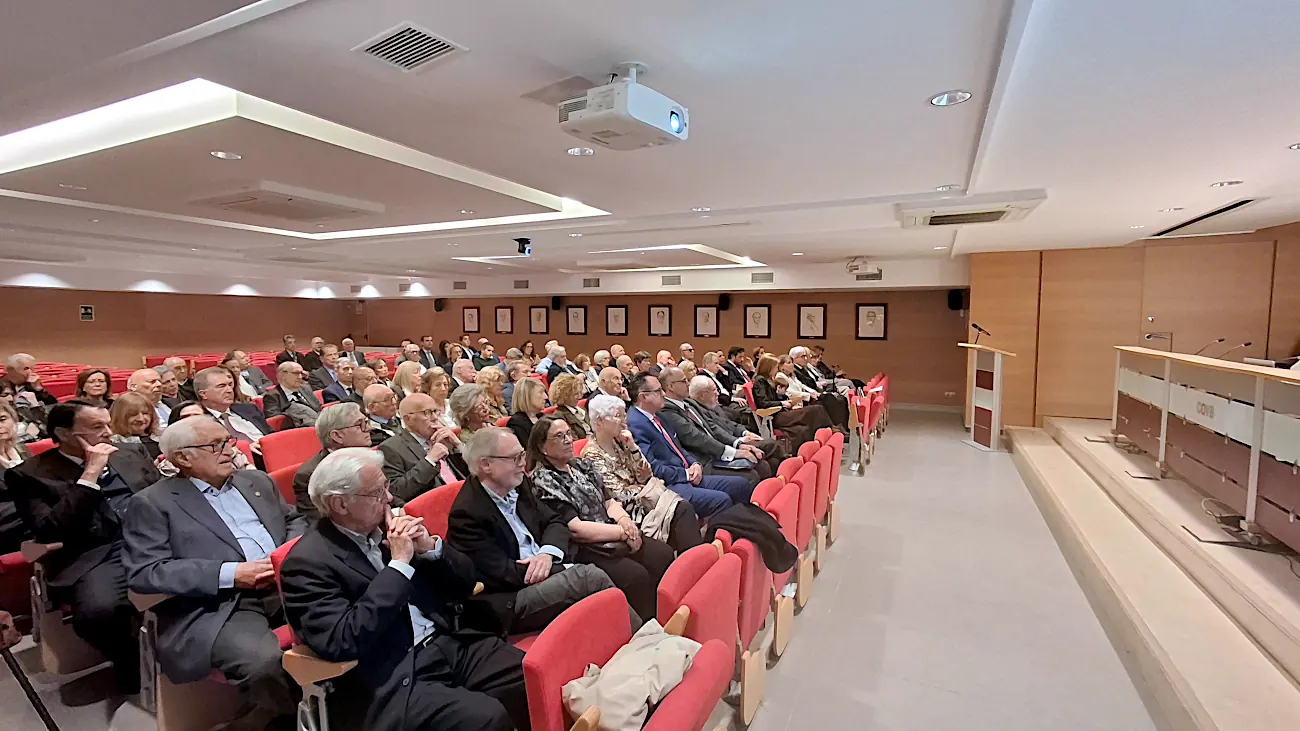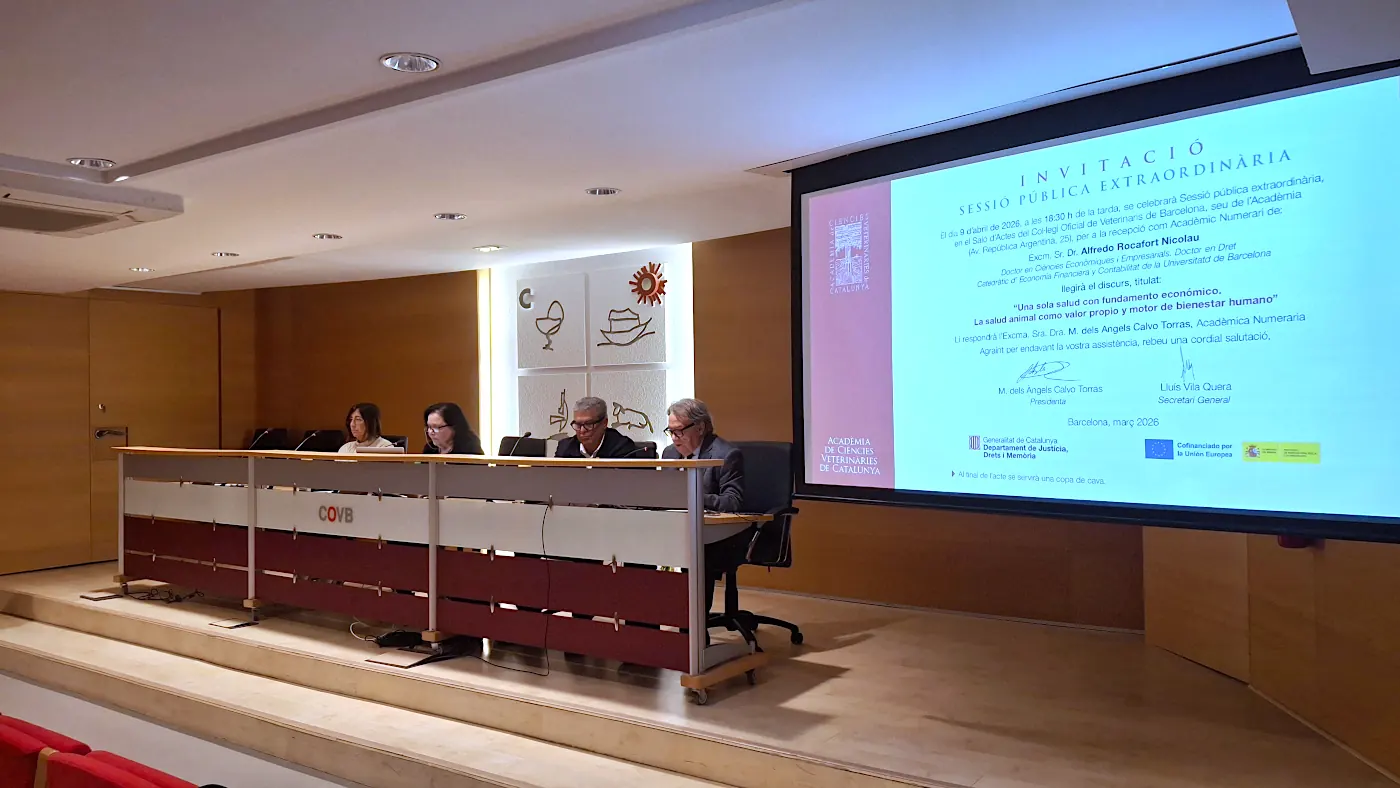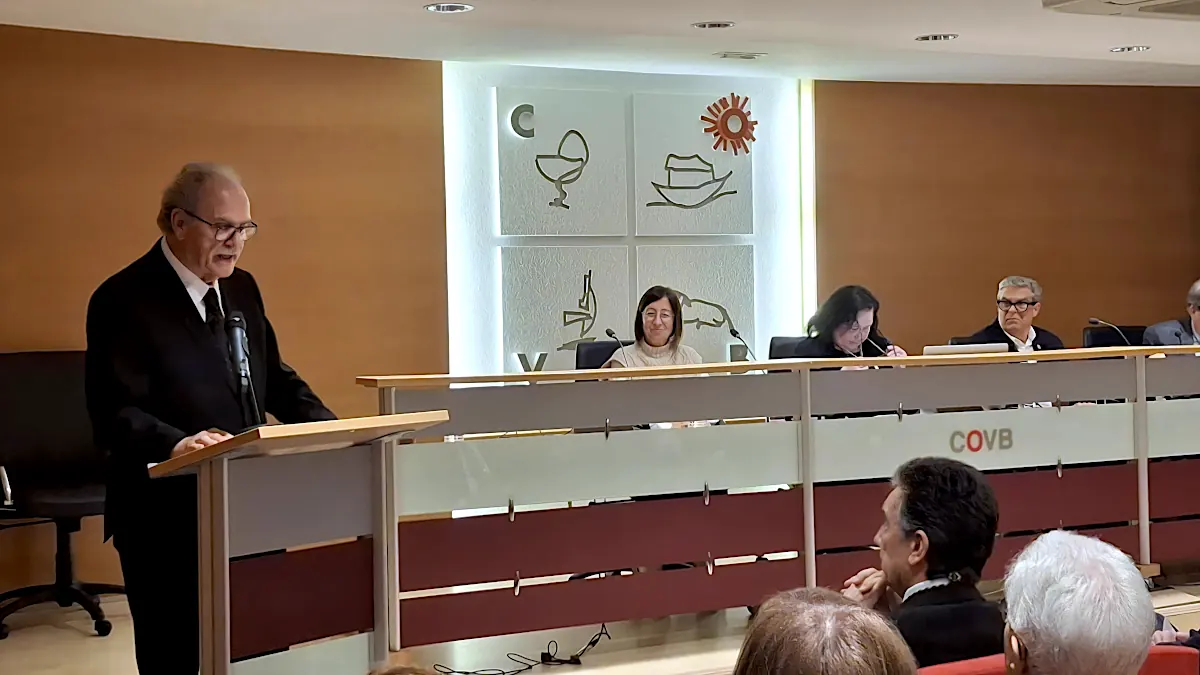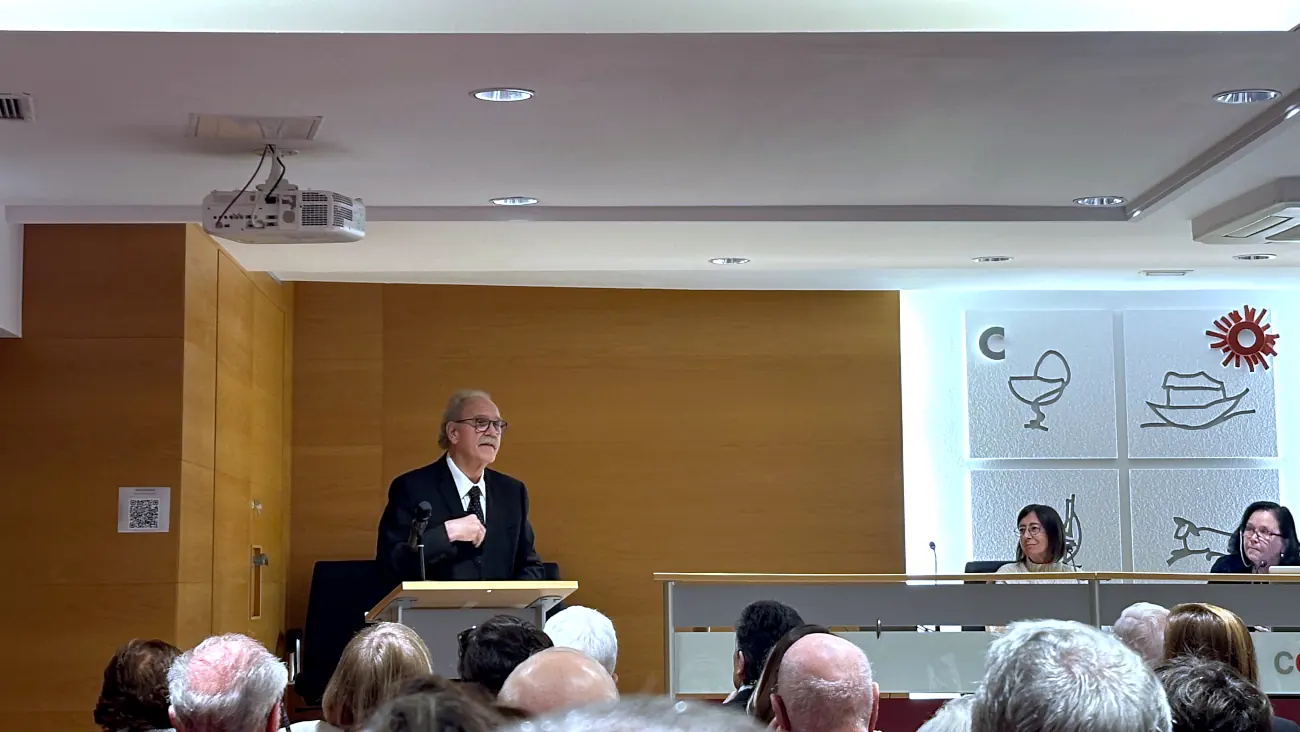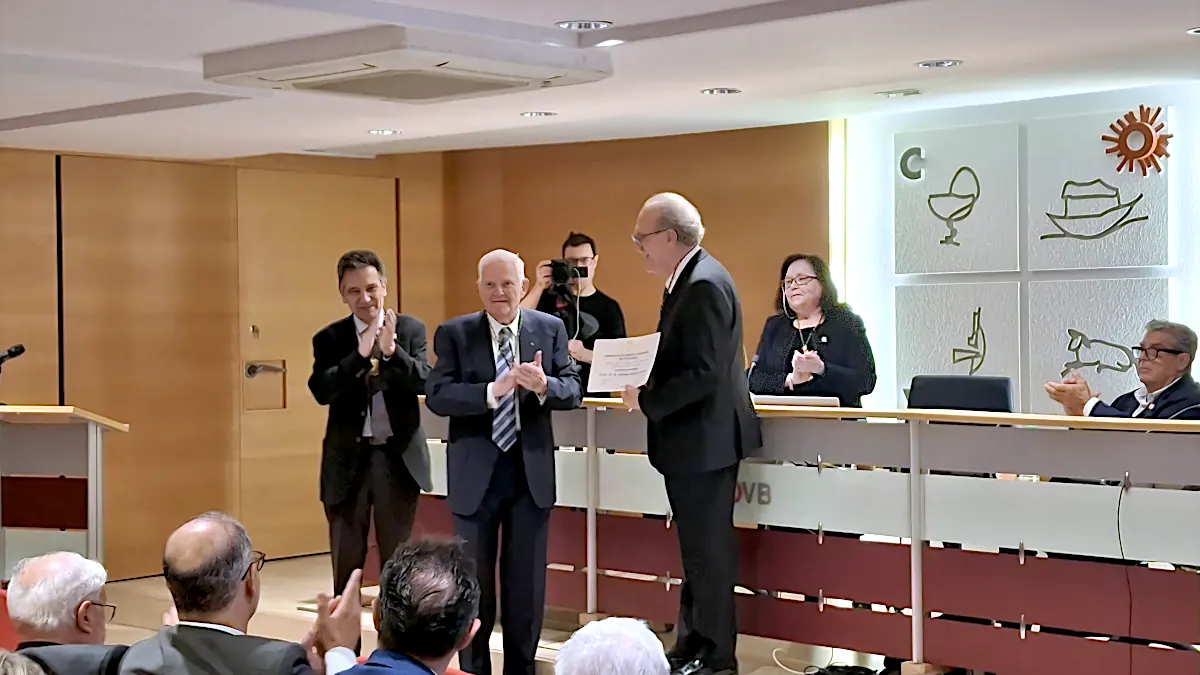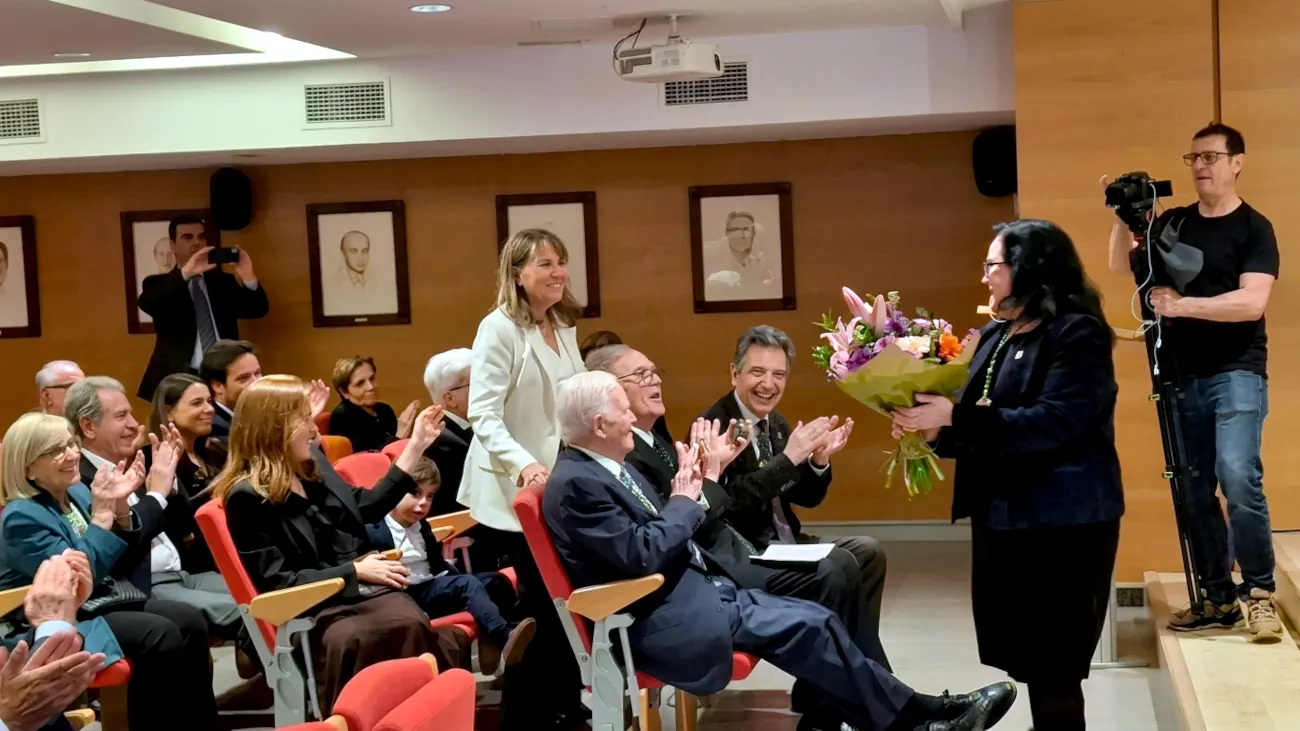


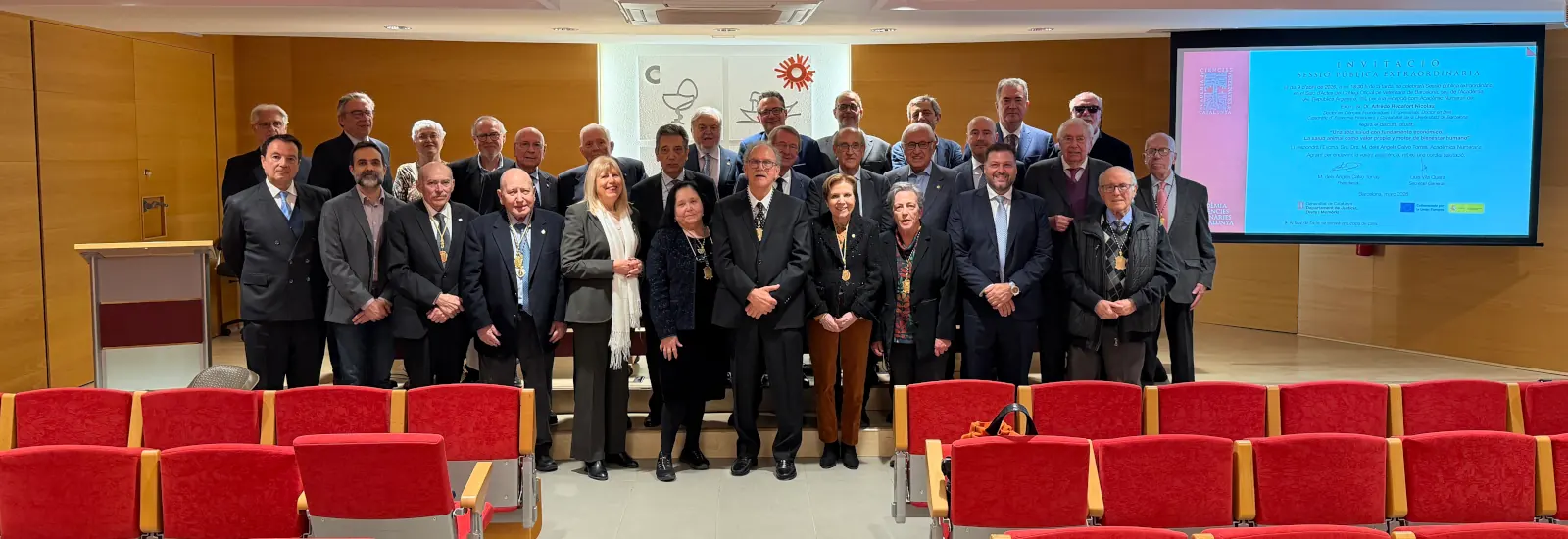
Alfredo Rocafort, Professor of Financial Economics and Accounting at the University of Barcelona, Doctor in Economic Sciences, Doctor in Law, and full member and President of the Board of Governors of the Royal European Academy of Doctors (READ), was admitted on 9 April as a full member of the Academy of Veterinary Sciences of Catalonia in the course of a solemn session held in the Assembly Hall of the Official College of Veterinarians of Barcelona. The recipient delivered the admission speech, “One Health on an Economic Foundation. Animal Health as an Intrinsic Value and a Driver of Human Wellbeing.” He was answered, on behalf of the Academy, by its President and, in turn, Vice-President of the READ, Maria Àngels Calvo.
In his address, Rocafort defended the need to integrate the economic perspective into the One Health approach already embraced in the scientific and healthcare sphere and by much of the medical and veterinary professions, arguing that, like human health, animal health and environmental protection are not merely ethical or ecological matters, but a central element for human wellbeing and long-term economic sustainability. In his speech, the new academician recalled that for decades, human, animal and environmental health have been treated as separate fields, a view that the health crises of the 21st century have shown to be insufficient. These threats begin with the way we still organise production systems, livestock farming, agriculture, and our relationship with nature, and both their impact and their harmful effects show that traditional responses are not enough to combat them, he argued.
“Veterinary medicine today has a key role. It is no longer only about the health of animals, but also about public health, food quality and safety, environmental sustainability and the balance of the productive systems that sustain society. And precisely for that reason, it needs to engage in dialogue with other disciplines that help to better understand its challenges and to find more solid responses,” he explained in order to introduce the concept of the circular economy as one of the mechanisms that, from an economic perspective, can complement the fight against present and future health crises within this One Health paradigm.
“The circular economy brings special value. It encourages us to think of health not only in terms of repairing damage, but also of preventing it, using resources responsibly, reducing impacts and seeking more balanced, resilient and lasting systems. From this interdisciplinary perspective, I wish to show how the integration of One Health, economic analysis and the principles of the circular economy helps us to better understand the health challenges of the 21st century and, above all, to find responses that are scientifically sound, legally coherent and economically sustainable,” he added.
In this new model, veterinary medicine occupies, in the expert’s view, a strategic place. No longer only because of its traditional role in animal health and food safety, but because it acts as a bridge between public health, territorial management, sustainable production and animal welfare. In this regard, Rocafort praised the discipline’s capacity to connect different scales, from the individual animal to productive systems and ecosystems, and called on scientific institutions such as the Academy of Veterinary Sciences to continue promoting interdisciplinary dialogue among health professionals, economists, jurists and other experts.