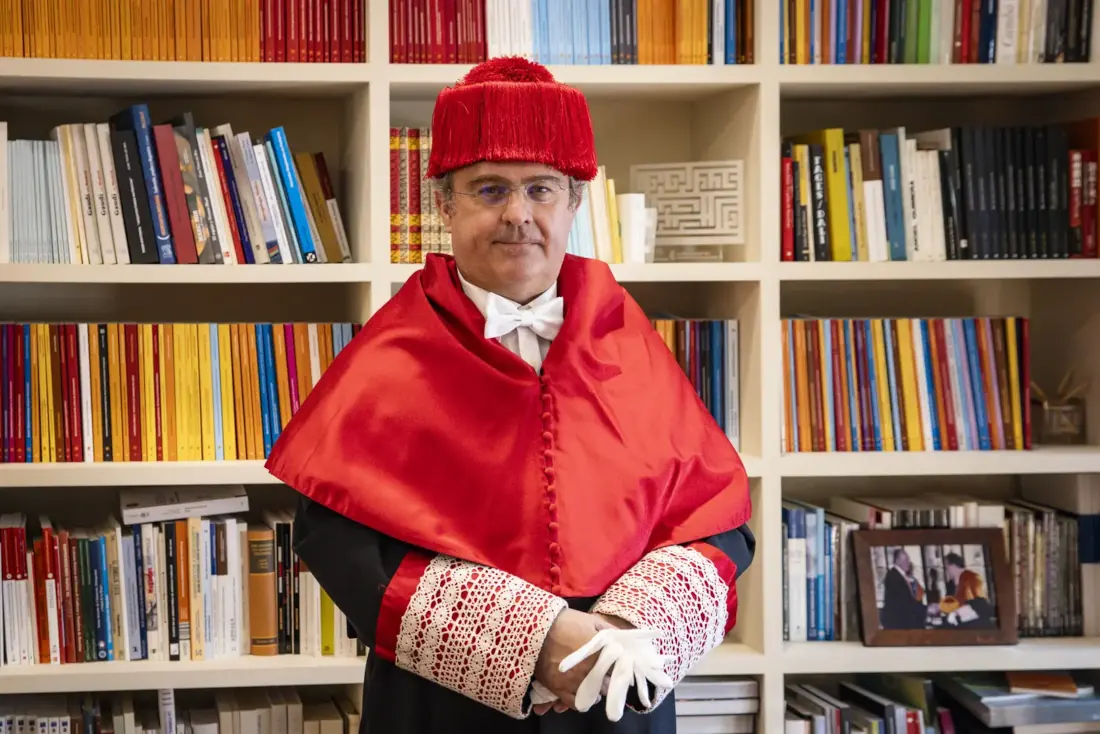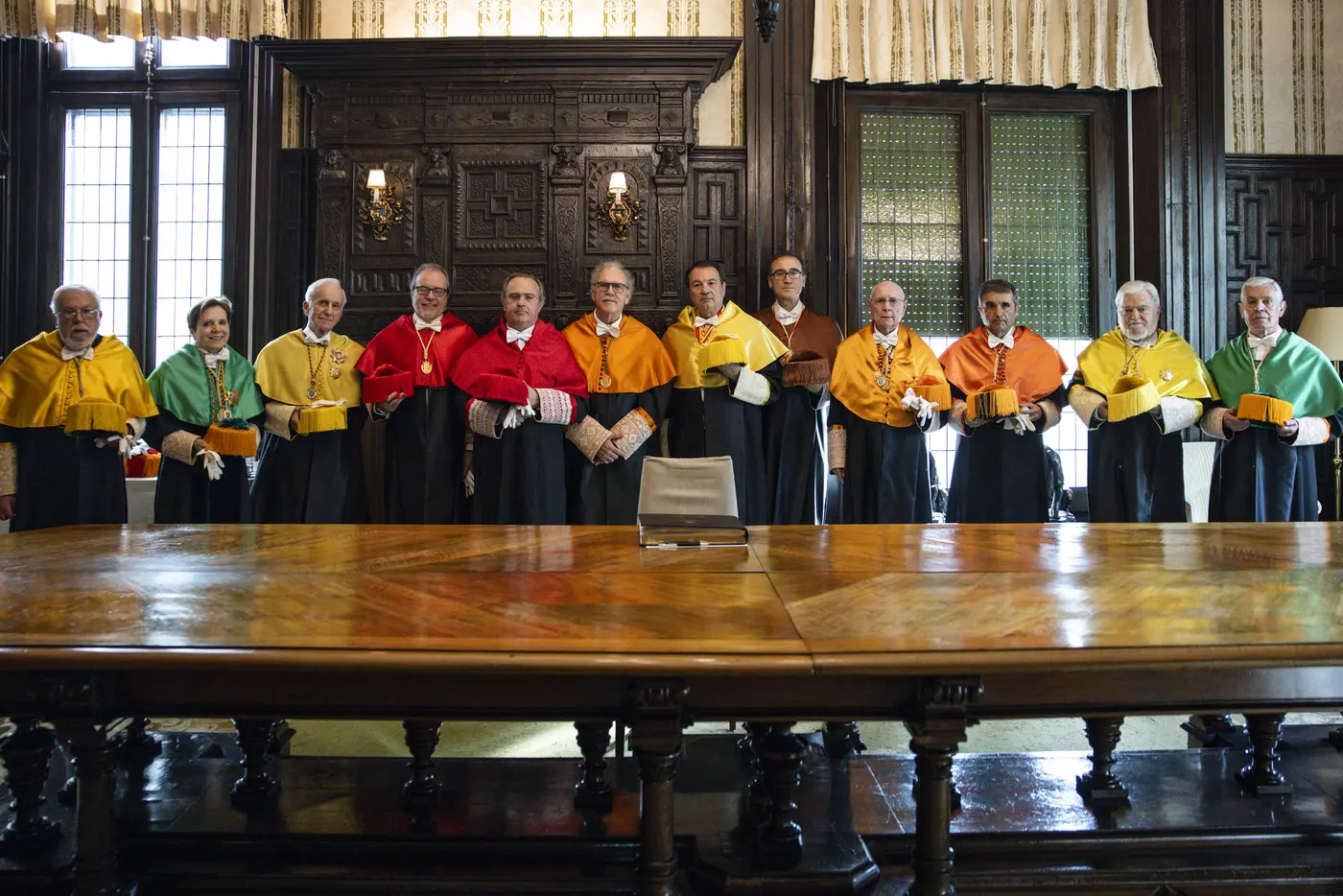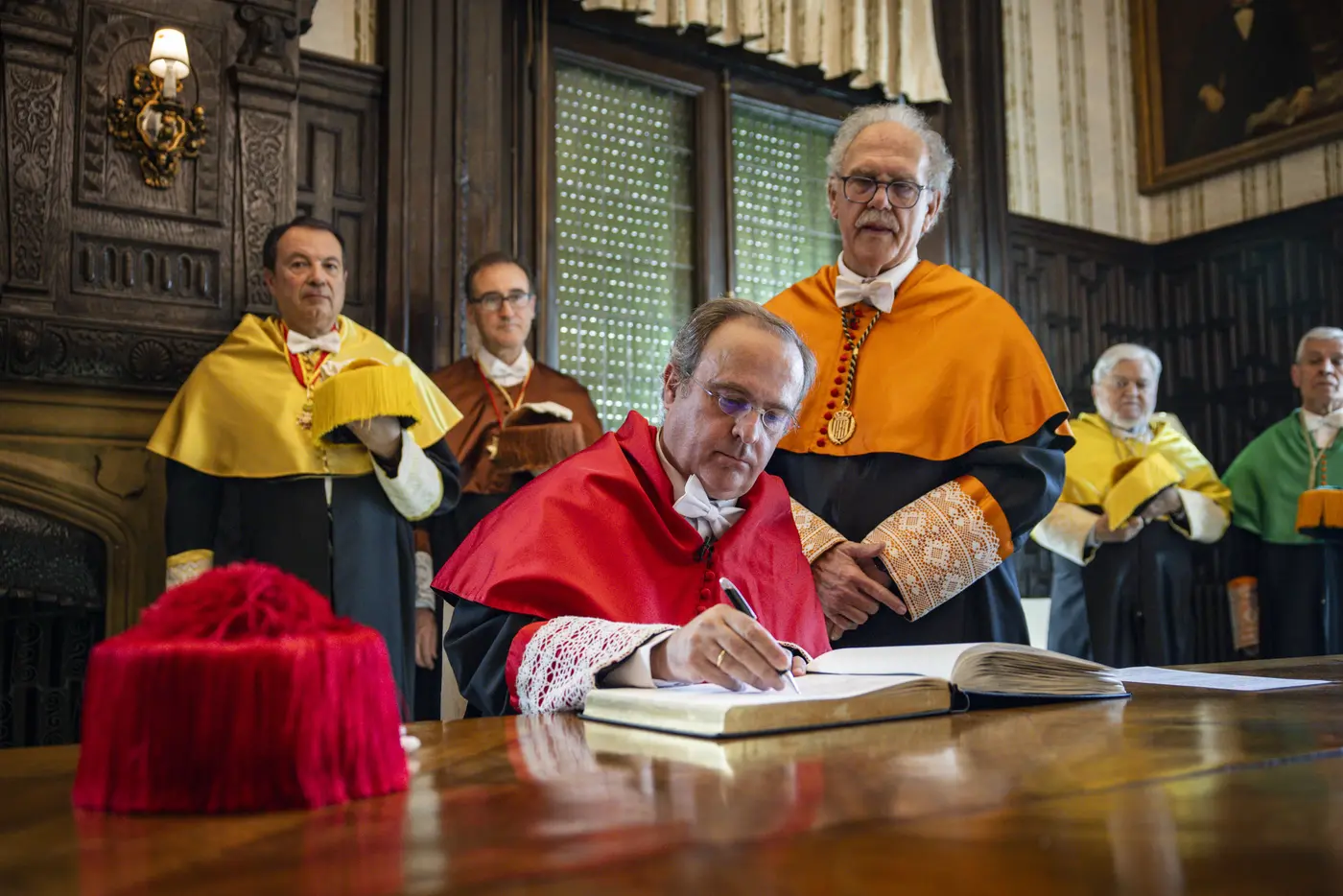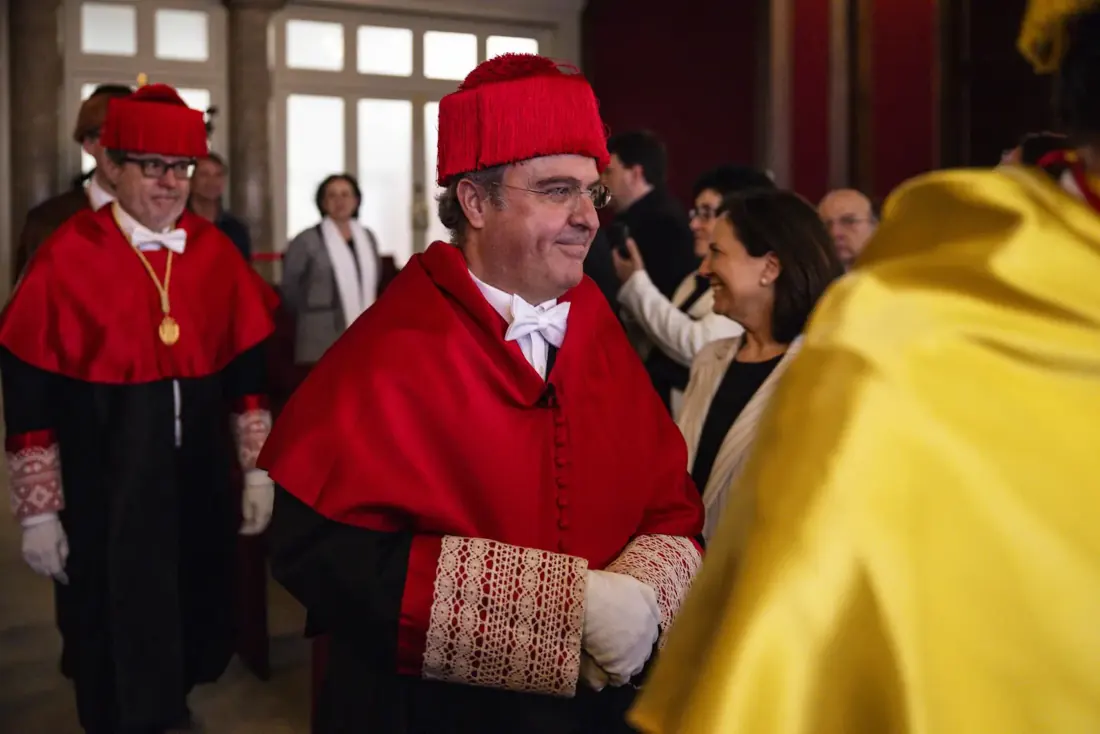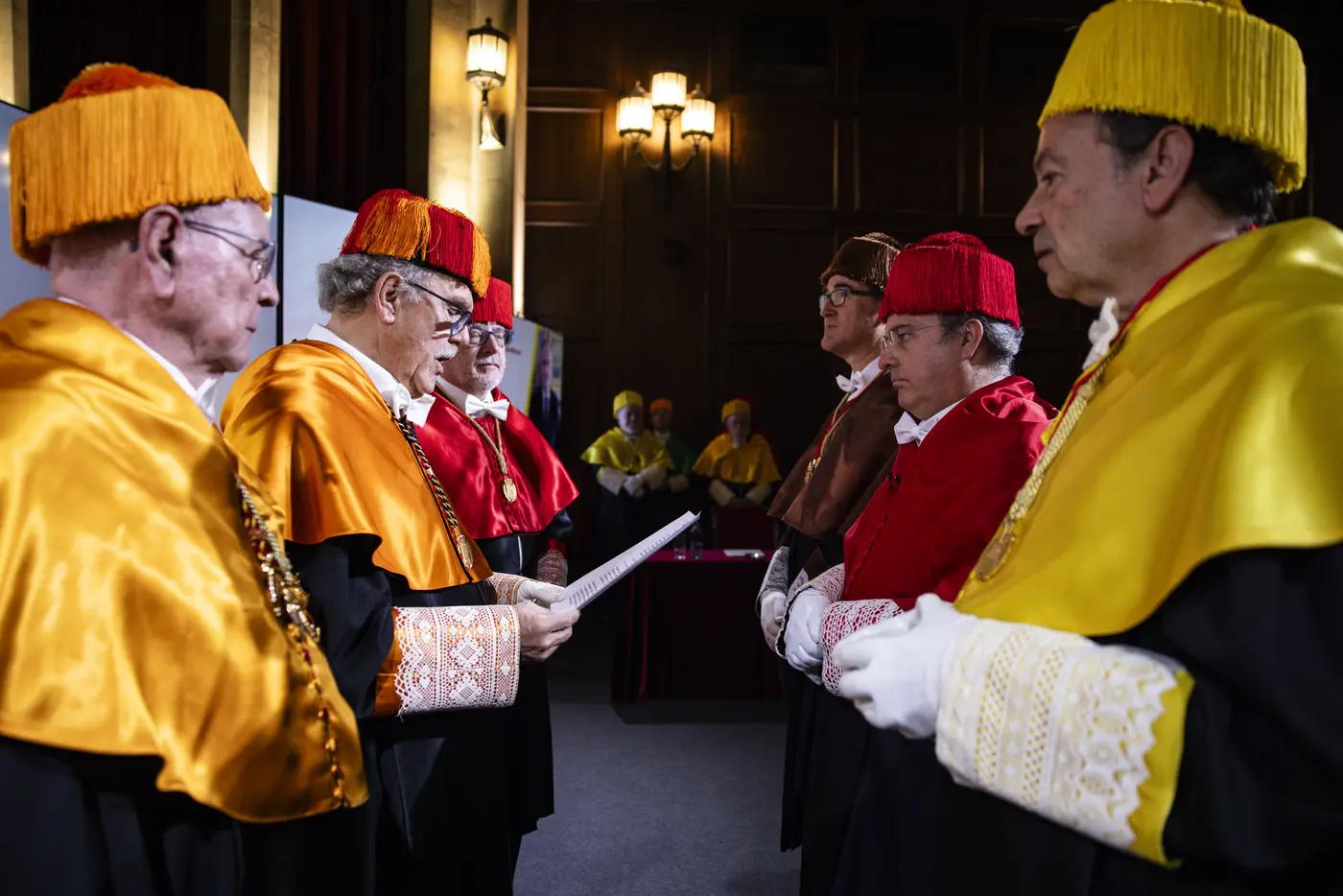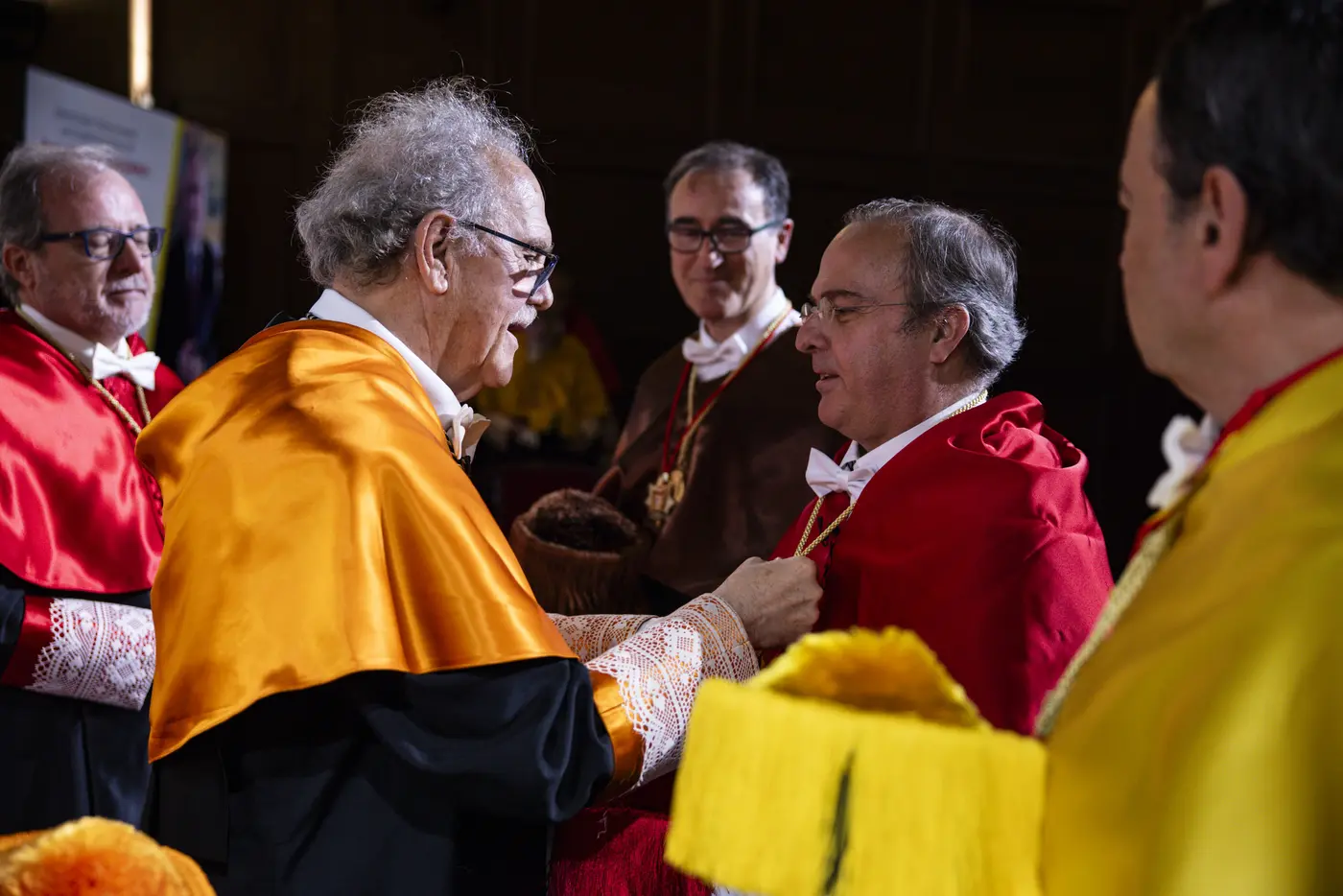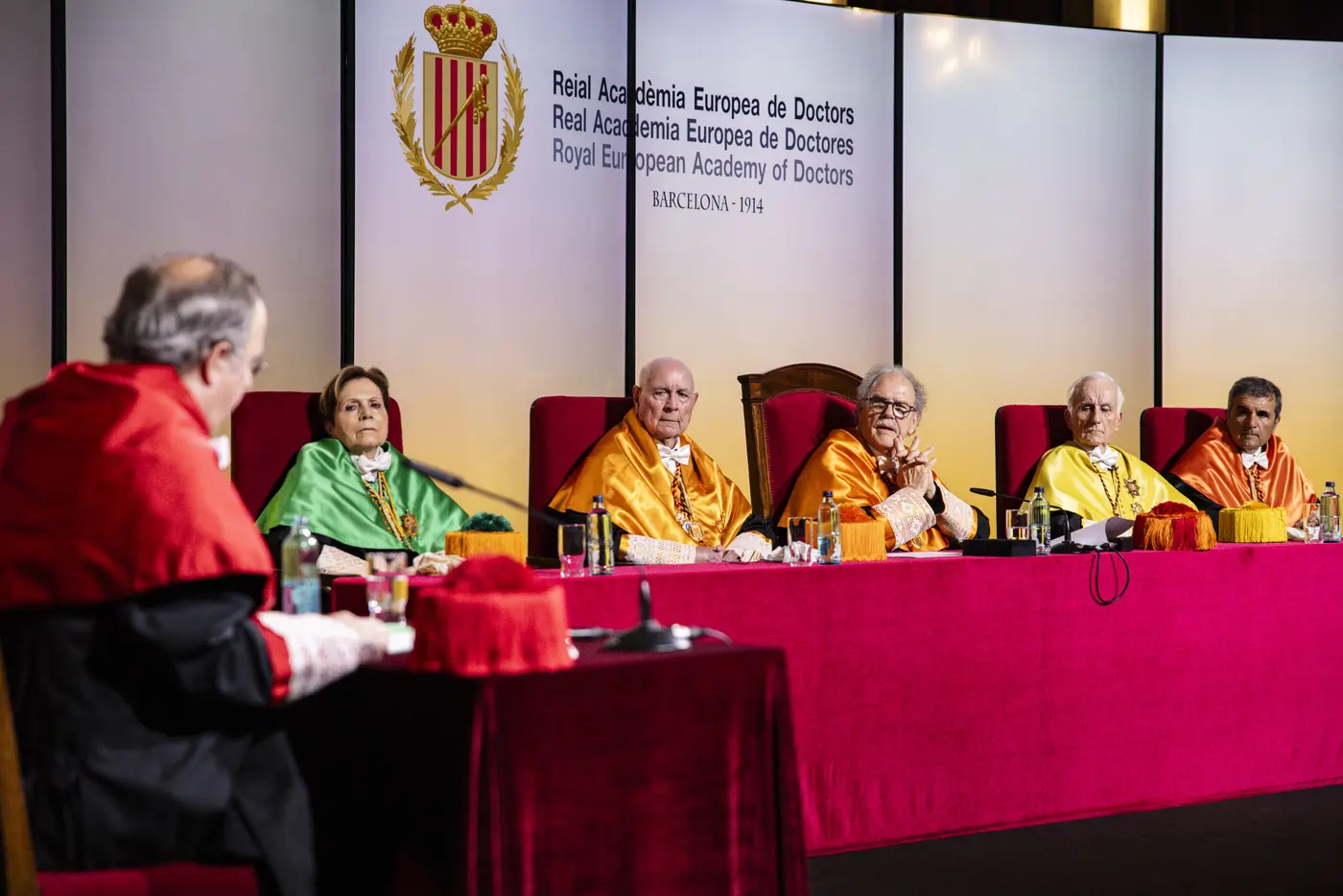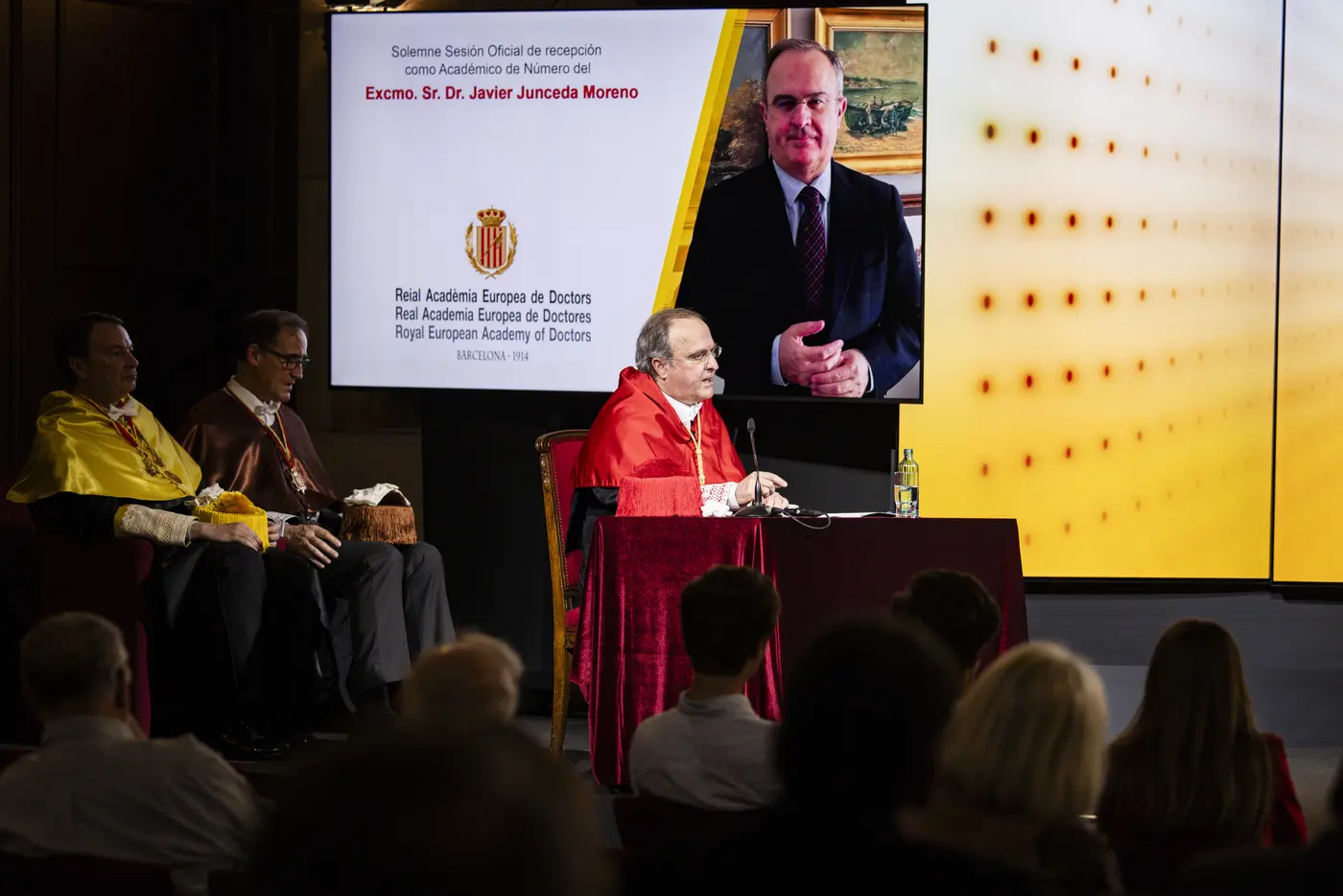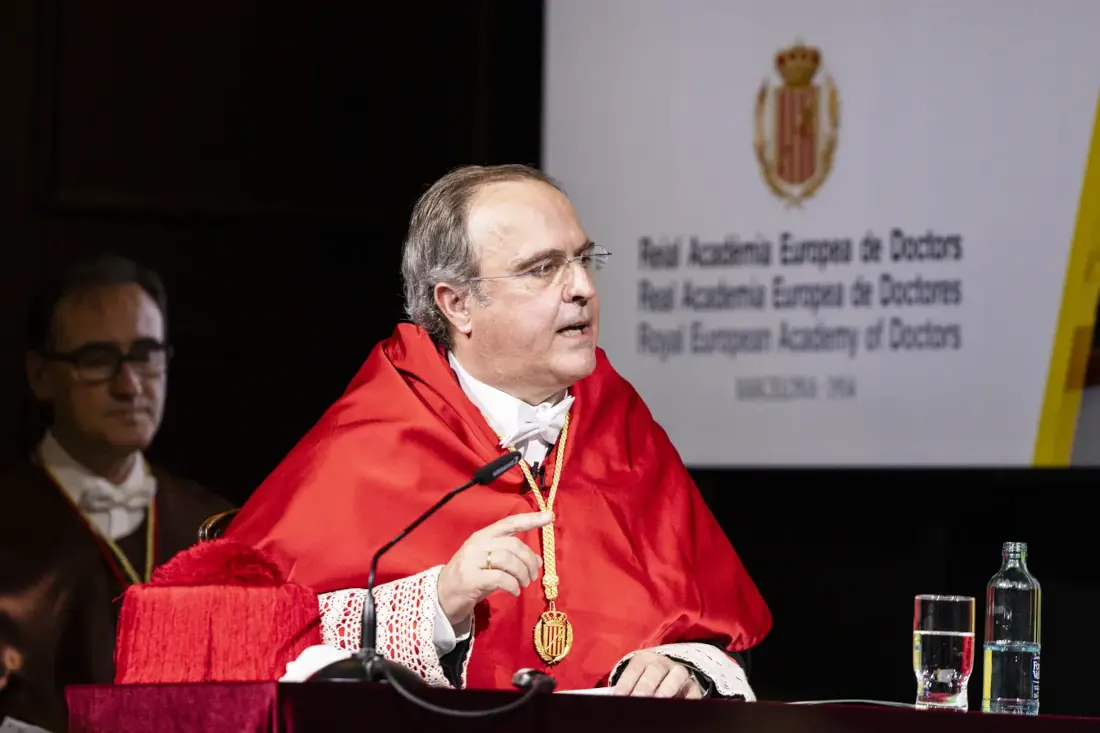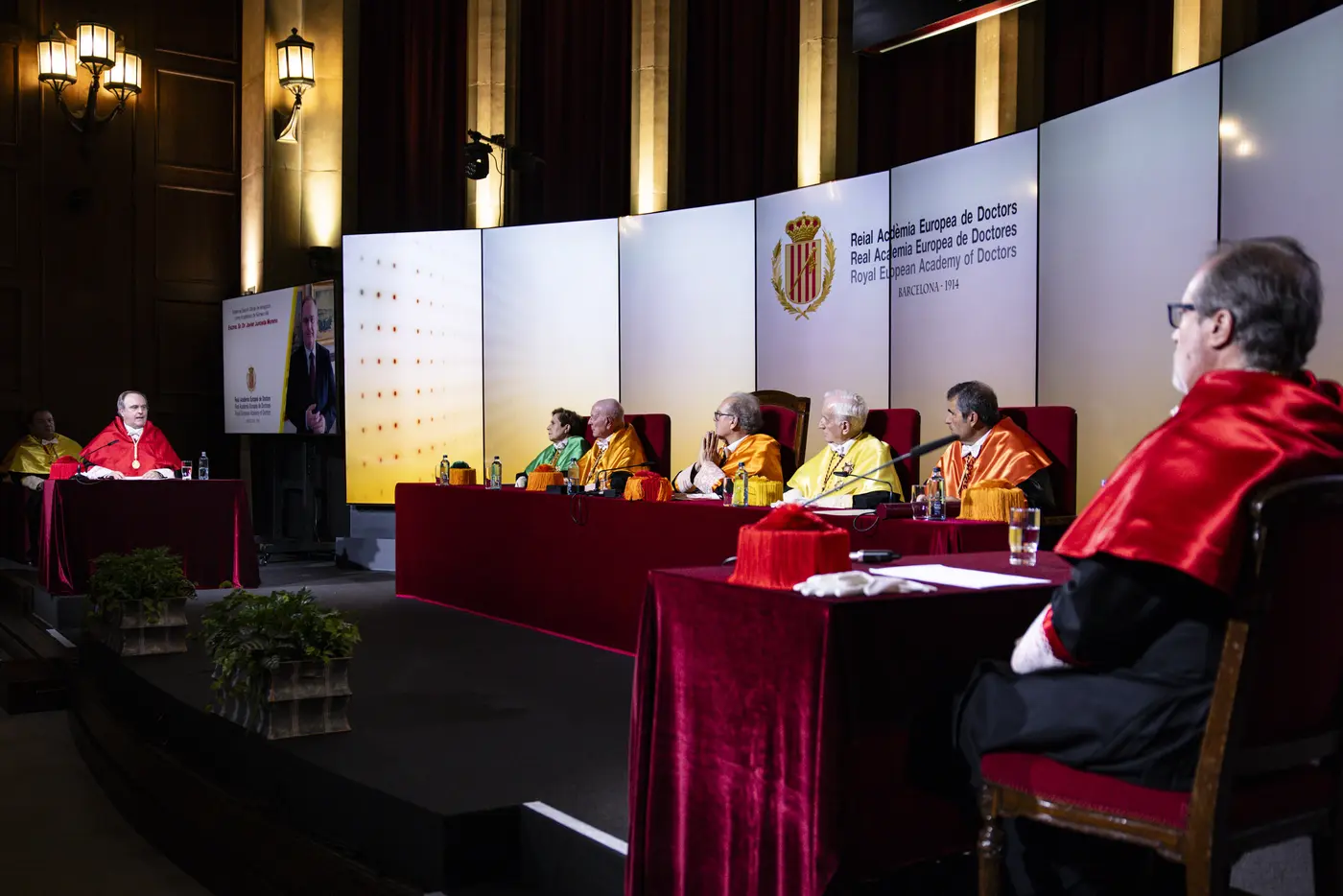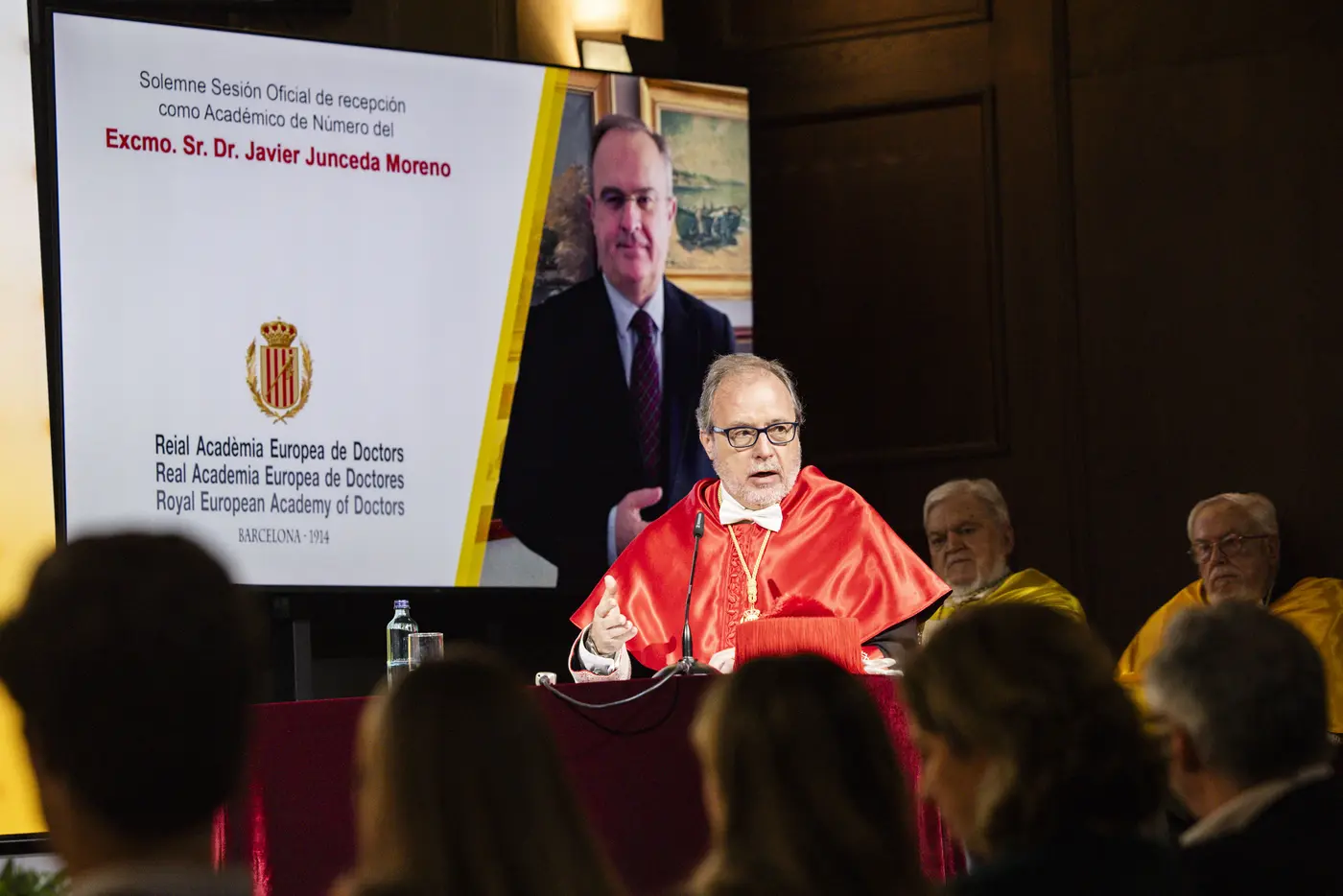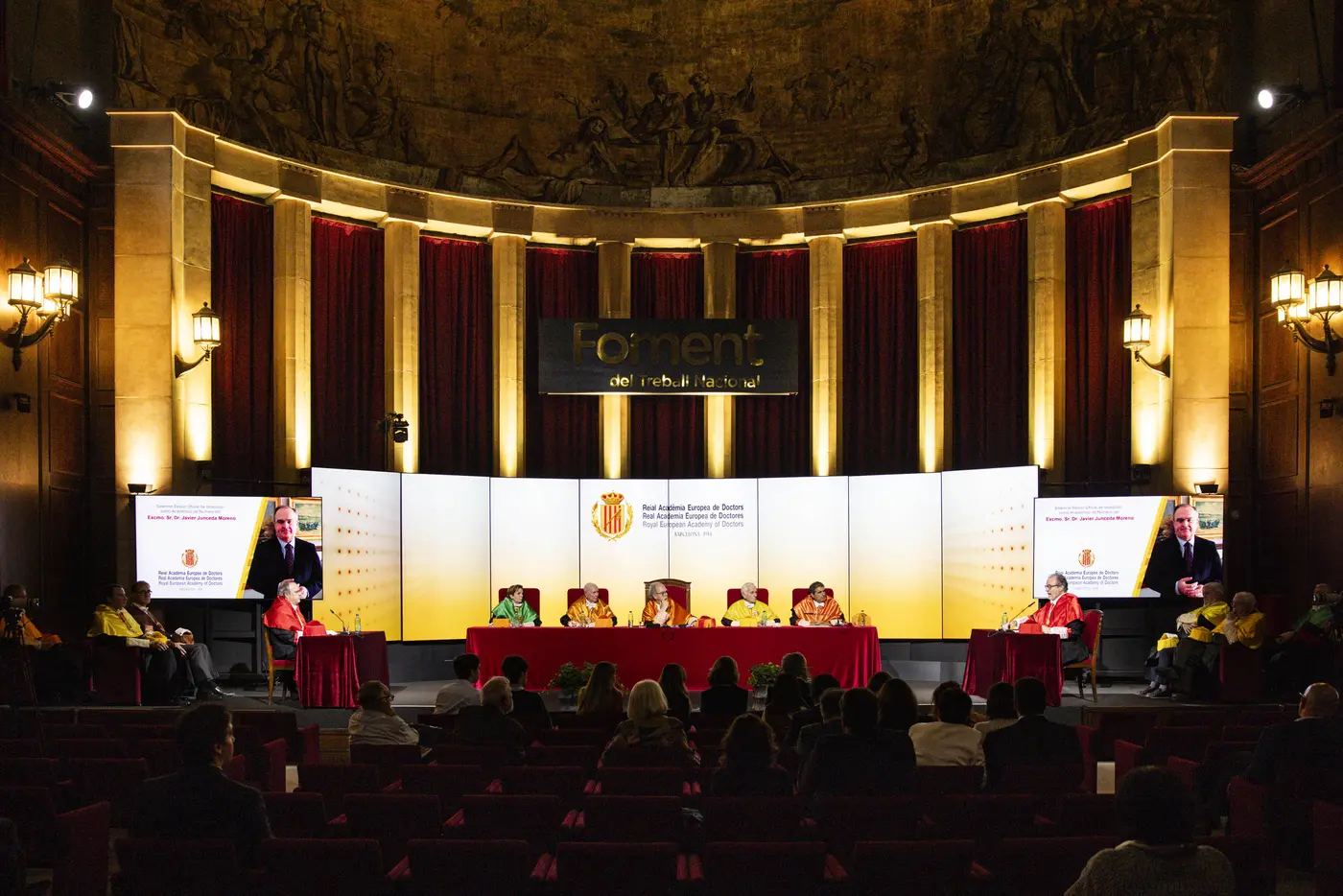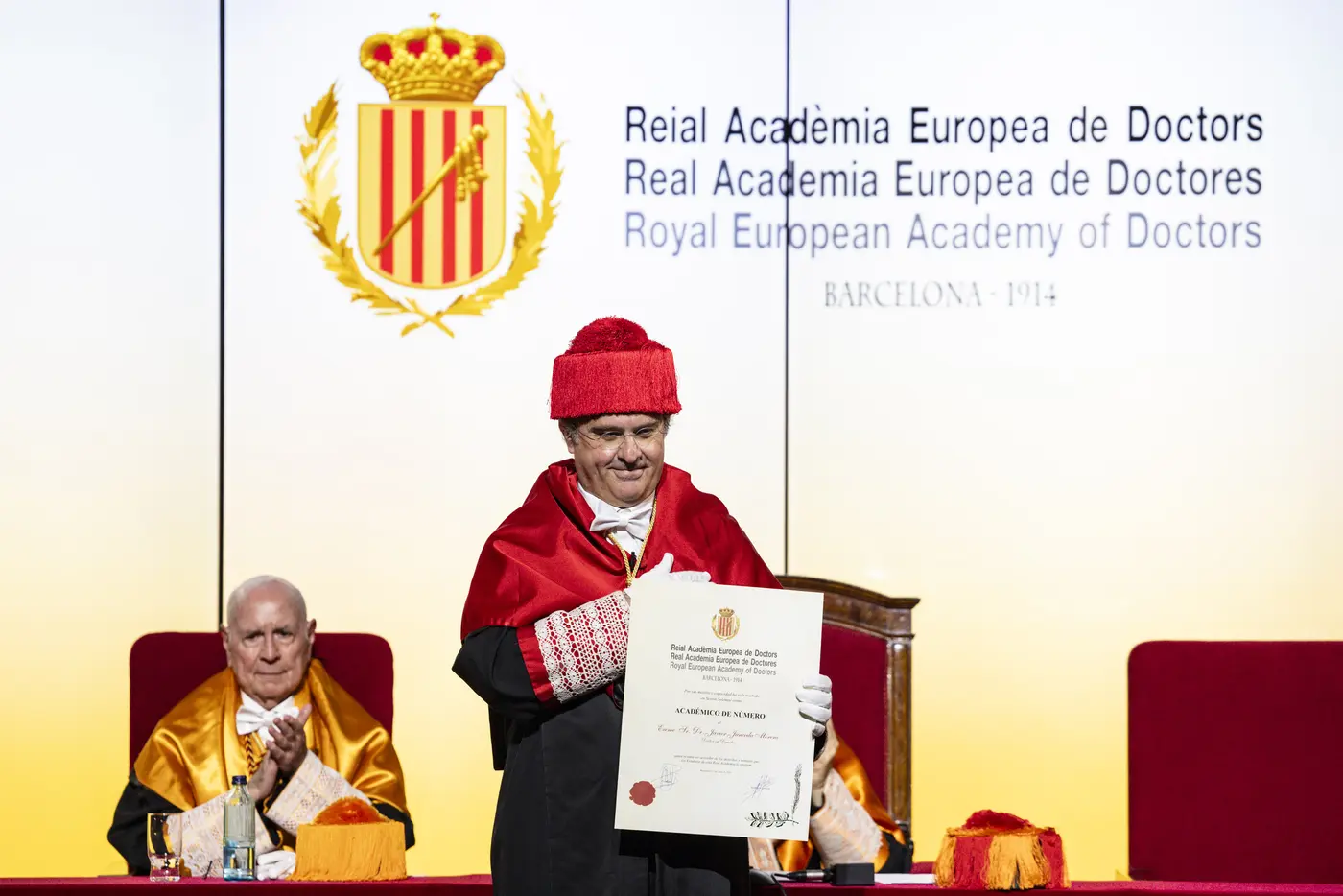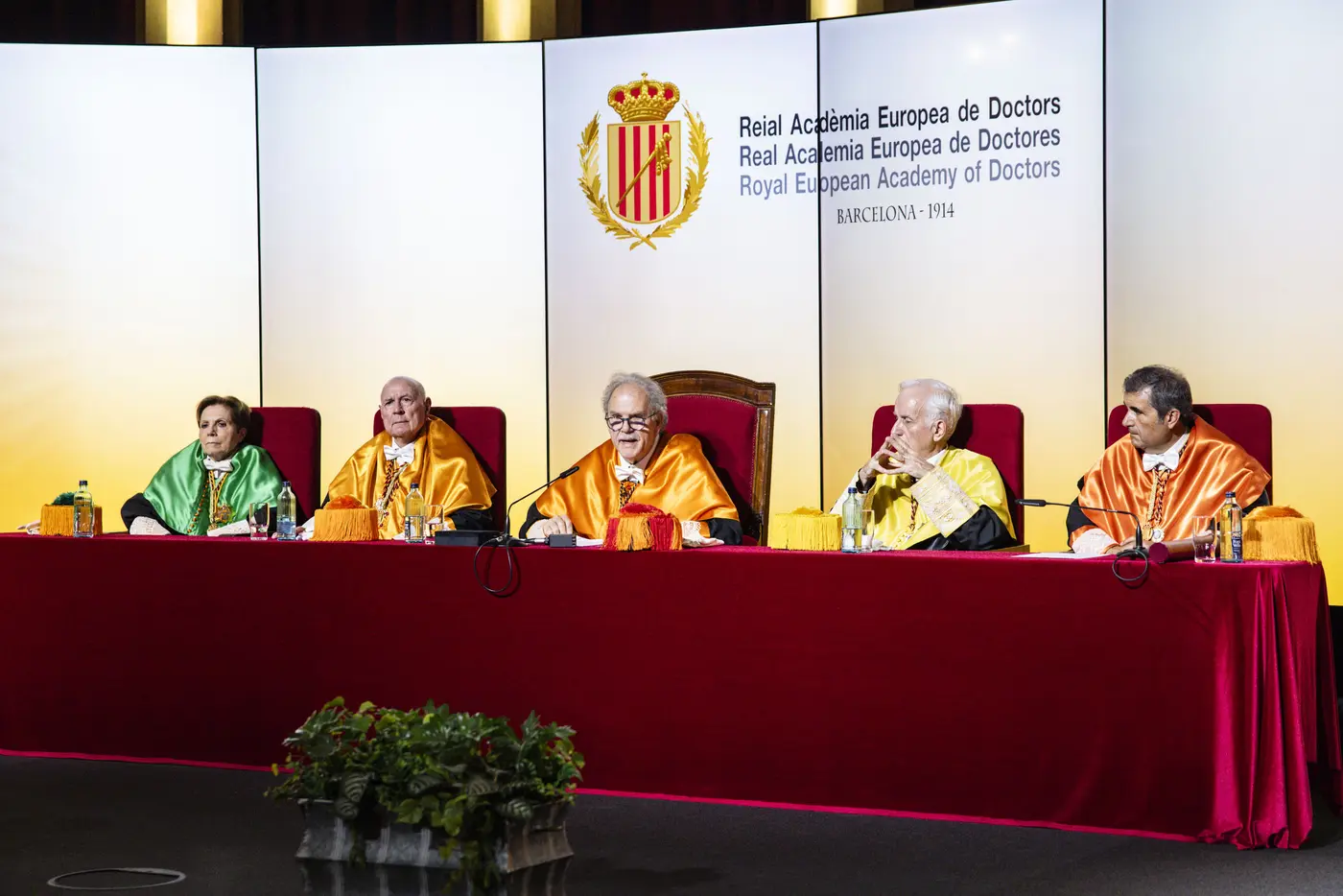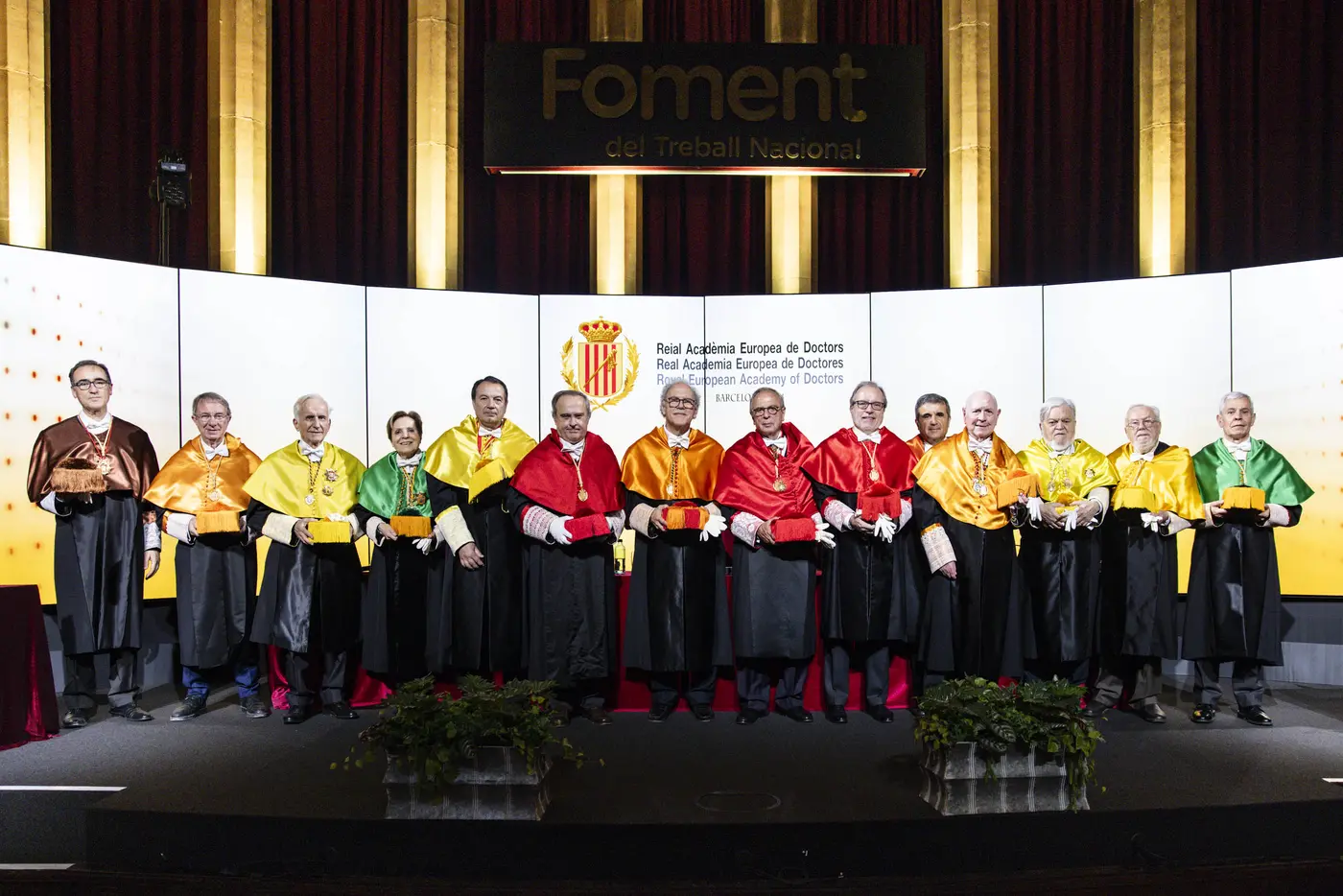



Javier Junceda, Doctor of Law, renowned jurist and former Dean of the Faculty of Law at the International University of Catalonia, was admitted as a full member of the Royal European Academy of Doctors (READ) in the course of a solemn ceremony held on Tuesday, 21 April, at Foment del Treball, the Academy’s headquarters. The recipient delivered the admission speech “On Legislative Incontinence and Administrative Simplification”, in which he addressed the excess of legislation and the pressing need to tackle it, analysing responses from other countries to this phenomenon, as well as various legal initiatives proposed in Spain. He was answered on behalf of the Royal Corporation by a full member and member of the Board of Governors, Daniel Berzosa. The session was streamed live on the READ’s YouTube channel, where it remains available to view.
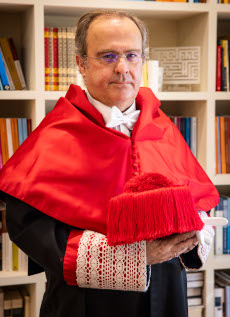
Dr. Javier Junceda
For the expert, the phenomenon he described as “legislative incontinence,” marked by the excessive and disorderly production of laws by numerous legislative bodies, has become a growing problem that complicates the understanding and application of law in Spain and in the European sphere, since the multiplication of identical rules across the 17 autonomous communities generates a uniformity that contradicts the very essence of the State of the Autonomous Communities. Junceda also warned that this proliferation of regulations not only hinders public administration but may also lead to arbitrary laws, a risk that the Spanish Constitution limits but that depends largely on the common sense of those who administer justice. He also criticised excessive public participation in the drafting of technical regulations, which often proves ineffective and distorts the legislative process.
To confront these challenges, Junceda proposed specific measures, including the adoption of a “guillotine law” to automatically eliminate obsolete regulations, delegation to the Government to reorganise the legal system, and the creation of dedicated posts to coordinate administrative simplification. He also suggested replacing traditional licences with declarations of responsibility and promoting the use of technology and artificial intelligence to streamline procedures. The recipient concluded with a call to restore technical quality in legislative drafting, entrusting this task to experts and specialised bodies, and warned that an excess of regulations may be a symptom of corruption and institutional disorder, paraphrasing in conclusion the famous statement by Tacitus that “the most corrupt republic is the one with the most laws.”
Founder and Director of Junceda Abogados, the new academician is a full member of the Royal Institute of Asturian Studies, where he chairs the Commission on Law, Social and Economic Sciences, and a full member of the Royal Asturian Academy of Jurisprudence, a corresponding member of the Royal Academy of Jurisprudence and Legislation of Spain and of the North American Academy of the Spanish Language, and an honorary member of the Peruvian Academy of Law. He is a member of the Barcelona Arbitration Court, of the Arbitration Court of the European Arbitration Association, based in Madrid, and of the Arbitration Court of the Pontifical Catholic University of Peru. Since 2016, he has also been a member of the Commission on Urban Planning and Territorial Organisation of the Principality of Asturias, chosen from among experts of recognised prestige, and a member of the Advisory Council of the Spanish Association of Urban Planning Law.
He has served as an expert on 18 parliamentary committees on legislative reforms and has drafted various bills, legislative proposals, and regulatory provisions. He is the author or co-author of more than two hundred legal works, some of which have served as the basis for judicial rulings by the Constitutional Court of Chile, the Supreme Court of Peru and courts in Bolivia. He has received mentions in the Luis Sela Sampil Awards for doctrinal articles of the Faculty of Law of the University of Oviedo, and on two occasions in the prestigious Financial Studies Award (1992 and 2012), organised by the Centre for Financial Studies in Madrid. He is also a member of 14 editorial boards of Spanish and international legal journals. He has been recognised as doctor honoris causa by six foreign universities and as honorary professor by six others. He has served as a director, speaker, or lecturer in more than 50 training programmes held in Spain and Ibero-America.
Speech: “On Legislative Incontinence and Administrative Simplification”