

Dr Montserrat Guillén
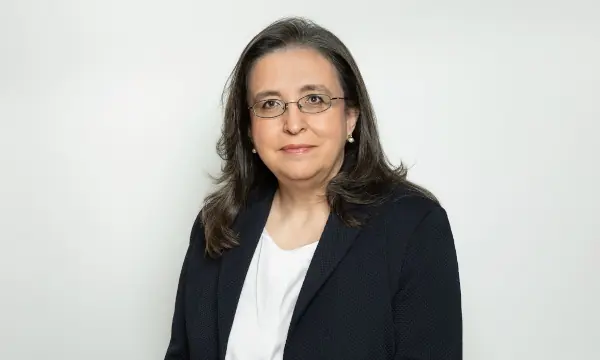
Montserrat Guillén, Professor of Quantitative Methods for Economics and Business at the University of Barcelona and Numerary Member of the Royal Academy of Economic and Financial Sciences and of the Royal European Academy of Doctors (READ), received the National Research Award in the Pascual Madoz category for Law and Economic and Social Sciences from King Felipe VI on 4 May, during a solemn award ceremony held at the Royal Palace of Pedralbes, in Barcelona. In its decision, the jury recognised her as “a pioneering figure and international reference in risk economics and actuarial sciences, with an academic and scientific career of great impact, whose work is profoundly transforming risk analysis and the economics of insurance in the 21st century, integrating quantitative methods with technologies such as Big Data and artificial intelligence and applying them to fields of particular social interest such as longevity, driving, financial investments and, more recently, climate”.
“We recognise in you that capacity to shape knowledge and your commitment to a better society. Your careers represent science oriented towards the common good, knowledge at the service of people. As a country, it is our duty to live up to that effort: to support it, foster collaboration and ensure that research receives the necessary backing so that it can continue to advance,” the monarch stated in his speech during the ceremony. The event was also attended by the President of the Government of Catalonia, Salvador Illa; the Minister of Science, Innovation and Universities, Diana Morant; the Secretary of State for Science, Innovation and Universities, Juan Cruz Cigudosa; the Secretary General for Research, Eva Ortega; the Minister for Research and Universities of the Government of Catalonia and Numerary Member of the READ, Nuria Montserrat; and the Mayor of Barcelona, Jaume Collboni.
Guillén has promoted and directed the Consolidated Research Centre on Risk in Finance and Insurance (UBriskcenter) since its inception and is regarded as one of the leading experts in risk analysis and its application to insurance and pension products. She has published more than 200 articles in scientific journals, and her contributions are among the most widely cited by other authors, to the point that she is the leading researcher in the field of actuarial sciences by number of citations and number two in insurance. Her main contribution is the development of statistics applied to insurance.
 The academic is a pioneer in the formulation of insurance prices that take into account policyholders’ behaviour, for example, using telemetry devices installed in vehicles. Her work concludes that automatic speed-control devices could reduce road accident fatalities by more than 60%. This research earned her the SCOR award for a study on telematics in motor insurance, as well as the award for best paper presented at the international congress of insurance experts, ICA Berlin 2018, for the article “The transition towards semi-autonomous vehicle insurance: contributions from usage-based data”, which she carried out together with several researchers from the Riskcenter-IREA of the University of Barcelona.
For her involvement in research in Catalonia, she has received several ICREA Acadèmia awards, granted by the Catalan Institution for Research and Advanced Studies in recognition of the research work of teaching staff at Catalan public universities who also contribute to retaining research talent within the Catalan university system. Guillén actively participates in the scientific activity of the READ and, at the 2nd Interdisciplinary Congress held by the Royal Academy at the Hotel Balneario Vichy Catalán, in Caldes de Malavella (Girona), she presented the paper “Paying per kilometre is the future of motor insurance”, opening the line of research that has led to her current recognition. In that study, the academic had already pointed out that the emergence of telemetry in motor insurance would revolutionise the current concept of insurance, since new technologies make it possible to collect information on the insured vehicle and its driver in relation to operating hours, distance travelled or driving style in general, thereby optimising costs and risks, with clear advantages for both the insured and the policyholder, as well as for the insurer.