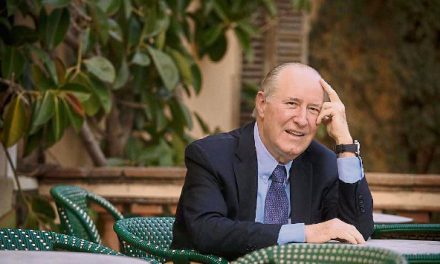


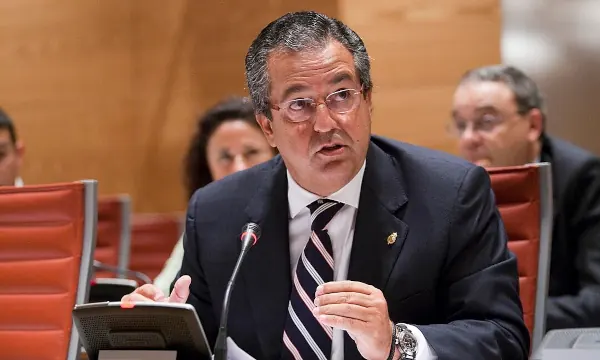
Dr. Antonio Alarcó
Antonio Alarcó, Senator for Tenerife, Professor of Surgery at the University of La Laguna and Director of its Chair of Telemedicine, Robotics and Telesurgery, and a Numerary Member-elect of the Royal European Academy of Doctors (READ), warns that demographic changes are becoming one of the most decisive factors for the economic and social future of Europe and Spain in the article “Dictatorship of Demography: The Silent Power That Defines Our Future,” published in the newspaper “La Razón” on 24 February. According to the expert, accelerated ageing and the collapse of birth rates, together with the decline in the number of workers and the increase in the number of retirees, threaten the future of the welfare state.
“While public debate usually focuses on issues related to economics and politics, there is a much deeper and quieter problem that is transforming the world and, therefore, our country as well. We are heading toward a society in which there will be more retirees than workers (30% of Spaniards are over 60 years old), and the birth rate has fallen below the level needed to keep the population stable. In Spain, this is dramatic and causes the welfare state to seriously falter,” the academic begins his reflection.
For Alarcó, the decline in births and the increase in life expectancy are altering the balance between workers and retirees, placing pressure on pension systems, healthcare and public finances. This demographic transformation acts as what the expert himself describes as a “silent dictatorship,” because it conditions economic and social policies for decades. He also stresses that many developed countries face labour shortages and difficulties sustaining economic growth, prompting a reconsideration of policies related to birth rates, immigration, and the organisation of the labour market.
 Alarcó emphasises that demography is not merely a statistical issue but a structural force that defines the future of societies. If measures are not adopted to address ageing and low birth rates, the European social and economic model could become unsustainable in the coming decades. As one of the alternatives to this unsustainable situation, he proposes a profound reorganisation of the labour market that would include the possibility of extending working life before a forced reconsideration of the public pension model becomes inevitable, together with a decisive commitment to promoting higher birth rates. “Tomorrow is already too late, and the necessary corrections must be implemented based on scientific evidence, because their effectiveness takes more than five years to become noticeable. We must say no to ageism, no to compulsory retirement, and yes to encouraging and protecting birth rates. We must give it our all—enough is enough,” he concludes.
A renowned physician and scientist, Alarcó is a member of the Board of Directors of the European Union of Medical Specialists and the representative in Spain of the International College of Surgeons, and serves as President of the Canary Islands Association for Medical Education. He is also Honorary President of the Canary Islands Society of Surgery and has published in internationally recognised scientific journals.