

Dr. Joaquín Callabed
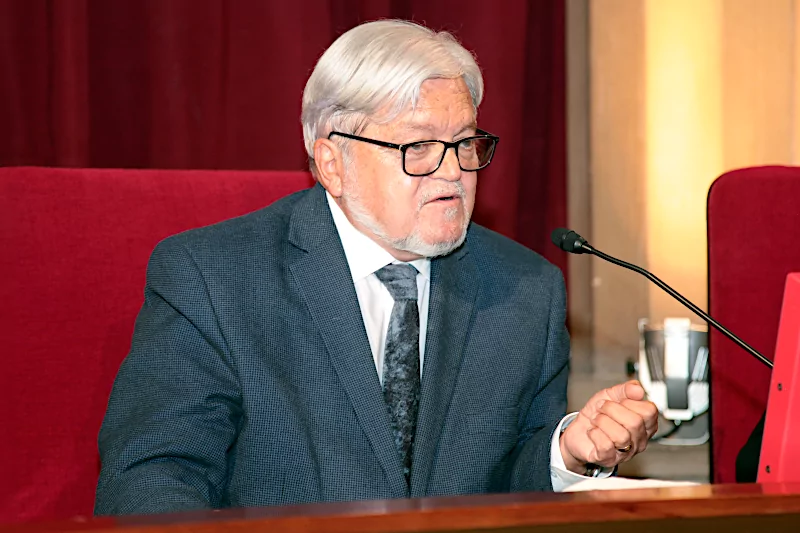
Joaquín Callabed, President of the Social Paediatrics Club, corresponding member of the Royal Academy of Medicine of Catalonia and of the Royal Academy of Pharmacy of Catalonia, and full member and Vice-President of the Health Sciences Section of the Royal European Academy of Doctors (READ), shares with the academic community a new series of articles in which he once again draws on his erudition and fascination with Italy and its cultural and scientific legacy. Specifically, these are “The Artistic Movement of the Sienese School,” “Florence’s Most Important Contributions to the Humanities and Sciences,” “The Pontanian Academy of Naples” and “The Fascination of Naples,” published between June and July in the “Expert Readers” section of the digital edition of the newspaper La Vanguardia, whose readers’ community he actively participates in.
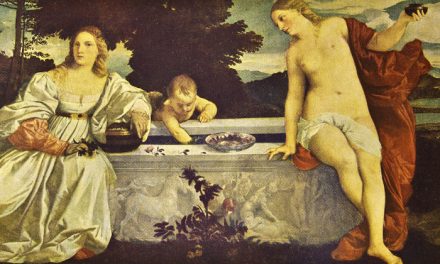
In “The Artistic Movement of the Sienese School,” the expert reviews the history of a fundamental artistic movement at the dawn of the Italian Renaissance, between the 14th and 15th centuries, representing a subtle evolution of Gothic art and Byzantine tradition. “Unlike the emphatic three-dimensional naturalism of Florence, with Giotto, the Sienese style humanised faces and introduced depth, while retaining a marked linear elegance, gilded backgrounds and decorative lyricism. The Florentine School laid the foundations of the Renaissance through science, anatomy and three-dimensional perspective. The Sienese School remained faithful to Gothic spirituality and lyrical refinement. It maintained what has been called ‘Gothic resistance’,” he summarises.
For his part, in “Florence’s Most Important Contributions to the Humanities and Sciences,” Callabed recalls how Florentine humanism transformed the European mindset by displacing medieval theocentrism. “Its impact laid the foundations of modernity by restoring the value of reason, classical Greco-Roman culture and human potential, influencing thought, education and art throughout the continent. Florence became the cradle of humanism thanks to the flourishing of the liberal arts and the support of great patrons. Its contributions to the sciences were also highly important, particularly in astronomy, mathematics, scientific societies, engineering and the natural sciences,” he notes before citing some of its key figures.
 In “The Pontanian Academy of Naples,” the President of the Social Paediatrics Club presents what he considers one of the earliest and most influential centres of Renaissance humanism in southern Europe. “Originally founded in the mid-15th century under the patronage of King Alfonso V of Aragon, this institution revolutionised the intellectual landscape by transforming informal gatherings into an academic structure devoted to scientific, literary and artistic reflection. Born at the Aragonese court under the name Porticus Antonianus, it was established by the humanist poet and historian Antonio Beccadelli, known as ‘il Panormita’,” he recalls.
Finally, in “The Fascination of Naples,” the academic explores the history of a city where Greek culture, Roman order and the Spanish legacy converge, while celebrating a recent visit. “According to mythology, Parthenope, daughter of Calliope and the river Achelous, was condemned by the gods for failing to seduce Ulysses and went to die on the shores of Naples. Rome left its language and culture intact there. Caesar Augustus, Cicero and Nero were fascinated by this vestige of Hellenic culture that continued to live before their eyes. Alfonso V of Aragon arrived in these lands in 1443 and entered with his court of humanists. Celebrities such as Lorenzo Valla and Antonio Beccadelli gathered in his library. The classics were read every day. This was the origin of the Academy that later came to be known as the Pontanian Academy. King Alfonso was likewise captivated by this land,” he concludes.