

Dr. Luis Pons
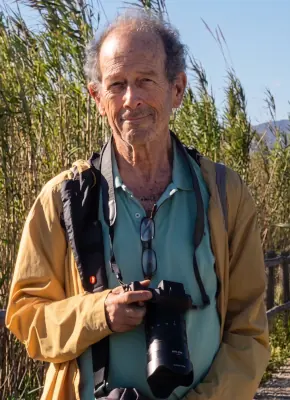
Luis Pons, corresponding member of the Royal European Academy of Doctors (RAED), shares with the academic community the photo galleries “Pope Leo XIV’s Greeting” and “The Islam Khoja Minaret”, published on 14 May and 12 June respectively in the “Readers’ Photos” section of the digital edition of the newspaper “La Vanguardia”. In them, the prolific photographer presents the images he took in Rome of Leo XIV before the Pope’s journey to Spain, anticipating his warmth towards the crowds, along with a brief selection from his journey along the Silk Road, featuring cities and places he regards as a paradise for photographers.
“After passing through the security checks, I managed to position myself in the front row by a barrier, far away from everything. I was surrounded by other members of the faithful and their children. It was the end of the Jubilee begun by Pope Francis. Suddenly, I saw the popemobile. Within a few minutes, my moment arrived. From just a few metres away, I said, ‘Buongiorno, Papa,’ and he greeted me with an open, sincere look. I had the opportunity to take several photographs, and I hope that during his stay in our country other photographers will also experience wonderful moments in which to take such close-up pictures of a great Pope. I share these images with respect and affection,” he explains regarding the pontiff’s photo gallery.
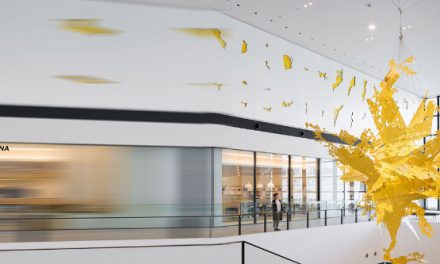
Regarding his other journey, Pons focuses his lens on the Islam Khoja Minaret, illuminated at night in the ancient walled city of Itchan Kala, in Khiva, Uzbekistan. “The minaret is known for being the tallest in the city, with decorative turquoise tiles and a slender conical structure. The surrounding area, Itchan Kala, is a well-preserved historic complex renowned for its adobe buildings and medieval atmosphere,” he notes.
The academic is one of the regular photographers featured in this section, where he has published a variety of photographic series on different subjects that have been warmly received by the newspaper’s readers. Among his most recent galleries are “The Chupa Chups of the Collserola Tower”, “Images of the Sant Joan Festival”, “What Did Barcelona’s New Year’s Fireworks Look Like?”, “A Guide to Identifying the Birds of Diagonal Mar”, “When the Moon Waxes Beside the Glòries Tower”, “Frida Kahlo’s Creative Universe, in Monochrome and Colour”, “Are Pickpockets Resurfacing in Barcelona?”, “Dragonflies Return to Barcelona”, “The Milky Way with Meteors in La Cerdanya”, “The Living Nativity Scene of Corbera” and “The Colours of Autumn in Montseny”—one of whose images was selected as one of the best photographs of last November—, “The Visual Delight of the Blossom in Aitona” and “The Flamingos of the Ebro Delta”.
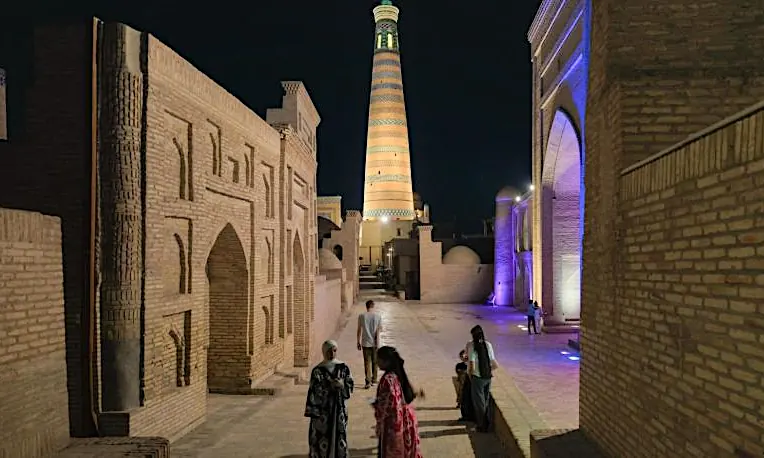
El minarete Islam Khoja – Luis Pons
He is also the creator of the celebrated photo galleries featuring the moon as their central subject: “The Moon’s Daily Visit”, “The Crescent Moon Levitates among Windswept Clouds”, “Discover the Language of the Moon”, “The New Moon Shines as Never Before in Barcelona”, “The Settings of Bécquer’s ‘The Moonbeam’”, “The Buck Moon Rests over La Ràpita”, “The Moon’s Omega Effect in the Ebro Delta” and “The New Moon of Marrakesh”.
Luis Pons discovered photography in the 1980s, inspired both by his interest in the chemical process involved in developing negatives for print photography and by his close involvement with the photography departments of the newspapers “El País” and “Avui”, where he worked as an executive, as he has explained to the academics who have closely followed his work in recent years. From there, he made the transition to digital photography.