

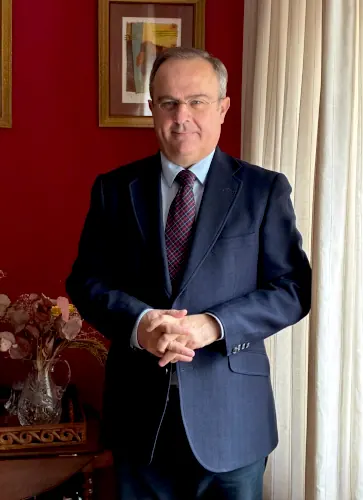
Dr. Javier Junceda
Javier Junceda, a renowned jurist, former dean of the Faculty of Law at the International University of Catalonia and full member of the Royal European Academy of Doctors (RAED), examines the role played during Spain’s Transition by Torcuato Fernández-Miranda, tutor to Juan Carlos I, in the article “Eight Memorable Months”, published in the digital newspaper El Debate on 25 May, and reflects on political correctness and public administration in “Comfort Zones”, published by the same outlet on 13 July. The academic also explains, in the article “Revisiting Constitutional Justice”, published on the specialist portal Confilegal on 7 July, the most significant aspects of the latest session of the Hispano-American Legal Studies Forum, a platform bringing together expert jurists from both sides of the Atlantic and promoted by Junceda himself, held in late June under the title “Ibero-American Constitutional Justice”. Among other prominent figures, the session included Spanish Constitutional Court judge Juan Carlos Campo and former president of the Constitutional Court of Peru, Ernesto Blume.
In “Eight Memorable Months”, the distinguished jurist recalls the decisive period Spain experienced between May and December 1976 and how, in a Cortes that remained Francoist but was increasingly receptive to change, fundamental laws were approved, including the Right of Assembly Act in May, the Political Associations Act in June and, above all, the Political Reform Act in November, promoted by Torcuato Fernández-Miranda. This concise and skilfully drafted law introduced liberal principles such as popular sovereignty, the separation of powers, universal suffrage and recognition of political pluralism, creating a Congress and a Senate elected by the public. Approved by a large majority and ratified in a December referendum by 94% of Spaniards, it enabled an orderly transition without rupture, dismantling the previous system under the supervision of King Juan Carlos and Adolfo Suárez. Junceda highlights Fernández-Miranda’s legal talent and spirit of reconciliation, as well as his “controlled demolition” of Francoism in order to achieve a peaceful and lawful solution by building bridges instead of walls.
In “Comfort Zones”, Junceda criticises the widespread tendency within public administration to prioritise convenience and risk avoidance over the public interest. Civil servants and educators choose safe, though suboptimal, decisions to avoid complications and complaints, he argues. The author points out that this aversion to risk leads to administrative paralysis, delays authorisations that are essential for economic activity and hampers national progress. Education, public procurement and bureaucratic procedures are among the areas most affected, he notes. The academic concludes that these “comfort zones” can be overcome only by objectively assessing public employees’ performance according to the outcomes delivered to citizens rather than their own convenience, while requiring minimum standards of integrity.
Finally, in “Revisiting Constitutional Justice”, the academic explains how the speakers at this latest session of the Hispano-American Legal Studies Forum, the sixth to be held, agreed on the need to distance constitutional courts from political conflict and consolidate their role as guarantors of institutional order. “Although constitutional judges may be selected through representative bodies, as their constitutions have determined, their plurality must always converge in the search for common solutions based exclusively and unequivocally on legal reasoning, strengthening their task of safeguarding the foundations of the system. To this end, there should never be Montagues and Capulets among them, nor conservatives and progressives, nor whites and blacks,” Junceda explains, echoing the forum’s conclusions.
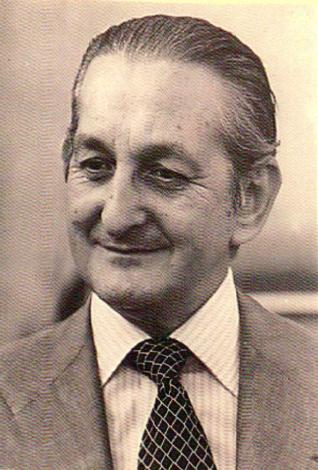
Torcuato Fernández-Miranda
Founder and director of Junceda Abogados, the new academic is a full member of the Royal Institute of Asturian Studies, where he chairs the Committee on Law, Social Sciences and Economics, and a full member of the Royal Asturian Academy of Jurisprudence, a corresponding member of the Royal Academy of Jurisprudence and Legislation of Spain and the North American Academy of the Spanish Language, and an honorary member of the Peruvian Academy of Law. He is a member of the Barcelona Arbitration Court, the Arbitration Court of the European Association of Arbitration, based in Madrid, and the Arbitration Court of the Pontifical Catholic University of Peru. Since 2016, he has served as a member of the Commission for Urban Planning and Land Management of the Principality of Asturias, selected from among experts of recognised standing, and as a member of the Advisory Council of the Spanish Association of Urban Planning Law.
He has participated as an expert in 18 parliamentary committees on legislative reforms and has drafted various bills and legislative proposals, as well as regulatory provisions. He is the author or co-author of more than two hundred legal works, some of which have provided the basis for judicial decisions by the Constitutional Court of Chile, the Supreme Court of Peru and courts in Bolivia. He has received commendations in the Luis Sela Sampil Awards for doctrinal articles organised by the Faculty of Law of the University of Oviedo, and on two occasions in the prestigious Financial Studies Award in 1992 and 2012, organised by the Centre for Financial Studies in Madrid. He is also a member of 14 editorial boards of Spanish and international legal journals. He has received honorary doctorates from six foreign universities and been appointed an honorary professor by another six. He has served as director, speaker or lecturer in more than fifty educational programmes held in Spain and Ibero-America.