

Dr. Javier Junceda
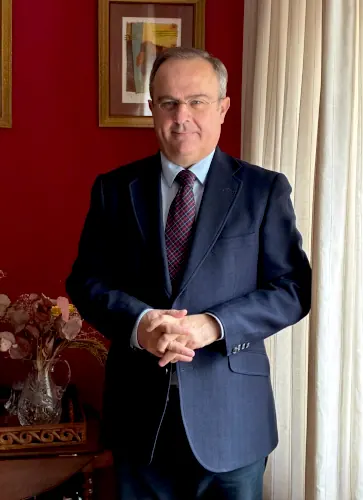
Javier Junceda, a renowned jurist, former Dean of the Faculty of Law of the International University of Catalonia and Numerary Member of the Royal European Academy of Doctors (READ), addresses current affairs from a legal perspective and pays tribute to the late academic José María Simón Tor in the articles “How to recognise a rule-of-law state”, “Much more than an ophthalmologist” and “Uncertainties”, published in the digital newspaper El Debate between 11 April and 11 May. Junceda is also the subject of two reports by the newspaper “La Nueva España” and the specialised portal Confilegal on his admission to the Royal Academy, which took place on 21 April. The new member read his admission speech, “On legislative incontinence and administrative simplification”, in which he reflected on the excess of legislation and the urgent need to address it, analysing the responses other countries have given to this phenomenon, as well as various legal initiatives proposed in Spain.
In “How to recognise a rule-of-law state”, the expert defines the standards that characterise any rule-of-law state beyond the classical separation of powers, following the precepts of the renowned Argentine jurist Alfonso Santiago: respect for a constitutional order that consolidates democracy and guarantees its continuity and institutional framework; effective compliance with a legal system that is clear, coherent, stable and reasonable; the election of office-holders through free and transparent elections, with sound electoral rules that facilitate citizen participation; limits on the re-election of political office-holders beyond two consecutive terms in order to allow alternation and prevent permanent control of power and nepotism; the separation of powers illuminated by Plato and Aristotle and later formulated by John Locke and Montesquieu; genuine judicial independence; the need for minimum standards of ethics, transparency and supervision in the public sector; a professional civil service that is accountable for its work; freedom of expression and the existence of free and independent media; and the broad recognition of human rights and their effective protection.
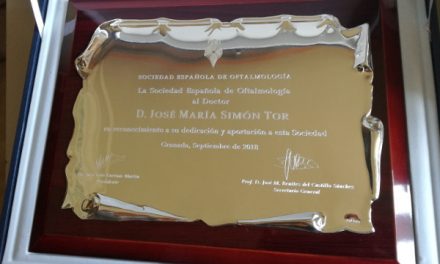
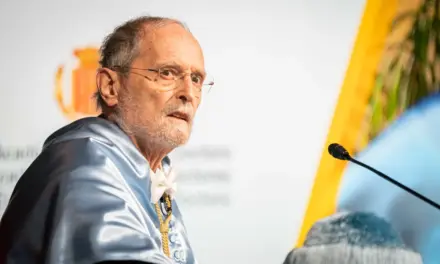
For his part, in “Much more than an ophthalmologist”, he recalls the figure of the late José María Simón Tor and the family and personal relationship he had with him. “The Simón clan has always been broad in scope. Simón de Guilleuma, a contemporary colleague of my grandfather, was not only a leading figure in ophthalmology, but also as a historian. And José María Simón Tor would brilliantly take up his legacy. His manual on glaucoma remains essential in his field, but he also devoted his life to medical history, to the point of being responsible for humanities in the Spanish society of his speciality,” he recalls. Finally, in “Uncertainties”, Junceda addresses the difficulty of managing every aspect of life in a constantly changing world in which predictability has given way to bewilderment. “Managing uncertainty, in short, means accepting it and knowing how to deal with it intelligently, because, moreover, we usually suffer much more in imagination than in reality, as Seneca already warned us in his treatise on providence,” he concludes.
 Founder and director of Junceda Abogados, the new academic is a Numerary Member of the Royal Institute of Asturian Studies, where he chairs the Committee on Law, Social and Economic Sciences, and a Numerary Member of the Royal Asturian Academy of Jurisprudence, a Corresponding Member of the Royal Academy of Jurisprudence and Legislation of Spain and of the North American Academy of the Spanish Language, and an Honorary Member of the Peruvian Academy of Law. He is a member of the Arbitral Tribunal of Barcelona, of the Arbitration Court of the European Arbitration Association, based in Madrid, and of the Arbitration Court of the Pontifical Catholic University of Peru. Since 2016, he has been a member of the Commission for Urban Planning and Territorial Organisation of the Principality of Asturias, chosen from among experts of recognised prestige, and a member of the Advisory Council of the Spanish Association of Urban Planning Law.
He has served as an expert on 18 parliamentary committees on legislative reforms and has drafted various bills, legislative proposals, and regulatory provisions. He is the author or co-author of more than 200 legal works, some of which have served as the basis for various court rulings in the Constitutional Court of Chile, the Supreme Court of Peru, and courts in Bolivia. He has received mentions in the Luis Sela Sampil Awards for doctrinal articles of the Faculty of Law of the University of Oviedo and, on two occasions, in the prestigious Financial Studies Award (1992 and 2012), organised by the Centre for Financial Studies in Madrid. He is also a member of 14 editorial boards of Spanish and international legal journals. He has been recognised as doctor honoris causa by six foreign universities and as honorary professor by another six. He has served as a director, speaker, or lecturer in more than 50 training programmes held in Spain and Latin America.