

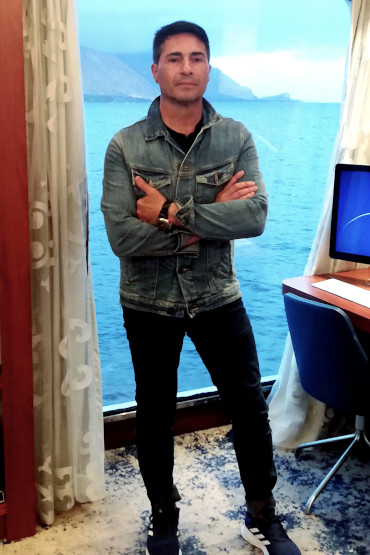
Mr. Miquel Ventura
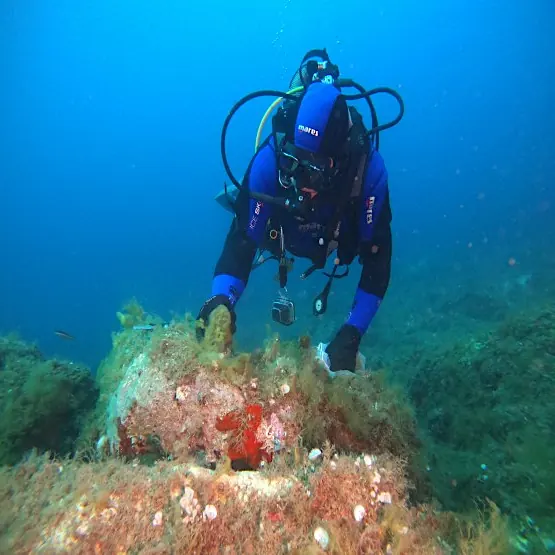
The latest quarterly report from Silmar, the marine biodiversity observation and protection project managed by the Environment and Ecology Unit of the Pro Royal European Academy of Doctors Foundation, covering the period from May to July 2026, highlights the detection of the invasive alga Lophocladia lallemandii in late spring at the La Cima station, located off the coast of Castell-Platja d’Aro on the Costa Brava. This finding led those responsible for the project, headed by Miquel Ventura, the Foundation’s Project Director, to carry out specific monitoring to assess its spread and its impact on underwater biota, particularly on those species, communities, and habitats most sensitive to its development and therefore potentially affected by it.
During these three months, observations also determined that a colony of the native coral Cladocora caespitosa showed approximately 37% of its surface without living tissue after more than eight years of monitoring. “Added to this pressure is the risk associated with ballast water and sediments from merchant vessels which, unless properly managed, can transport microorganisms, pathogens, larvae and non-native species across different marine regions, altering water quality and reducing the recovery capacity of coastal ecosystems,” the bulletin warns, illustrating with images the observed decline of this species.
 The report also emphasises the pressure exerted by tourism on this natural environment. “The Catalan coast is an extraordinary natural area, but it is also one of the most visited regions in the Mediterranean. The Costa Brava alone recorded more than 12.2 million hotel overnight stays during 2025, an activity concentrated particularly in the summer months. This high influx can locally intensify recreational boating, anchoring, underwater noise, waste generation, water consumption and pressure on sanitation systems. At Silmar, we analyse how these pressures affect the habitats, species and ecosystem services that sustain environmental quality, social well-being and a large part of the coastal economy. Active conservation does not seek to curb tourism, but to help transform it into a more responsible, well-managed activity that is compatible with the ecological capacity of the coastline,” the bulletin states.
The Silmar project received the 2024 Talent Award in the category “Biotech, Chemistry and Life Sciences” for its contribution to knowledge of marine biodiversity and to raising awareness of the human impact on seas and oceans. In 2025, the project strengthened its network of stations and research protocols to obtain more precise data in a context of increasing pressures arising from climate change, pollution, and the intensive use of coastal areas.