

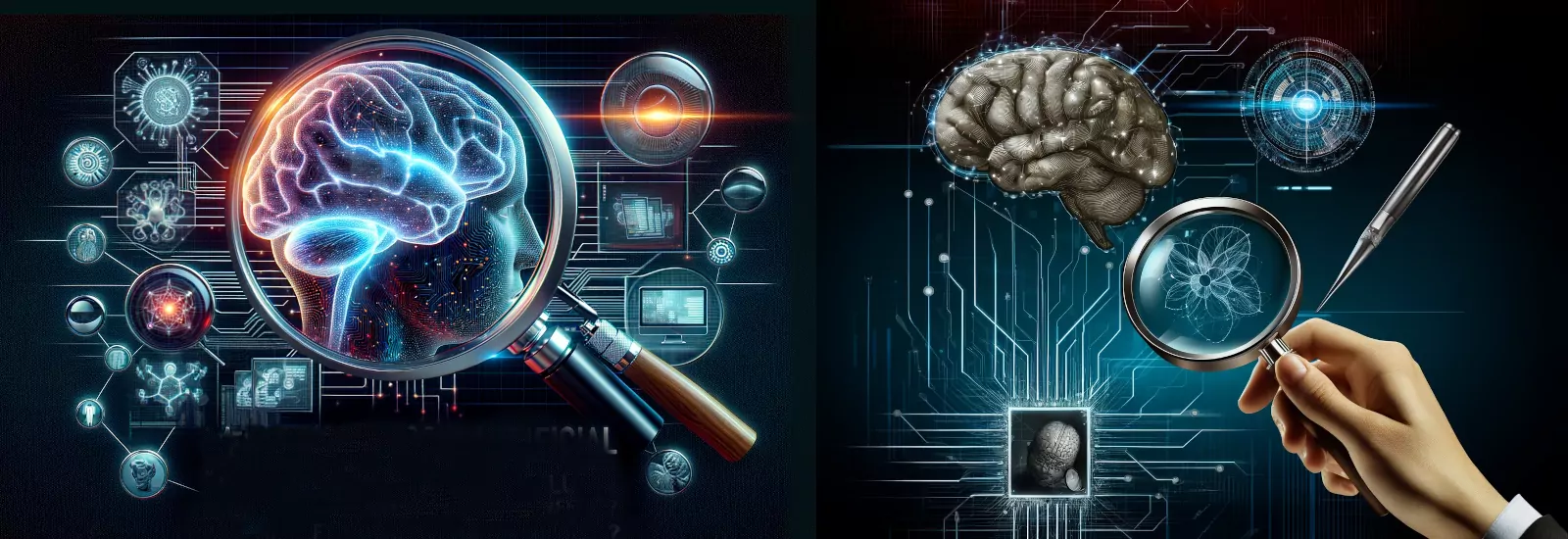
Bernat-Noël Tiffon, Honorary Member of the European High Council of Doctors and Honorary Doctors and full member of the Royal European Academy of Doctors (READ), has featured in recent weeks in a series of publications in media outlets such as the specialist portals Confilegal and Diario Jurídico, as well as the digital edition of the newspaper La Vanguardia, following the publication of his latest book, “Criminal and Forensic Psychology, Artificial Intelligence (AI) and Black Boxes: Challenge, Reality, Fiction, Ally or Rival, or Ethics and Deontology?” (J. M. Bosch Editor). In this work, he examines the role of AI in forensic practice, presenting specific examples to illustrate how this disruptive technology could reconstruct criminological events, assess the cognitive and volitional state of the perpetrator of a crime, or analyse psychopathic motivation, thereby accelerating and objectifying expert assessment work.
In an extensive conversation with the expert, Confilegal presents the main conclusions of a work that is far removed from a conventional handbook, as well as the author’s firm commitment to using technology without distorting or dehumanising forensic practice. “A machine can process a clinical history or background information, but it lacks intuition and countertransference. A human expert senses the tension in the room, detects an uncomfortable silence or a look intended to manipulate. AI can count bloodstains or analyse the syntax of a statement, but it is incapable of smelling fear or sensing pure evil. Clinical judgement is a synthesis of experience and empathy that cannot be programmed,” Tiffon states in one of his key responses.
The report published by Diario Jurídico, for its part, focuses on the book itself, introducing the “black boxes” already mentioned in its title, as well as the academic’s extensive professional and scientific career. “The author coins the term ‘black box’ to denounce the lack of transparency in AI processes. ‘An algorithm can geolocate human remains or detect patterns in thousands of data points, but it lacks the intuition, empathy and clinical judgement needed to understand psychopathic motivation,’ Tiffon states. According to the author, artificial intelligence is deterministic, whereas the criminal mind is erratic and chaotic: ‘AI must be the psychologist’s microscope, not the judge passing sentence.’ The work also analyses critical risks such as algorithmic hallucinations—false data invented by AI—and the iatrogenic dangers of therapeutic chatbots, which may validate the delusions of psychotic patients instead of challenging them,” the article summarises.
In La Vanguardia, Tiffon, in conversation with journalist Sara Casas, reviews his extensive career and, through historical cases and milestones in forensic research, discusses his role as a leading communicator in his field. “Within the university environment, I was asked to direct my publications towards specialised works. From that point onwards, I began working on more technical books intended for professionals, students and people interested in criminal and forensic psychology from a scientific perspective. I published a four-volume work on forensic psychometrics, focusing on the use of psychological assessment tests and instruments in different types of criminal cases. I also worked on a visual atlas of forensic psychology to illustrate, from a technical perspective, how certain mental disorders may be related to particular criminal acts,” he explains.
About this latest book, he looks towards the future of a profession which, like so many others, will depend to a large extent on artificial intelligence tools, although, in his view, it can never cease to be human. This will require the implementation of solid ethical and professional frameworks that guarantee effective judicial protection and respect for fundamental rights. “It is possible that, in the more or less near future, changes will occur in professional roles through the creation of new profiles of forensic psychologists specialising in artificial intelligence. We must always ensure human supervision in its use, safeguard confidentiality, privacy and professional ethics, and employ AI solely for the benefit of society,” the author states in his presentation of the book.
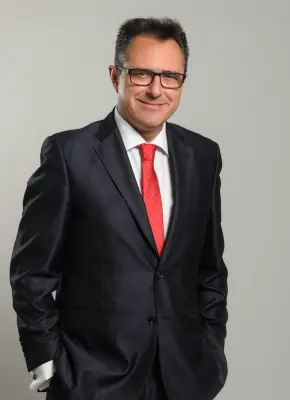
Dr. Bernat-Noël Tiffon
A Professor of Legal Psychology at Abat Oliba University, Tiffon also promotes the Academy of Psychological Forensic Training, an online education centre aimed at training professionals in the fields of legal, forensic and criminological psychology. Its courses are delivered under an agreement with the Lafayette University Institute, an institution associated with the IMF Universitas Europaea–eUniv European University of the Principality of Andorra. Among his most recent scientific activities, his participation in the Responsible Gambling Congress, organised by the Catalan Centre for Social Addictions Association and held on 9 April at the Maritime Museum of Barcelona, is particularly noteworthy. The event, which had reached its 17th edition, addressed issues ranging from the profile of social addictions to the future of responsible gambling, with institutional, association and business participation. The academic delivered the lecture “Psychopathology of Addictions and Forensic Consequences: Clinical and Criminological Analysis of Behavioural Addictions and Their Implications in the Judicial Sphere.”
He has taken part in criminological cases belonging to the contemporary history of Spain’s most notorious crimes, with broad public reach and social impact; has taught at Spanish and international universities; and is the author of more than 20 books on the subject. He is also a recognised communicator in academic forensic psychology, as a lecturer and as a manager and organiser of leading events and conferences in these fields. He holds national accreditation as an expert psychologist in legal and forensic psychology from the General Council of Official Associations of Psychologists. He is a member of the American Academy of Forensic Sciences, the American Academy of Psychiatry and the Law, the Canadian Society of Forensic Science, the International Academy of Legal Medicine, the French Association of Criminology and the Mexican Society of Criminology. He has published “The Tiffon Family Saga: From Traditional Surgery to Psychiatry and Forensic Psychology. An Investigation into a Three-Century Family Journey through Medical and Social History” (J. M. Bosch Editor), in which he reviews a long and distinguished family career devoted to medicine and psychology, as well as the aforementioned “Criminal and Forensic Psychology, Artificial Intelligence (AI) and Black Boxes” (J. M. Bosch Editor).