

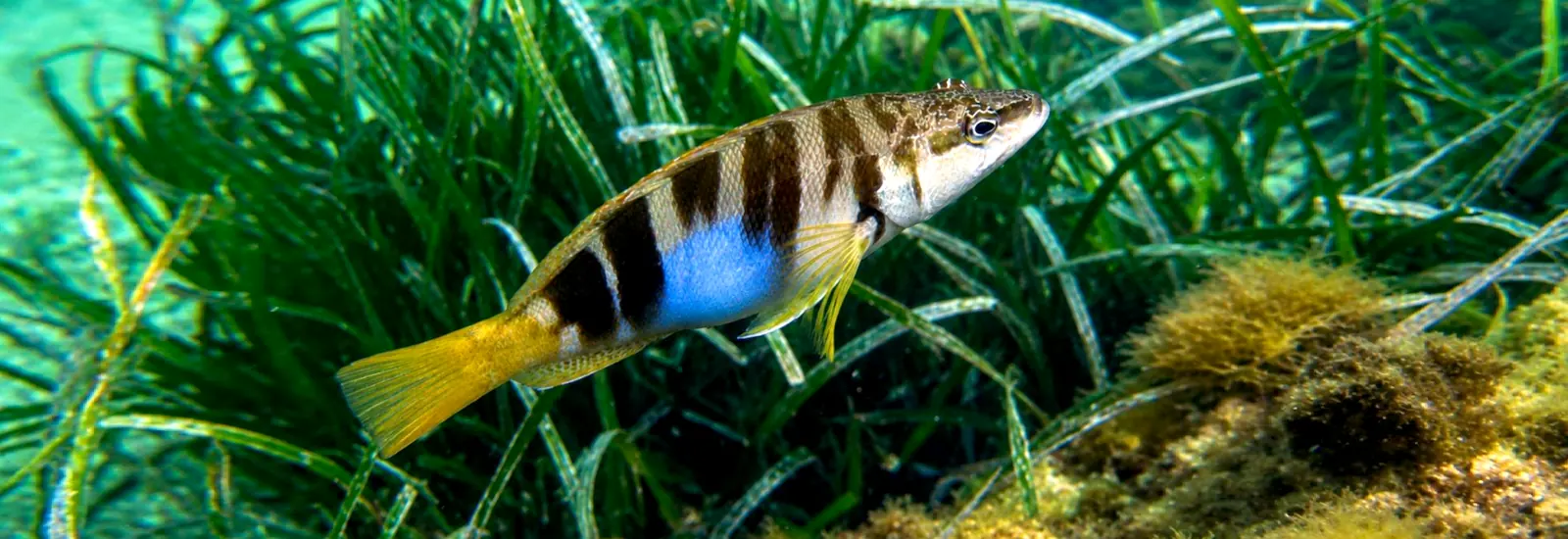
Serranus scriba (Linnaeus, 1758)
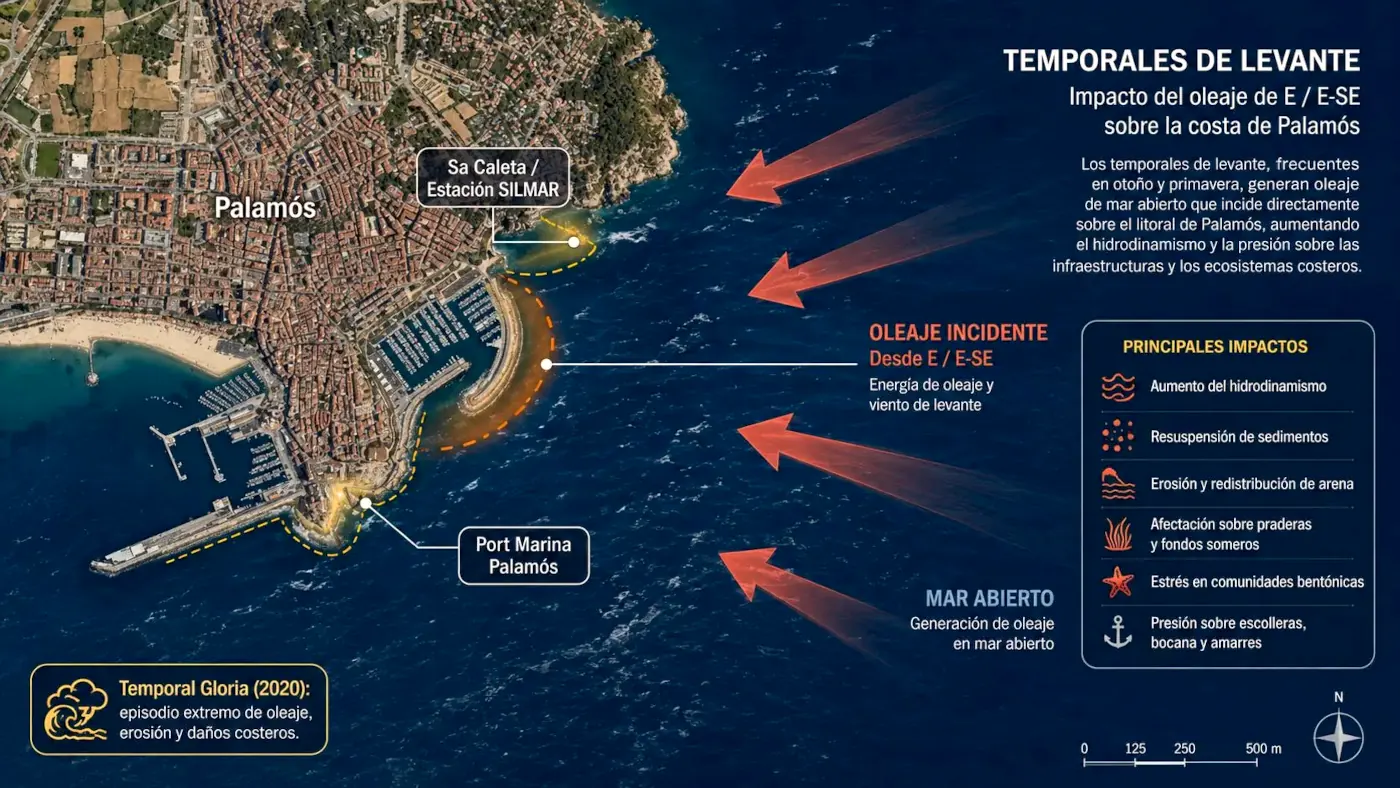
Miquel Ventura, Project Director of the Pro Royal European Academy of Doctors Foundation and of the marine biodiversity observation and protection project Silmar, managed by the Foundation’s Environment and Ecology Unit, has presented the latest activity report of the Sa Caleta marine monitoring station, located on the coast of Palamós, on the Costa Brava. The document summarises the observation, ecological diagnosis and bioindicator monitoring work carried out during 2025 at one of the underwater enclaves of greatest ecological interest in the area.
According to the coordinator of the Silmar project, biologist Mario Bofill, from the organisation Ocean for You (O4Y), the results for this period make it possible to determine that this stretch of coastline maintains an ecological quality considered good to very good despite the significant human pressure and the relentless warming of the Mediterranean. The station, located in the cove of Morro del Vedell, demonstrates notable ecological resilience amid accelerated climate change, with an overall score of 6.8 out of 10. In fact, the report records a significant increase in biodiversity over this period, as the inventory of observed species rises from 87 in the 2012 baseline to 112 in 2025. Although this figure has important nuances, given that this growth is due both to a greater sampling effort, including night diving and cryptic fauna, and to the arrival of non-native species.
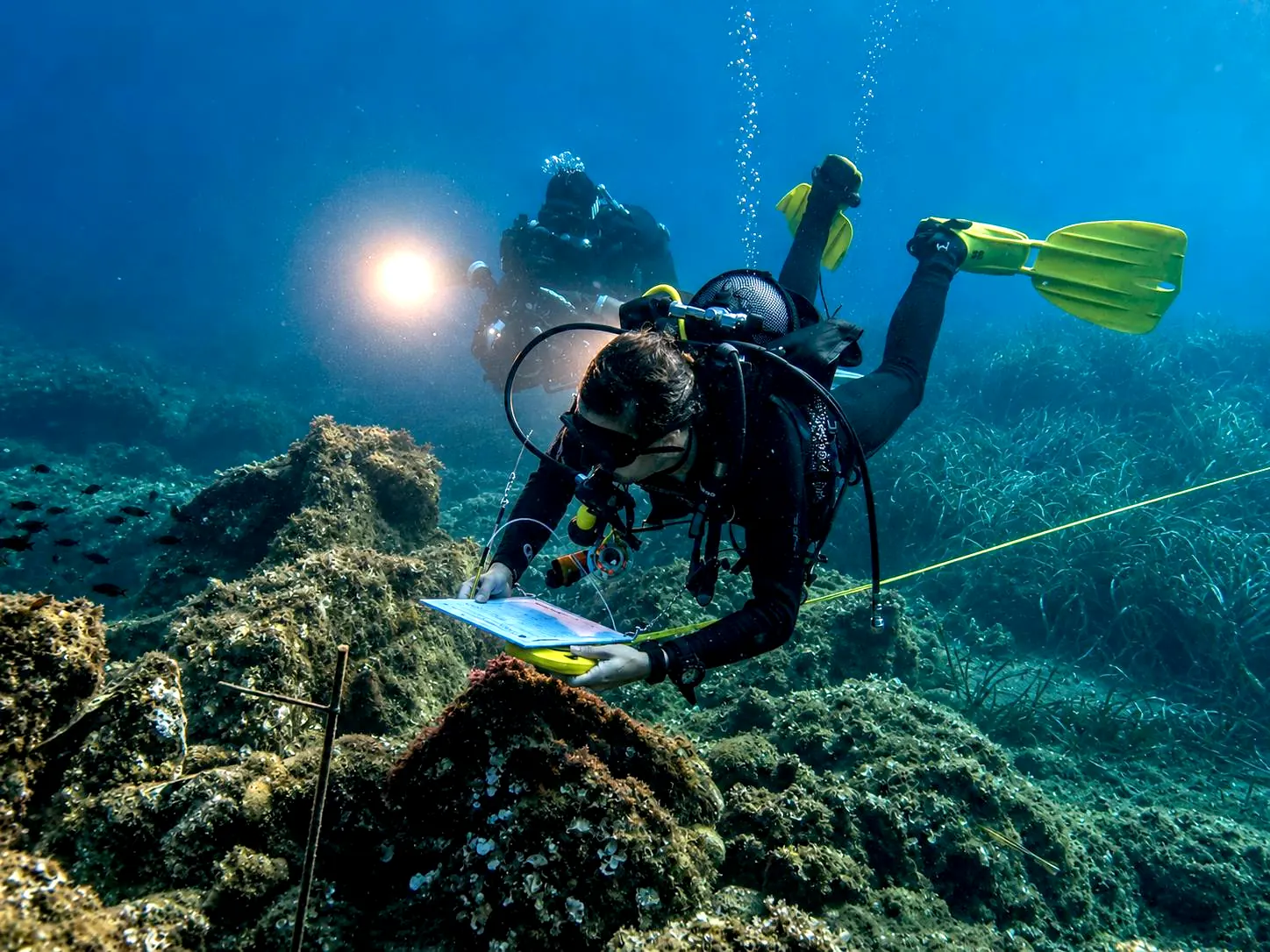
Bofill and Ventura explain in the report that, among the most positive elements, the extraordinary stability of the brown algae communities of the Cystoseira variety stands out, which recent taxonomic revision has distributed among the genera Cystoseira, Gongolaria and Ericaria (brown algae, order Fucales), showing values practically identical to those of 2017 and 2018. They also highlight that the fragmented meadow of Posidonia oceanica, the marine phanerogam endemic to the Mediterranean, remains without generalised regression, and no mass mortalities of gorgonians have been recorded, specifically of the species Eunicella singularis (white gorgonian), as occurred in previous years. However, the report warns of several threats. Water warming has become the main driver of change: the summer of 2025 was among the warmest ever recorded in Catalonia, and the three-year period (2023–2025) saw exceptionally high temperatures. This warming favours the expansion of invasive species, especially the red alga Lophocladia lallemandii, already observed at the station, as well as others such as Asparagopsis spp. and the green alga Caulerpa cylindracea, which are identified as monitoring priorities.
Other significant pressures share a common denominator: the growing ecological footprint of mass tourism and leisure activities along the coast, whose intensity often exceeds the system’s carrying capacity. The anchoring of boats on Posidonia uproots and fragments the meadow, damage that may take centuries to recover; recreational boating adds pollution, underwater noise and sediment resuspension; and spearfishing, recreational fishing and poaching keep populations of large breeders — such as the dusky grouper Epinephelus marginatus and the dentex Dentex dentex — depleted, with cascading effects across the entire trophic network. Recreational diving, when not properly managed, can cause physical damage to gorgonians and other fragile organisms, although when well managed it also becomes a powerful awareness-raising tool. Added to this is the complete absence of living specimens of the fan mussel, Pinna nobilis, since the epizootic that began in 2016, caused by the parasite Haplosporidium pinnae. On a positive note, the presence of juvenile lobsters (Palinurus elephas) and seahorses (Hippocampus spp.) is considered an indicator of ecosystem functioning.
In his final diagnosis, Ventura describes a resilient but highly vulnerable ecological nucleus and proposes concrete actions: the effective protection of Posidonia, intensive control of invasive species, monitoring of gorgonians, expansion of public awareness and stronger influence on local management to promote ecological anchoring, strict regulation of fishing and the possible expansion of the marine Natura 2000 Network. In this line of public-private co-responsibility, the project has, among others, the collaboration of the Mas Ribas hotel in Palamós, which has understood that investing in the active conservation of natural capital is not a cost, but an investment in the future itself. Healthy marine ecosystems — the Posidonia meadows that capture blue carbon and protect the coast from erosion, the brown algae communities that sustain biodiversity, the clean waters that attract visitors — provide ecosystem services on which the quality of life and well-being of the territory, as well as tourism activity itself, directly depend. Preserving this natural capital is the condition for these services to remain available today and for future generations.
The Silmar project was awarded the Talent Award 2024 in the category “Biotech, Chemistry and Life Sciences” for its contribution to understanding marine biodiversity and raising awareness of human impact on the seas and oceans. In 2025, the project has strengthened its network of stations and study protocols to obtain more precise data amid growing pressures from climate change, pollution, and intensive coastal use. Recently, Silmar also presented its latest activity report on the La Cima marine monitoring station, located on the coast of Castell-Platja d’Aro on the Costa Brava, with slightly more optimistic results.