

Dr. Francisco López Muñoz
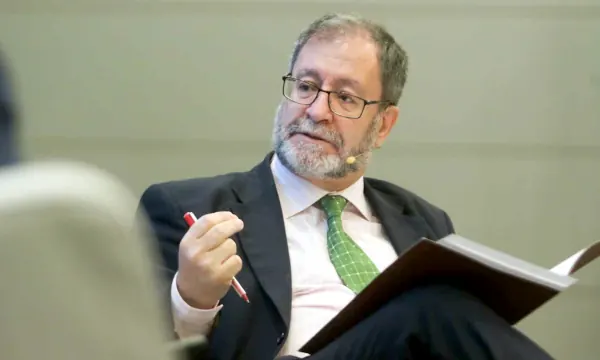
Francisco López Muñoz, Professor of Pharmacology and Vice-Rector for Research, Science and Doctoral Studies at Camilo José Cela University, Corresponding Member of the Royal Academy of Medicine of the Basque Country and of other national and international academies, and Numerary Member of the Royal European Academy of Doctors (RAED), has published the article “The crimes of Coimbra’s foundling wheel” in issue 23 of the cultural magazine “Hasta el tuétano”, corresponding to last May, in which he examines a series of murders of infants taken into the care of the Church in the 18th century. The academic co-authored this publication, which has a strong outreach focus, with Francisco Pérez Fernández, Professor of Criminal Psychology and History of Psychology at Camilo José Cela University.
The case came to light in April 1772 in Coimbra, when Luiza de Jesus Rodrigues, aged 22, was accused of murdering at least 33 infants whom she had collected from the local Foundling Wheel, run by the Order of Mercy, which took in abandoned newborns. The accused claimed that she was collecting the children on behalf of third parties, receiving 600 réis per child and clothing in which to wrap them. Instead of delivering them, however, she suffocated them. The bodies were concealed increasingly carelessly in her home: severed body parts, decomposing heads and an entire corpse beneath straw. This earned her the nickname Lucifera.
The discovery was accidental. A nun from the institution, Angêlica Maria, handed two infants over to Luiza and, hours later, found one of them strangled in a nearby olive grove. It was established that Luiza had been acting for at least two years and had collected more than 20,000 réis. The investigation revealed serious ecclesiastical negligence on the part of the administration: there were no reliable records and no monitoring of the children once they had been handed over. Luiza did not immediately confess to all the crimes, but the evidence secured her conviction. The court imposed an exemplary sentence: she was paraded through the streets with a rope around her neck while her crimes were proclaimed, tortured with red-hot pincers, mutilated and crucified before being burned to prevent any dignified burial. She was also ordered to pay 50,000 réis in legal costs. She was the last woman to be executed in Portugal and received the harshest sentence in the country’s history.
López Muñoz also took part as an expert in chemical warfare in the television documentary “Quanta guerra!”, produced by 3CAT. The programme follows a journalist’s search for traces of her late grandfather on the Aragon fronts during the Spanish Civil War. The academic gives his testimony during a visit to the former Tudela School of Warfare, where officers of the Republican Army received training on the different gases that could be used by the insurgent Army or by the German and Italian forces supporting it. López Muñoz has also been distinguished as an Ambassador of the Spanish Army, the highest recognition awarded by the Ministry of Defence.
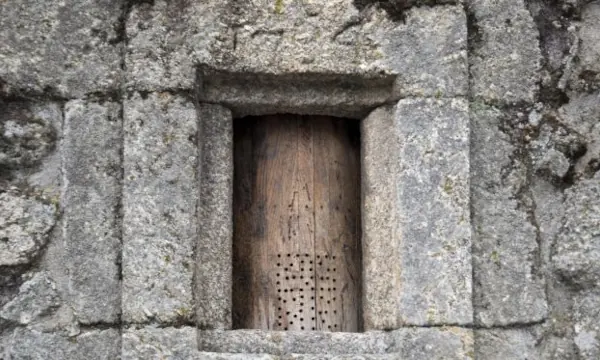
Roda dos Expostos, or foundling wheel, still preserved in the Portuguese town of Caria [source: SAPO Viagens]
He has taken part in numerous research projects and is the author of monographs and articles in his fields of study. He was recently granted the honorary title of Kentucky Colonel and appointed an Honorary Guardia Civil, coinciding with the 25th anniversary of the creation of this status, the corps’ highest civil distinction, which is awarded exceptionally. On 20 March, he was also recognised with the Medal of Merit in Cyberdefence, awarded by the Professional Association of New Technology Experts.