

Dr. Josep Maria Franquet
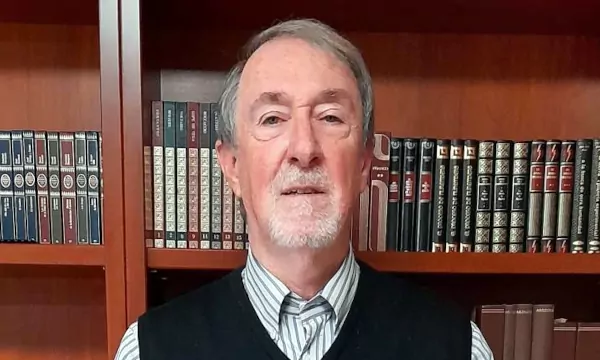
Josep Maria Franquet, Professor at the National University of Distance Education and the International University of Catalonia, and Numerary Member of the Royal European Academy of Doctors (RAED), has published the studies “Bioareas and nodes in the Cantabrian-Mediterranean region” and “On the care and efficient use of water” in the “OBE Notebooks”, published by the BioEbro Observatory of the Foros de la Concordia Foundation, appearing respectively in the second and seventh issues of this specialist publication.
The first study proposes a model of territorial planning based on bioareas and nodes to address depopulation, inequality and sustainability in the ecosystems of the Cantabrian and Mediterranean regions. To this end, it uses gravitational models that make it possible to promote intermunicipal cooperation and the implementation of digital and energy infrastructures, while encouraging civic participation, with particular emphasis on rural development, social cohesion and the management of these ecosystems, prioritising pilot projects and integrated strategies.
“The bioregional framework is the appropriate one for achieving effective planning of land uses classified as urban, agricultural, livestock, industrial, energy-related and natural. This space constitutes a geographical area containing the basic elements of an ecosystem, together with the energy, water, agri-food, socioeconomic and cultural resources required to undertake resilient action in response to the climate and digital transitions, promoting harmonious and balanced development that makes social sustainability possible. To achieve these objectives, it is essential to carry out medium- and long-term planning that takes into account the finite nature of resources and their conservation for future generations,” the expert summarises before developing his proposal, which divides the territory into 32 functional natural spaces, or bioareas, and ten areas that he describes as “micropolitan nodes”.
As regards “On the care and efficient use of water”, the study addresses the sustainable management of this fundamental element for life, highlighting the water and energy transition, the reuse of wastewater and rainwater, pumped-storage hydropower, water-saving technologies and infiltration systems. Among his recommendations, the expert proposes integrated models to reduce consumption, improve water quality and protect ecosystems, promoting efficient infrastructure, planned reuse and urban planning policies to address scarcity and climate change.
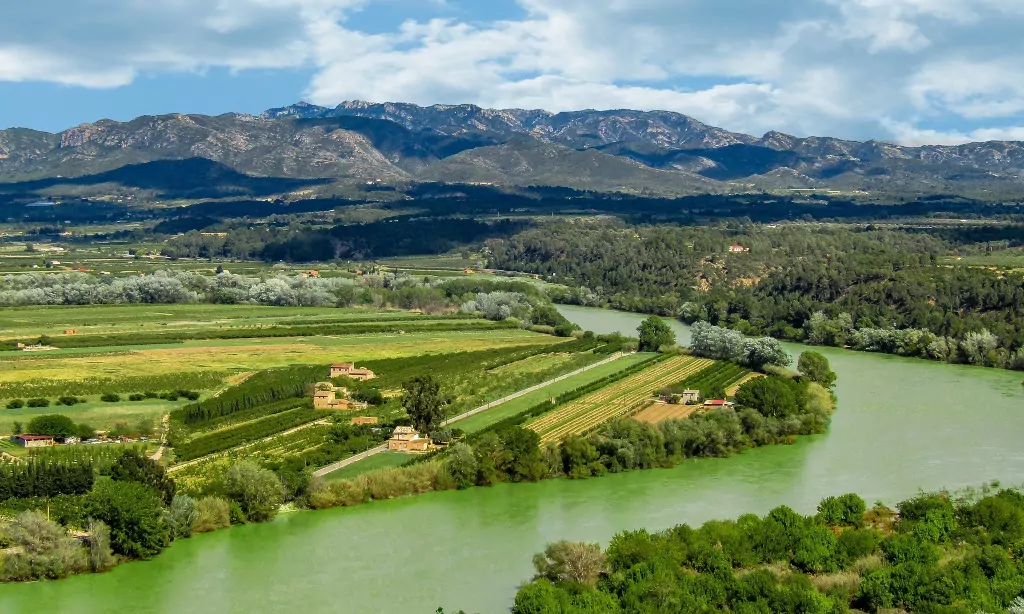 “One of the most decisive technologies for the energy transition is pumped-storage hydropower, which represents a major challenge in the transformation of the electricity system and is essential for improving its efficiency and managing demand. However, the persistent droughts that have recently affected the entire Mediterranean region as a consequence of climate change pose a new challenge. It is necessary to reuse the effluent water from wastewater treatment plants serving municipalities and to harness the potential of their treated wastewater. This should be accompanied by the use of rainwater and water from public swimming pools, as well as the incorporation of new sources into the urban water cycle,” the academic summarises in outlining his proposals.
Franquet is an agricultural engineer and consultant, university professor, writer and politician. He served as a councillor on Tortosa City Council from 1995 to 2007 and as Vice-President of the Baix Ebre County Council. He also taught at the UNED centre in Tortosa, where he served as Director of the centre and of its north-eastern campus covering Catalonia and the Balearic Islands. His professional career combines teaching, research and political activity with the management of agricultural holdings in the Ebro Delta. He has been a critical voice in defence of the territory, particularly in relation to the National Hydrological Plan, and has chaired the Economic and Social Council of the Terres de l’Ebre. He has been an ordinary member of the Doctors’ Senate of the University of Barcelona since 1997, an advisory member of the Official Chamber of Commerce, Industry and Navigation of Tortosa, and a member of the Spanish Chapter of the Club of Rome, among other institutions.
He is the author of around forty books and monographs on agriculture, construction, hydraulics, territorial planning, climatology, fish farming, topography, mathematics and economics, among other subjects, as well as numerous articles and technical notes. He is also the author of numerous poems and works in other literary genres, in both Spanish and Catalan. These works include the book “L’immortal i altres poemes”, the children’s story “La nana de Sara” and the costumbrista work “Trenta-tres jotes tortosines”. Other notable works include “Descobreix els sentits”, “Àlbum familiar” and “Ramon l’immortal”. Together with Juan Mingorance, he published the poetry collection “Sonetos a dúo”. Last year, he received the 8th People Who Change the World Award, granted by the Official Association of Agricultural Engineers of Catalonia.