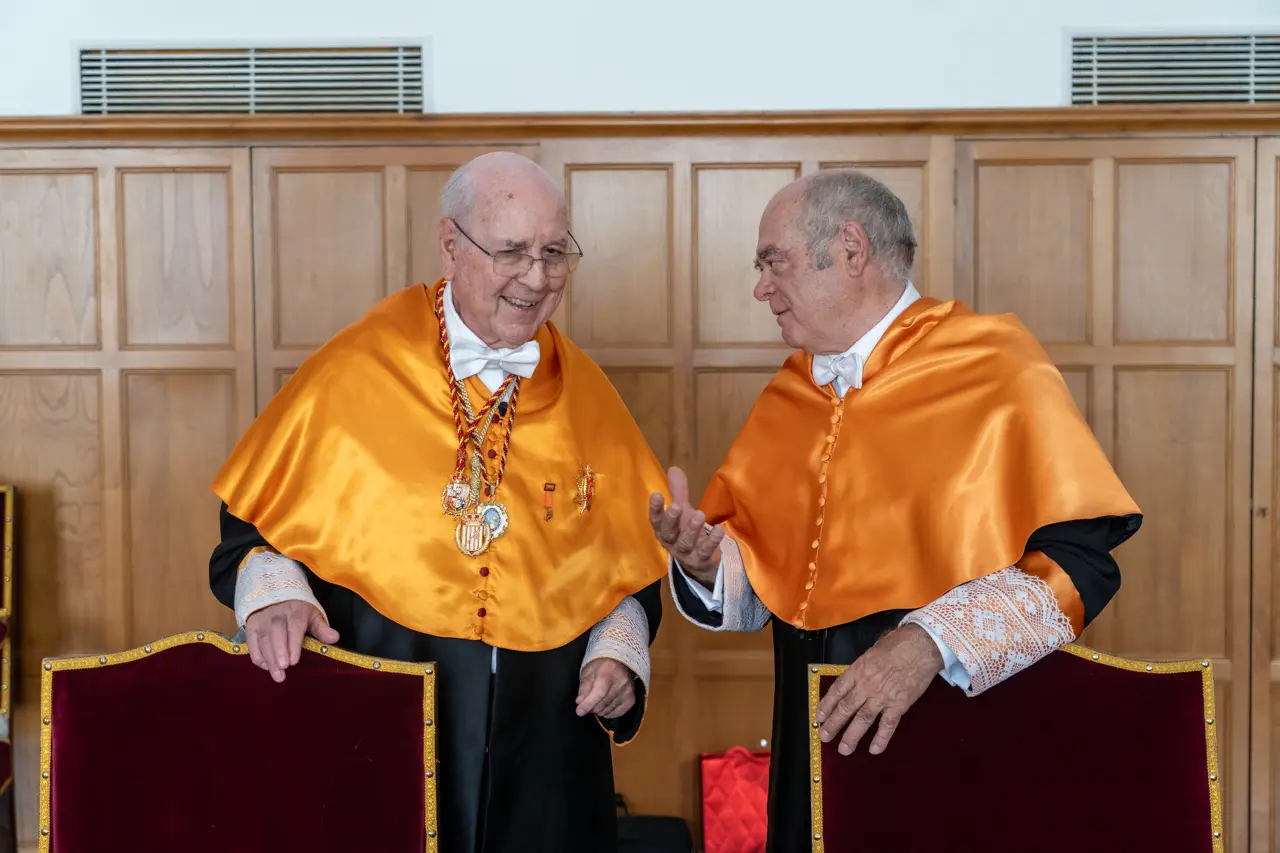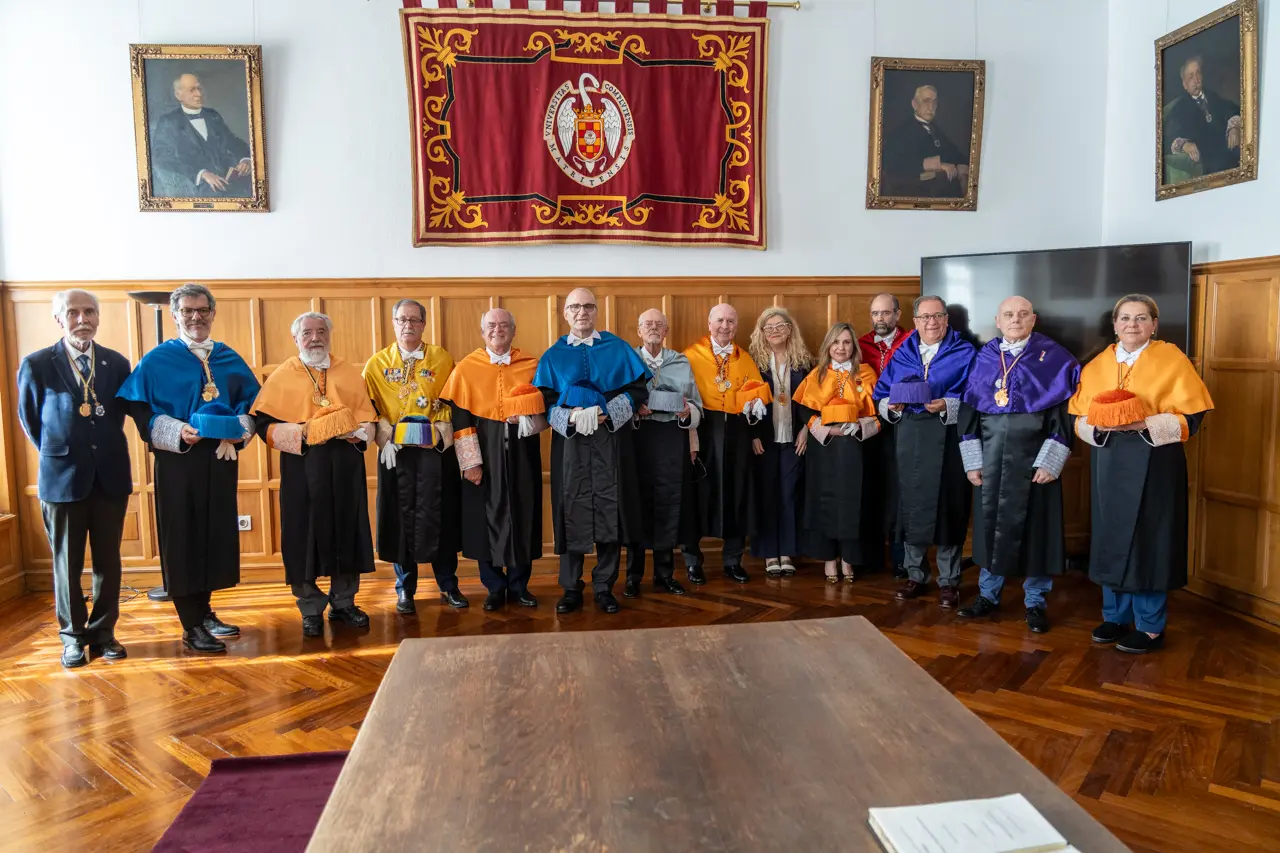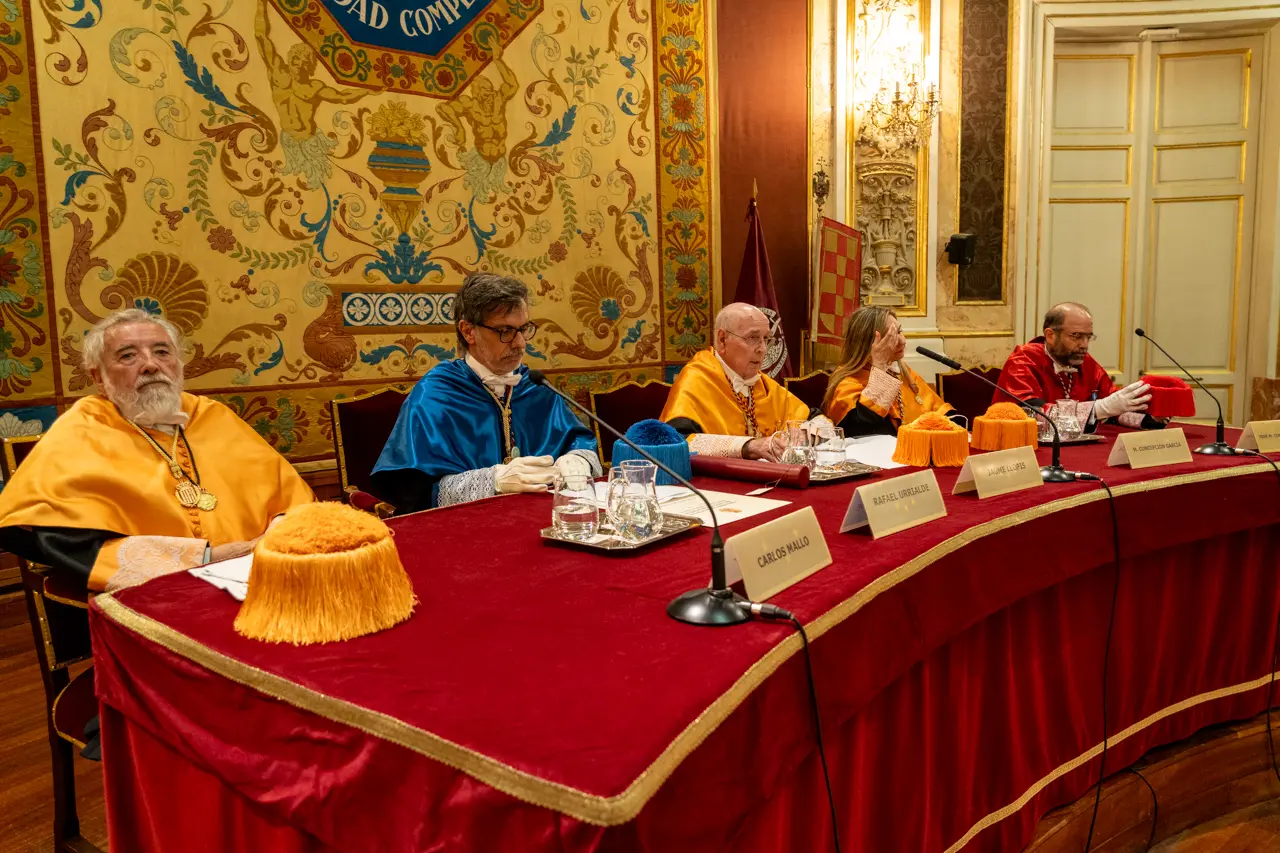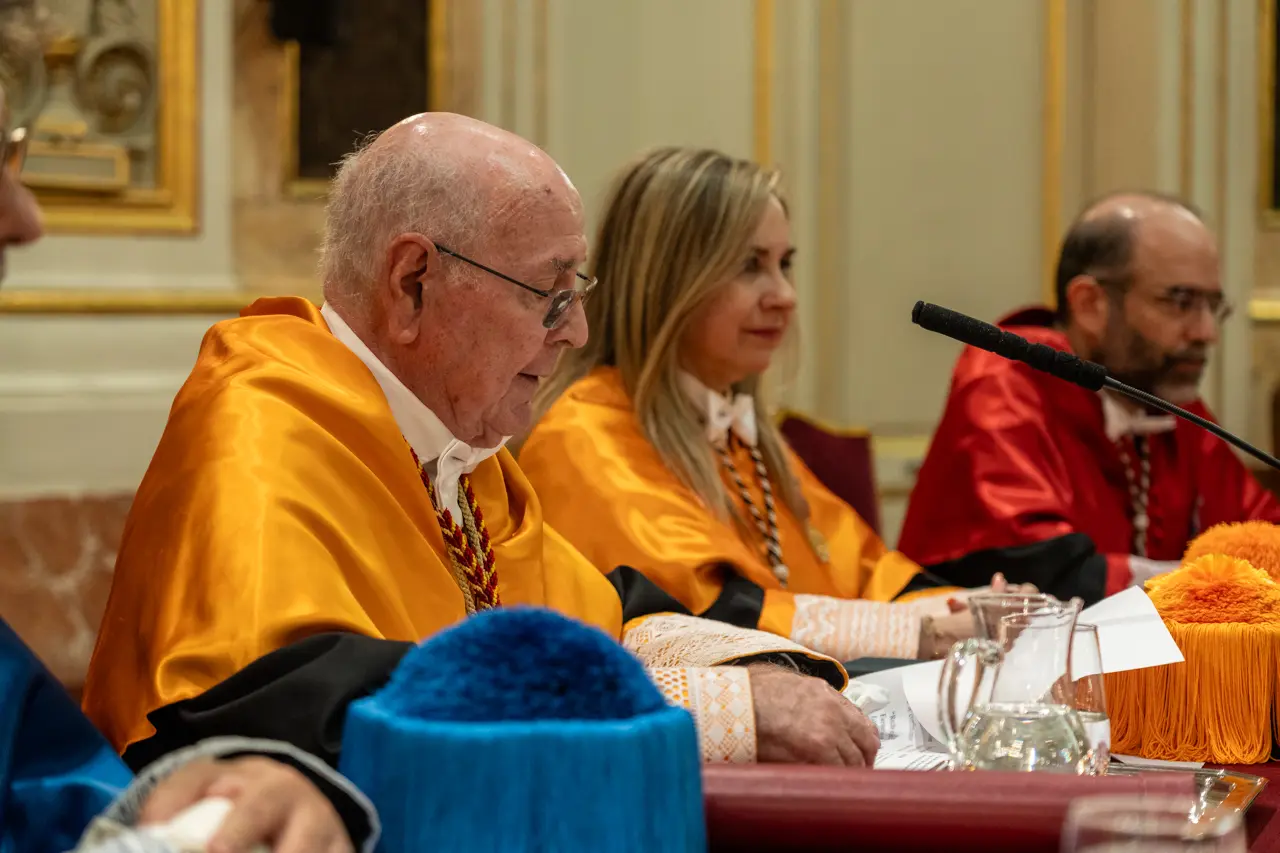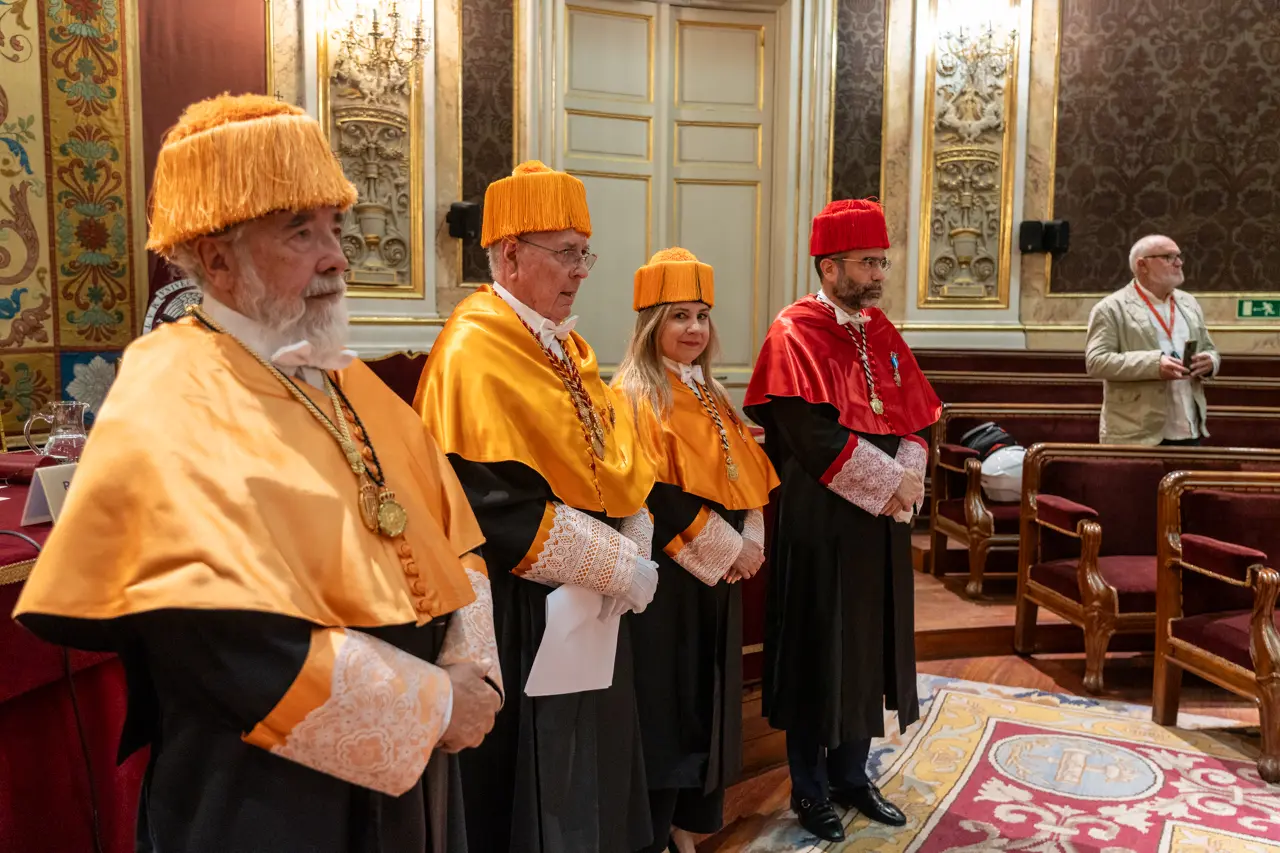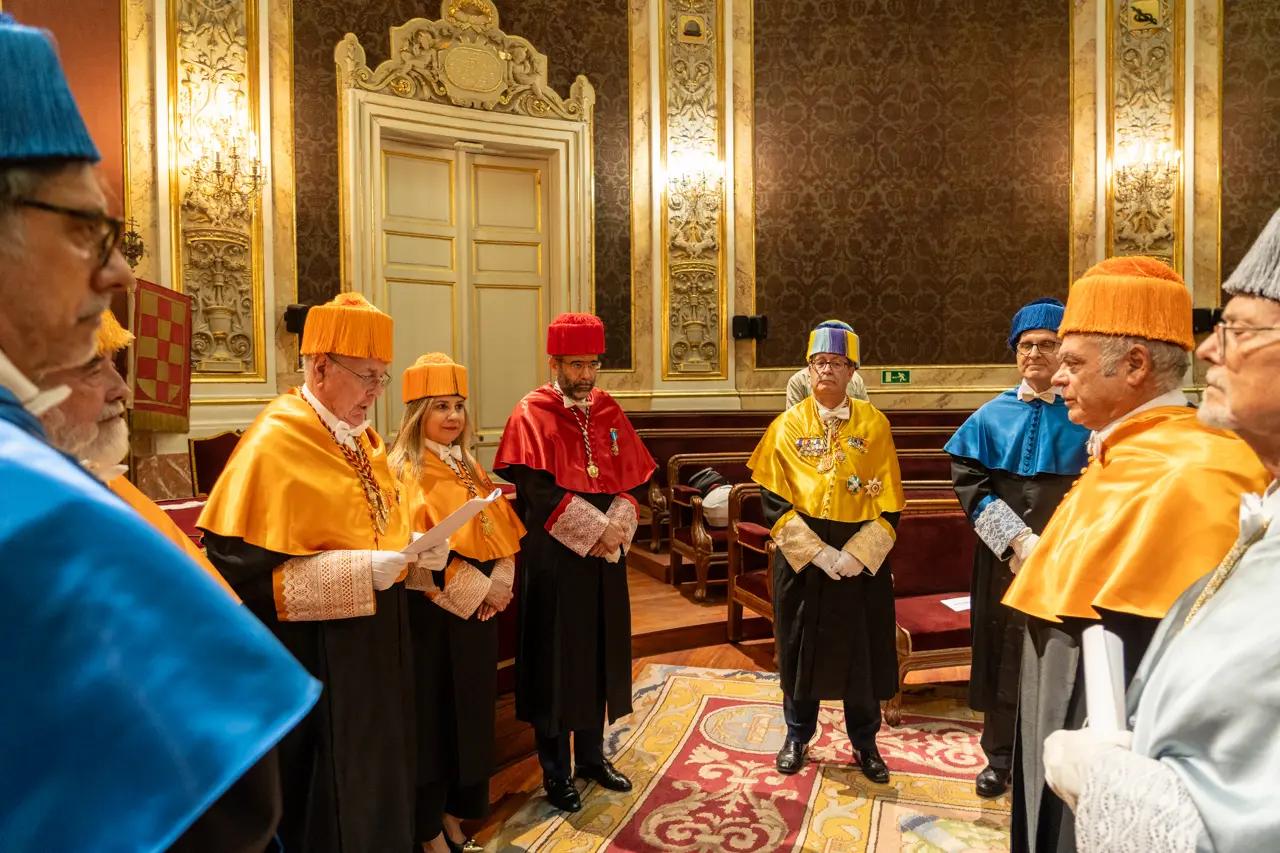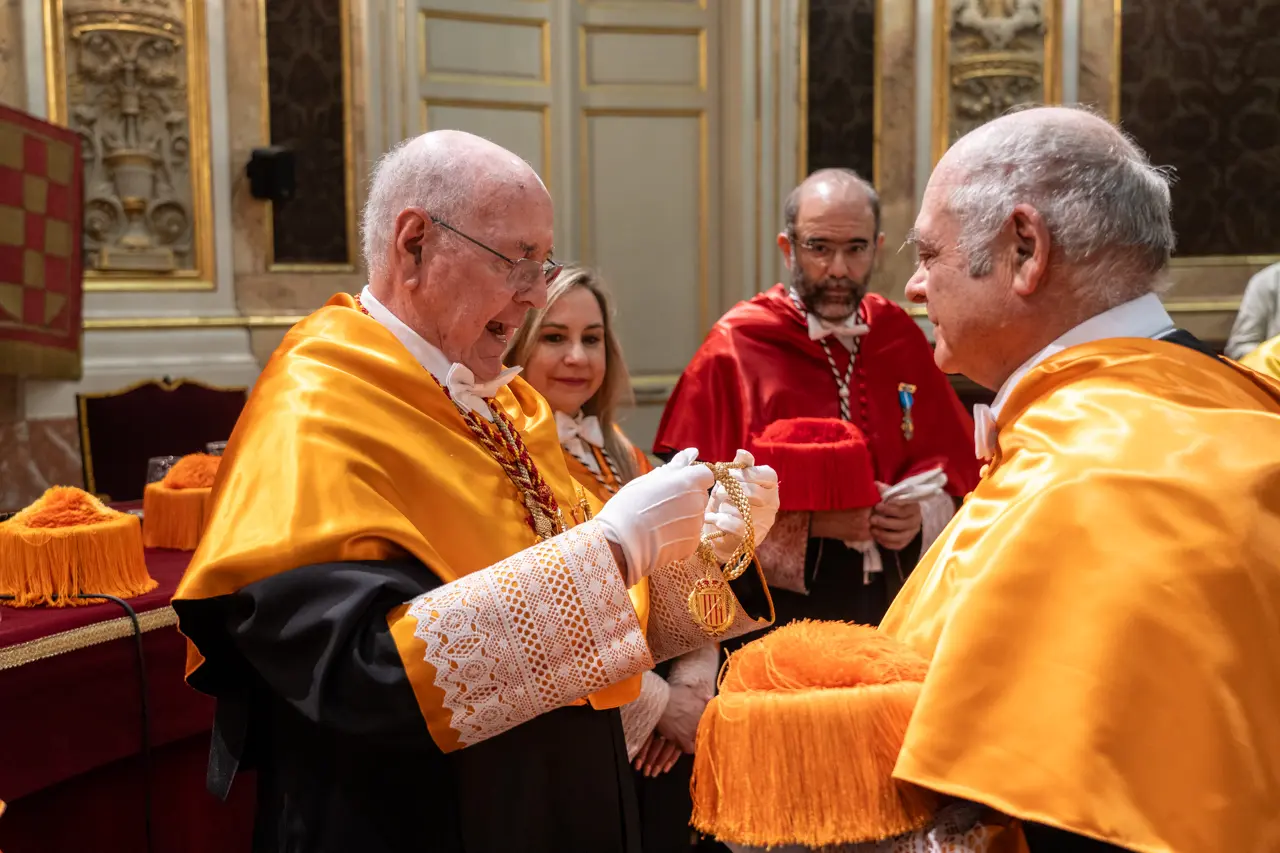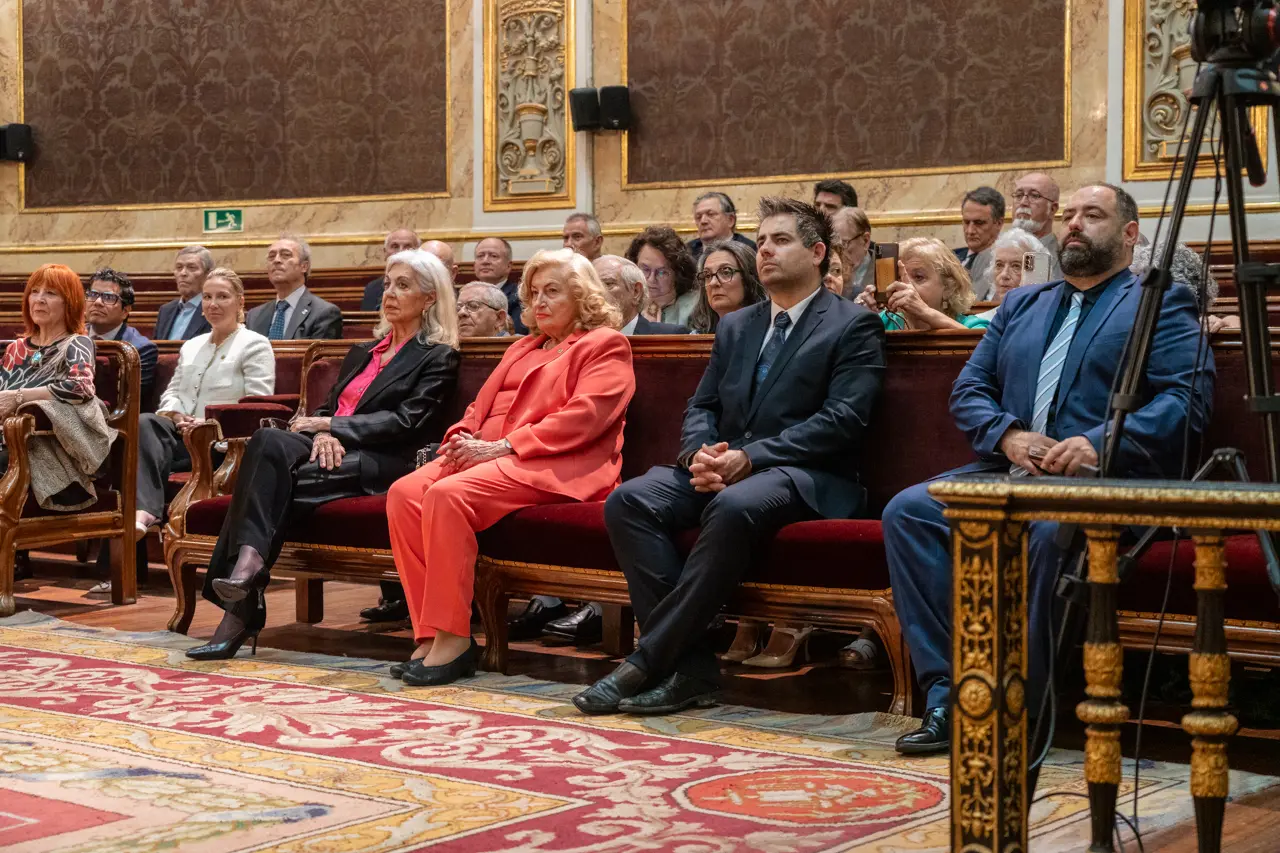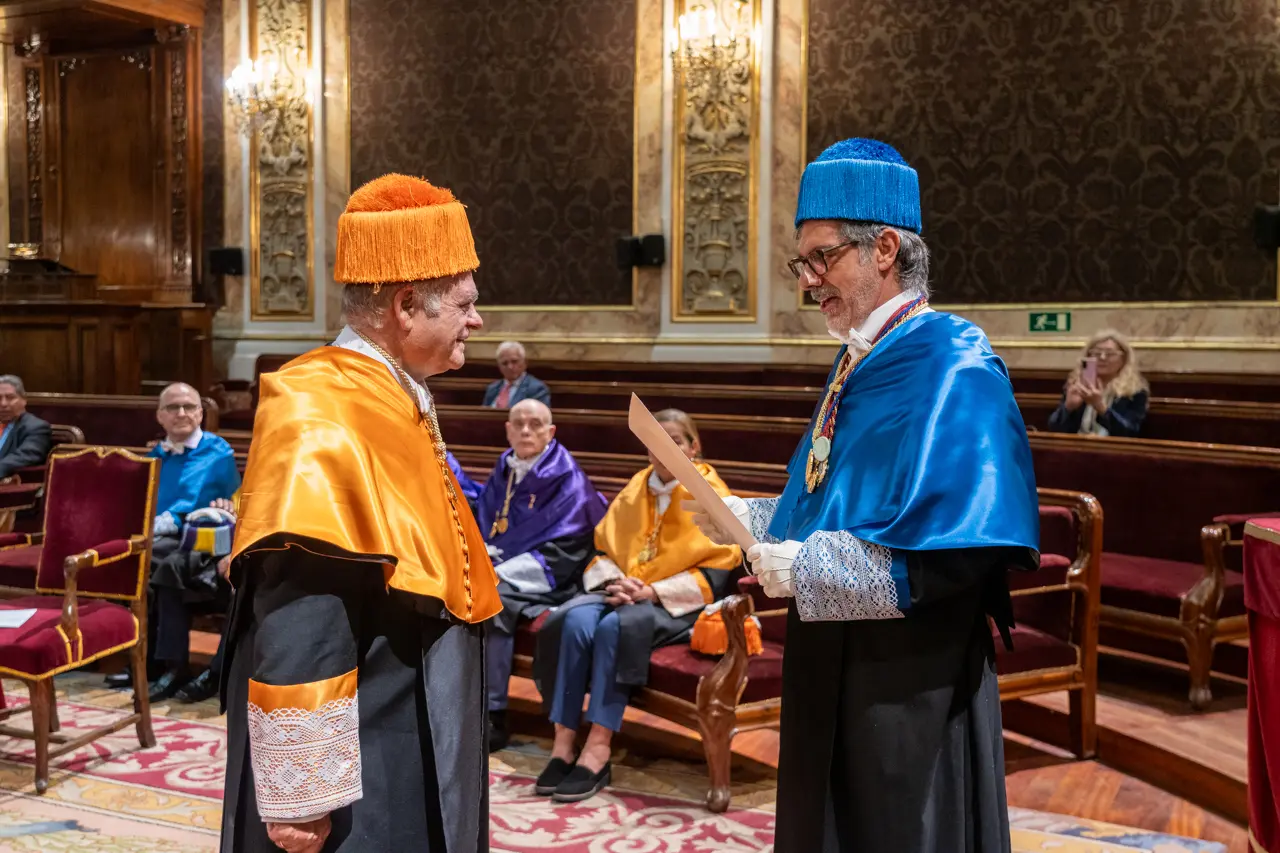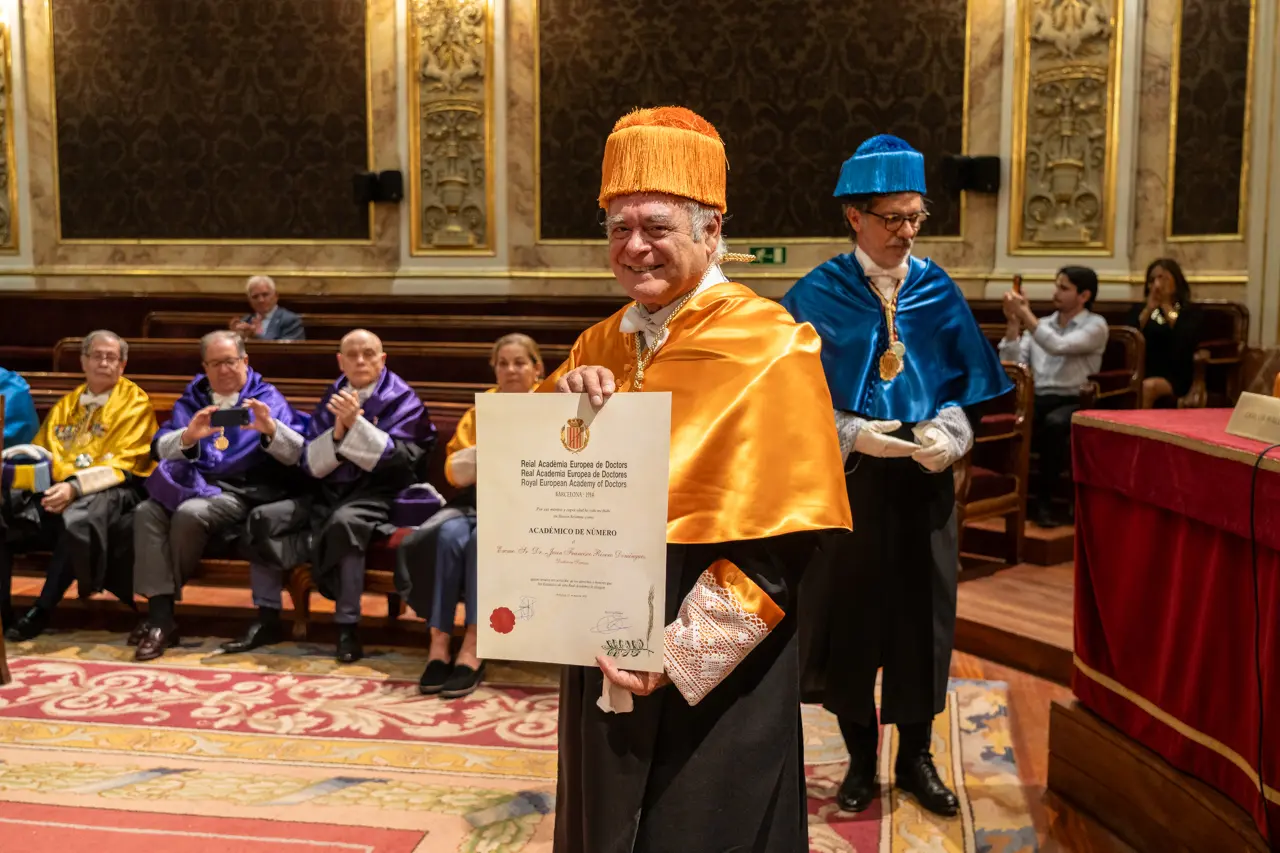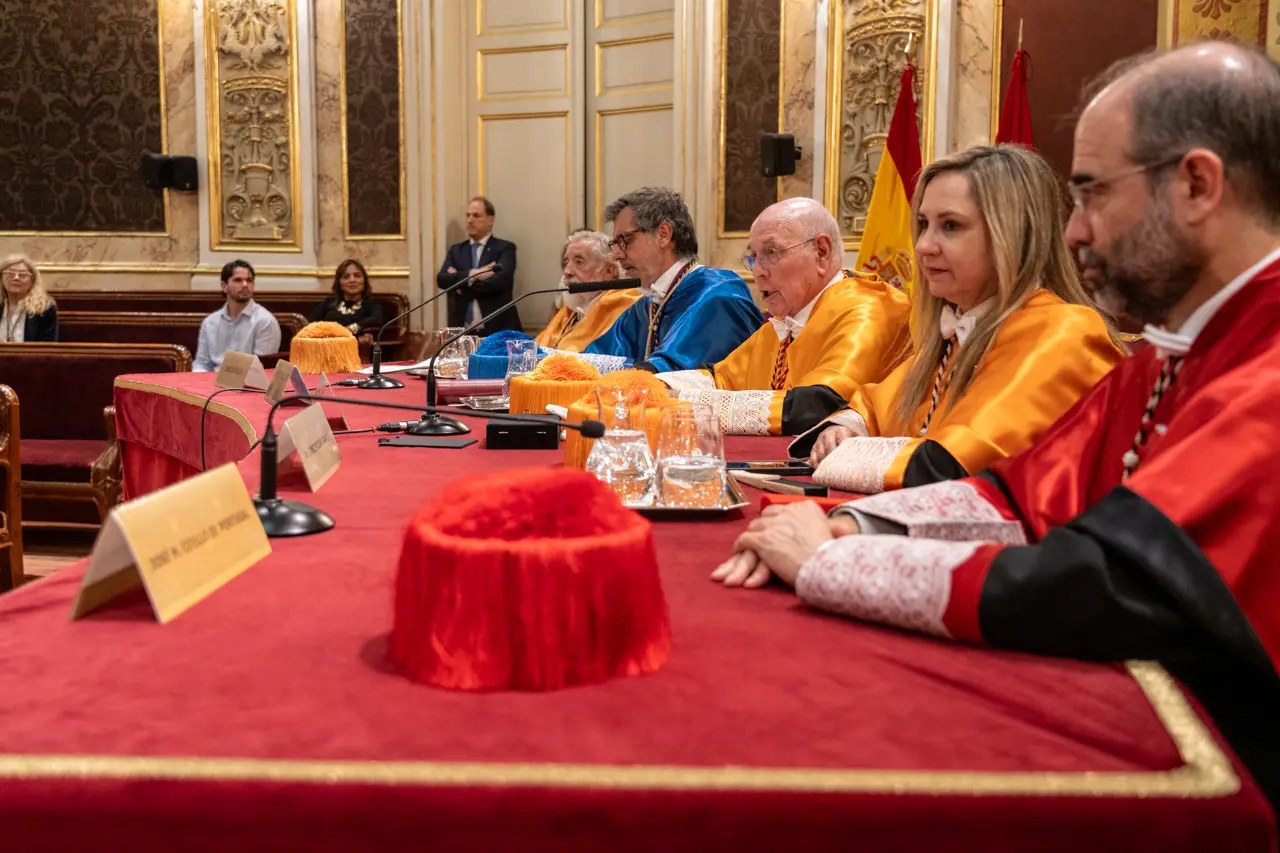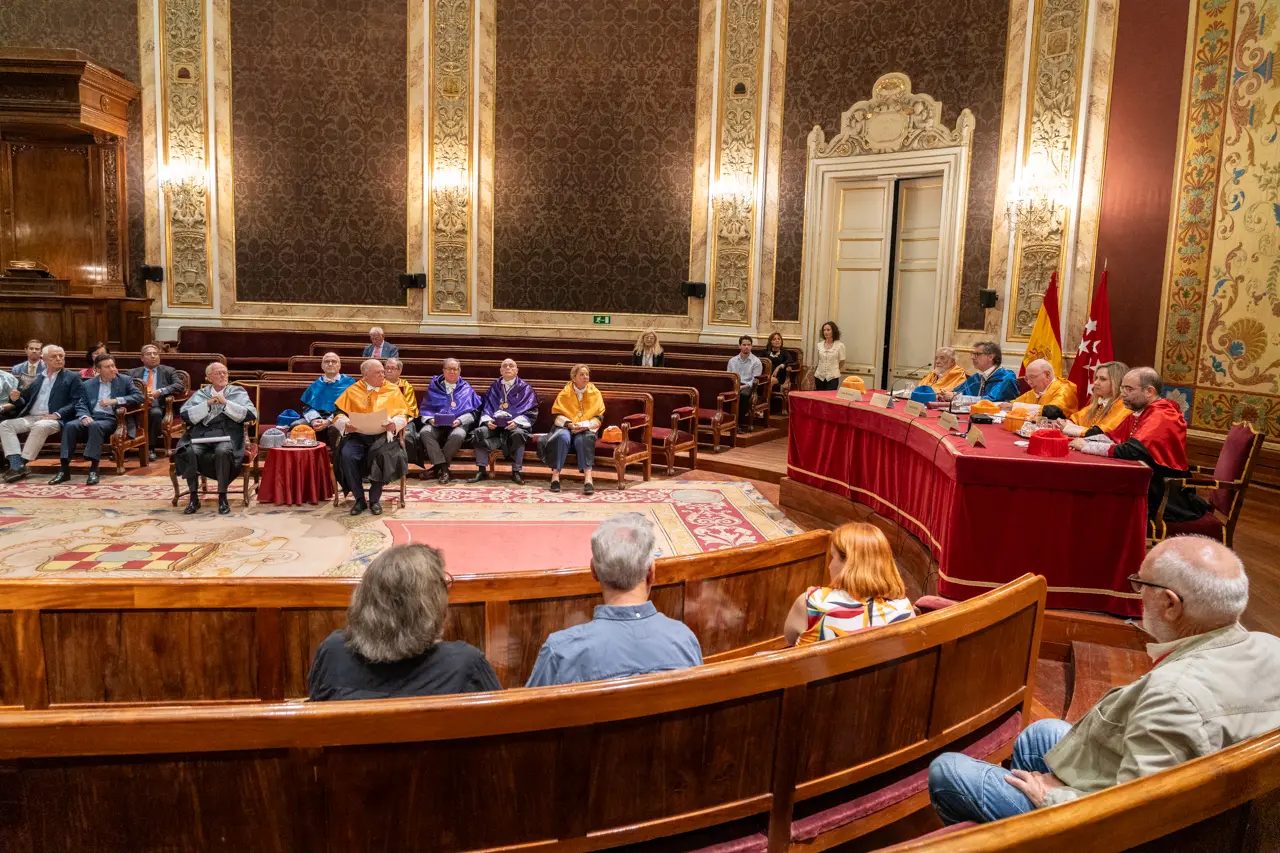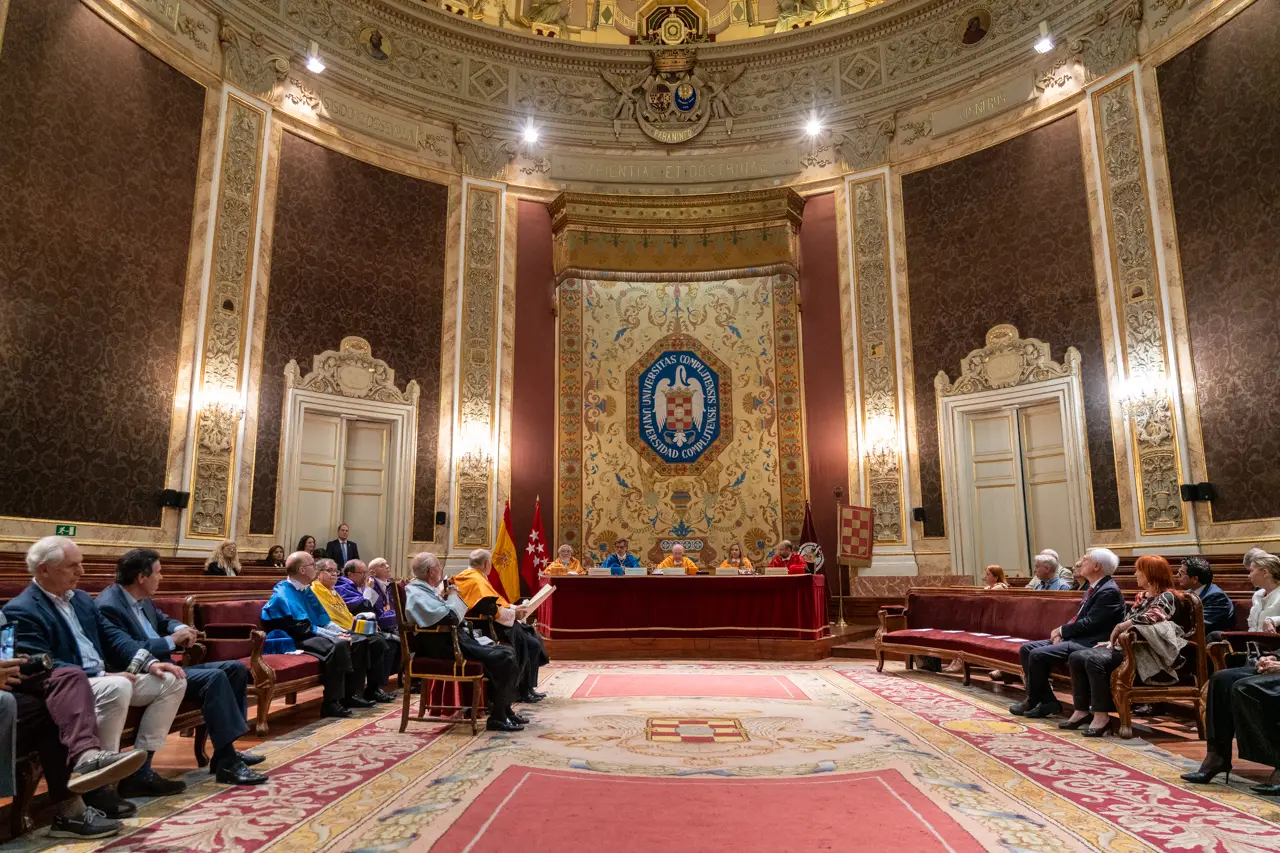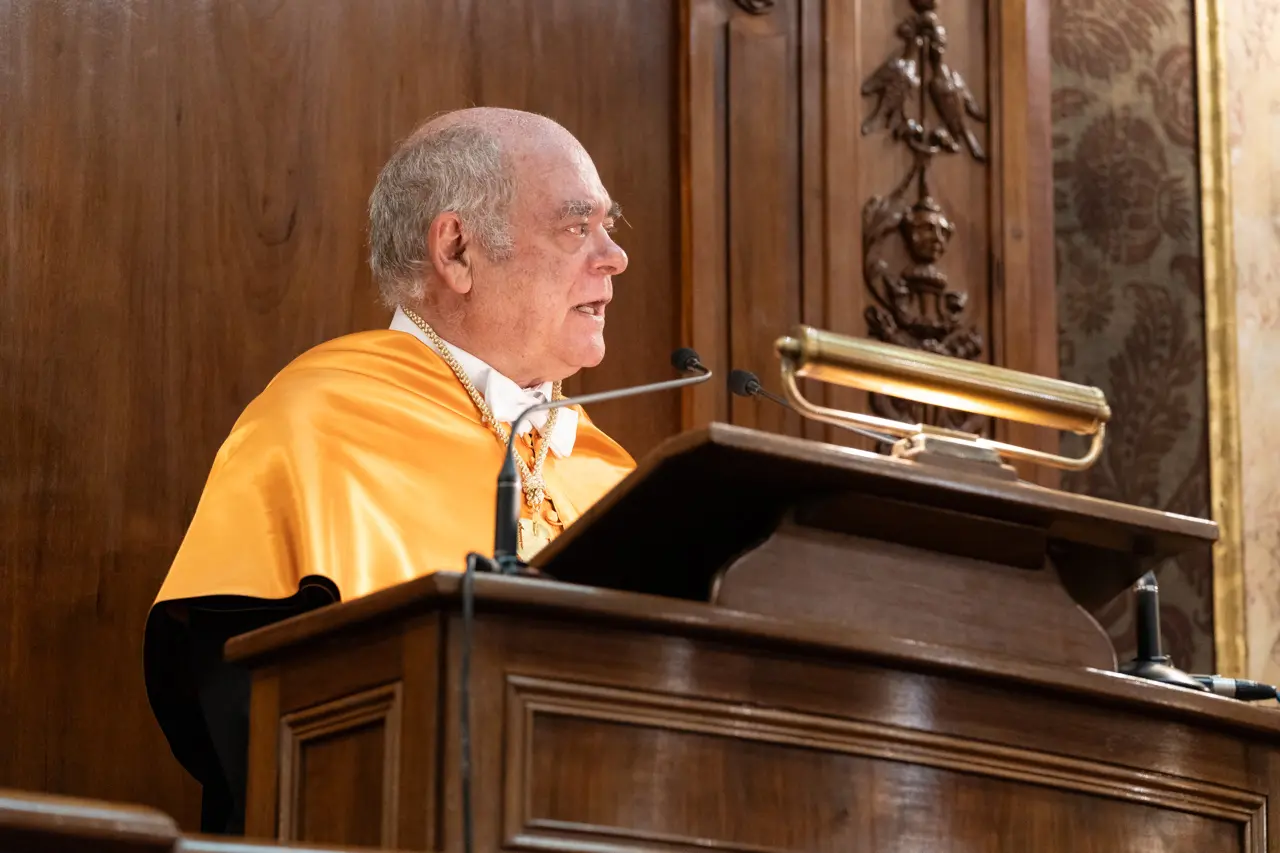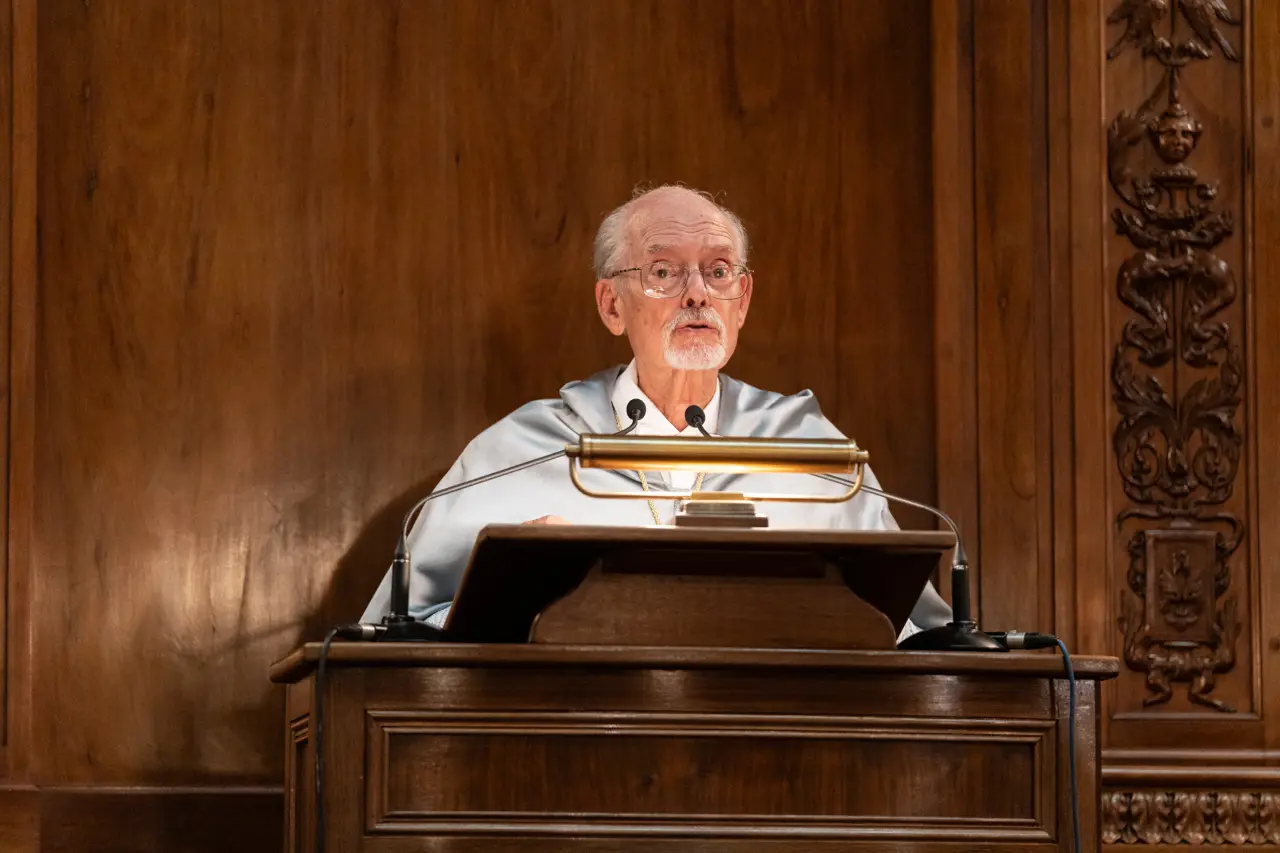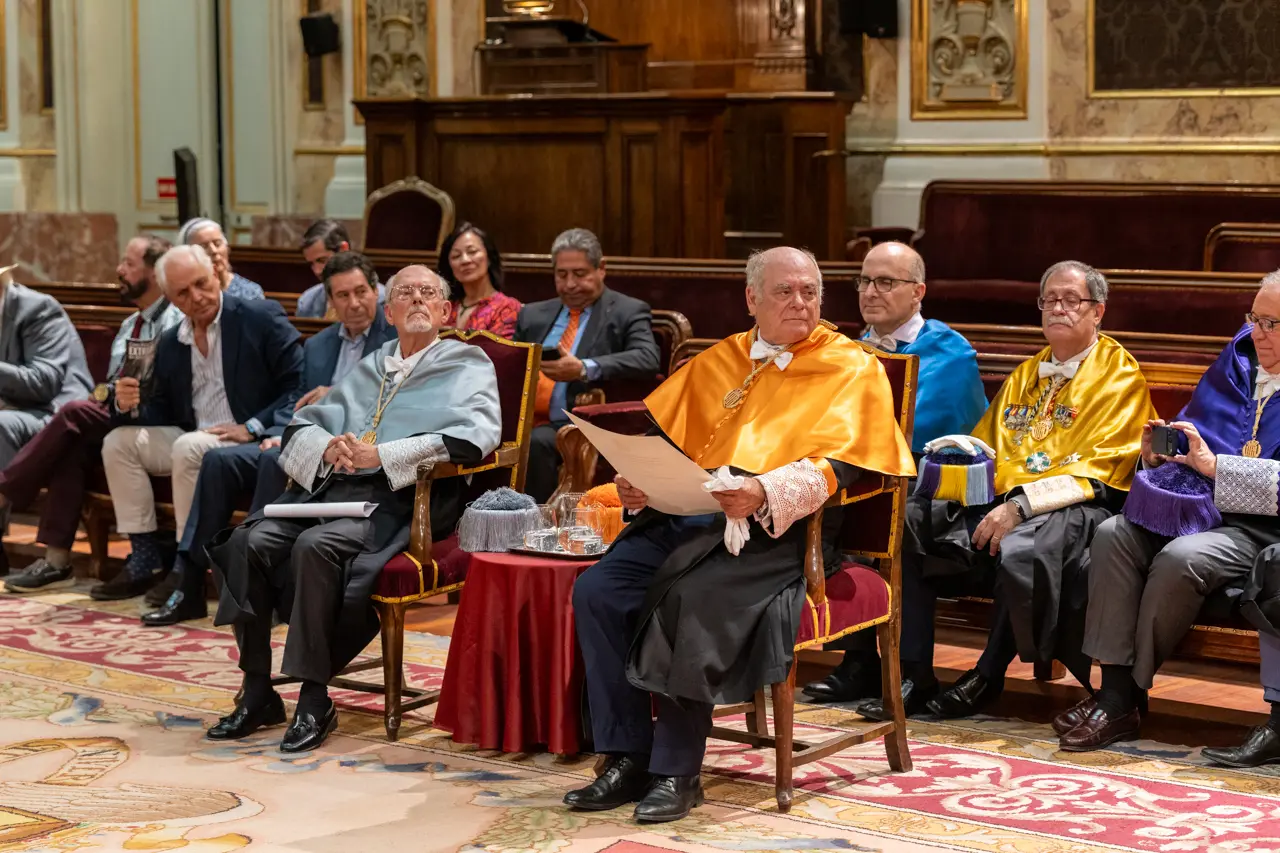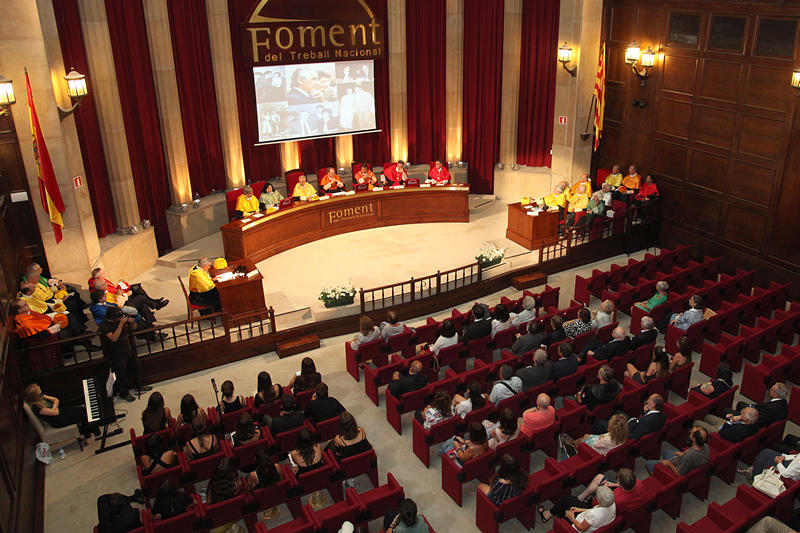


Juan Francisco Rivero, PhD in Tourism, was admitted as a Numerary Member of the Royal European Academy of Doctors (READ) in a solemn ceremony held this Thursday, 21 May, in the Great Hall of the Complutense University of Madrid. The new member read his admission speech, “La importancia de la comunicación en la promoción de los destinos turísticos” (The importance of communication in the promotion of tourist destinations), in which he reflected on the fundamental role that communication professionals, in their various roles, play in tourism dissemination and promotion, as well as on the new channels and formats of communication needed to reach the target audience. The response on behalf of the Royal Academy was delivered by the Emeritus Member Ignacio Buqueras. The session was streamed on the READ’s YouTube channel, where it can be viewed.
The new academic gave a concise overview of the history of tourism in Spain, from the so-called Grand Tour of the 18th and 19th centuries to the present day, highlighting the original focus on thermal spas through to the rise of sun-and-beach tourism in Spain, which drove the economic miracle of the late 1950s and 1960s. At this point, he highlighted a key message that resonated throughout the world: “Spain is different”, attributed to the then Minister of Information and Tourism, Manuel Fraga, which marked the strong growth of tourism until it became the driving force of the Spanish economy. Based on updated figures, Rivero pointed out that in 2025 Spain received 96.8 million international tourists, representing a 3.2% increase on the previous year, with revenues of 134.612 billion euros, 6.8% more than a year earlier. The sector accounts for more than 12% of Spain’s GDP and around 2.8 million jobs.
In this important economic activity, the new member highlighted the key role of communication in informing, attracting and building loyalty among tourists, through marketing strategies, specialised journalism, brand building and crisis management, especially in a context of global competition, deseasonalisation and market diversification. “Press releases, direct advertising, radio and television programmes, films and documentaries are basic promotional activities for tourist destinations. For this reason, tourism companies and institutions must engage with communication professionals, whether advertisers, journalists, influencers or digital media professionals, in order to publicise and promote tourist products and destinations and thus influence citizens who are attracted by the appeal and services of tourist destinations,” he stated in his conclusions.
Editor-in-chief of the newspaper “Baleares”, head of news at Radio 80, founder and director of the press agency Mallorca Press and of the communications office of Palma de Mallorca Airport, Rivero worked for more than three decades at Turespaña. He is a member of the Spanish Federation of Tourism Journalists and Writers, where he served as Vice-President, and of Skal International, an organisation that brings together 13,000 tourism-sector professionals in more than 100 countries, and in which he has chaired the Skal Madrid and Skal Spain groups. He was one of the creators of Visión–Latin American Association of Tourism Journalists and Writers, and the Secretary General of the European Academy of Tourism Journalism and the World Travel Media Guild.
Admission speech: “La importancia de la comunicación en la promoción de los destinos turísticos”