

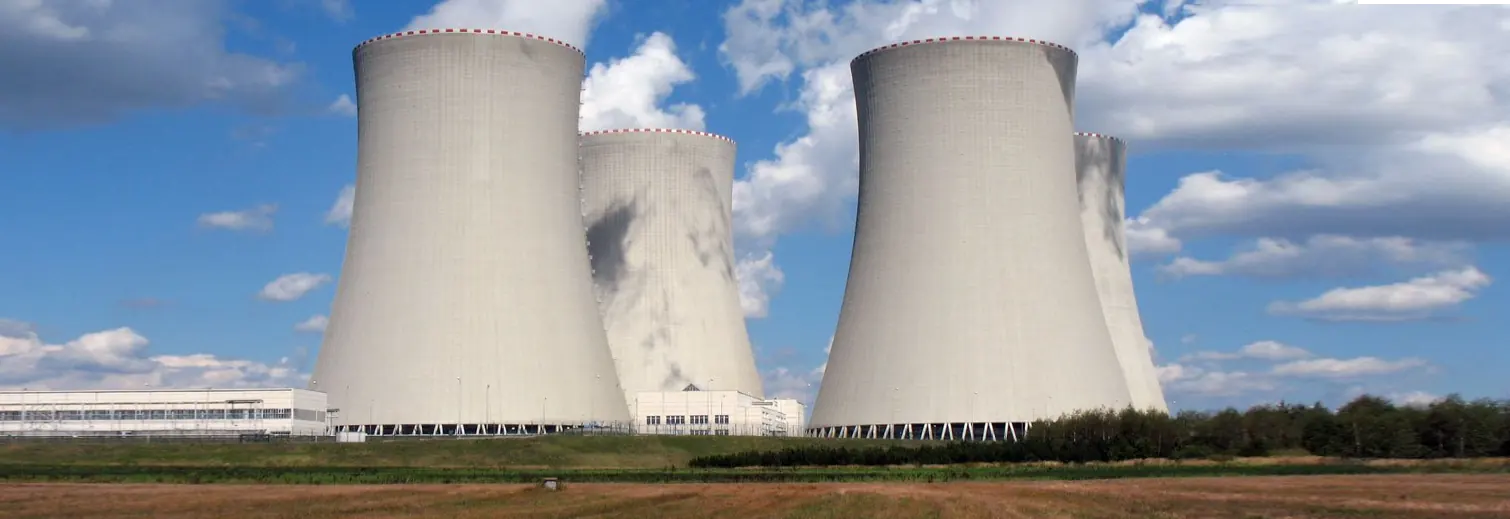
Image by PxHere
Joaquín Bautista-Valhondo, Professor at the School of Industrial Engineering of Barcelona of the Universidad Politécnica de Cataluña, full academician of the Royal European Academy of Doctors 1914 (READ) and President of its Section of Technological Sciences, has published in issue 87 of the journal «Dirección y Organización»—edited by the Asociación para el Desarrollo de la Ingeniería de la Organización and corresponding to 2025—the article «Planning and Control of Burnt Nuclear Fuel Stocks in PWR Nuclear Power Plants». In it, he describes the phases of the life cycle of nuclear fuel used in Spanish power plants, as well as the main characteristics of dry storage for spent fuel assemblies in pressurized water reactors (PWR). The expert also presents two models aimed at optimizing the encapsulation of already used nuclear fuel.
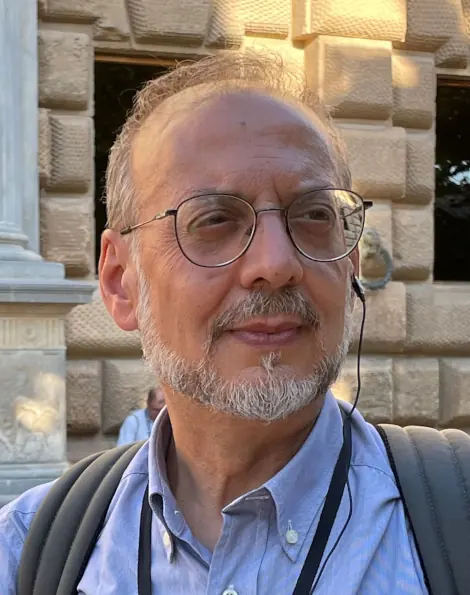
Dr Joaquín Bautista-Valhondo
The academician highlights planning and control of spent nuclear fuel inventories at Spain’s pressurized water reactor (PWR) plants as one of the least visible yet most strategic challenges of nuclear energy. His work is set against a backdrop marked by aging facilities, the progressive saturation of storage pools, and the need to manage a highly sensitive waste efficiently and safely from technical, economic, and social perspectives. In this context, the author provides a detailed description of the nuclear fuel life cycle, distinguishing two major stages: its use in the reactor and its subsequent management as spent fuel. In this latter phase, dry storage emerges as a key solution to relieve pressure on plant pools and ensure long-term safety. The article analyzes the technical features of this type of storage, which has become a central pillar of Spain’s nuclear waste management strategy.
Bautista-Valhondo proposes the use of advanced mathematical programming tools to optimize the encapsulation process for spent fuel, presenting two mixed-integer linear programming models that make it possible to plan—in a single operation—the transfer of fuel from storage pools to dry storage containers, while minimizing costs and operational constraints. This approach introduces criteria of efficiency and economic rationality into a field traditionally dominated by purely technical or regulatory considerations. The study is illustrated through a hypothetical case applied to the Central nuclear de Ascó in Tarragona, with a time horizon set in 2028, when the emptying of its spent fuel pool is scheduled. The simulation shows how the proposed models facilitate decision-making and provide viable solutions to a complex problem, anticipating scenarios and avoiding last-minute improvisation.
Bautista-Valhondo is the author of monographs such as «Decision Models and Tools», «Game Theory in Competitive and Collaborative Environments», «Metaheuristics in Engineering», and «Engineering Project Planning»,four reference works in the field published by Dextra Editorial and the Association for the Development of Organization Engineering. Although these books are primarily aimed at readers with some prior knowledge, their accessible and informative tone makes them suitable for anyone interested in the topics they address.