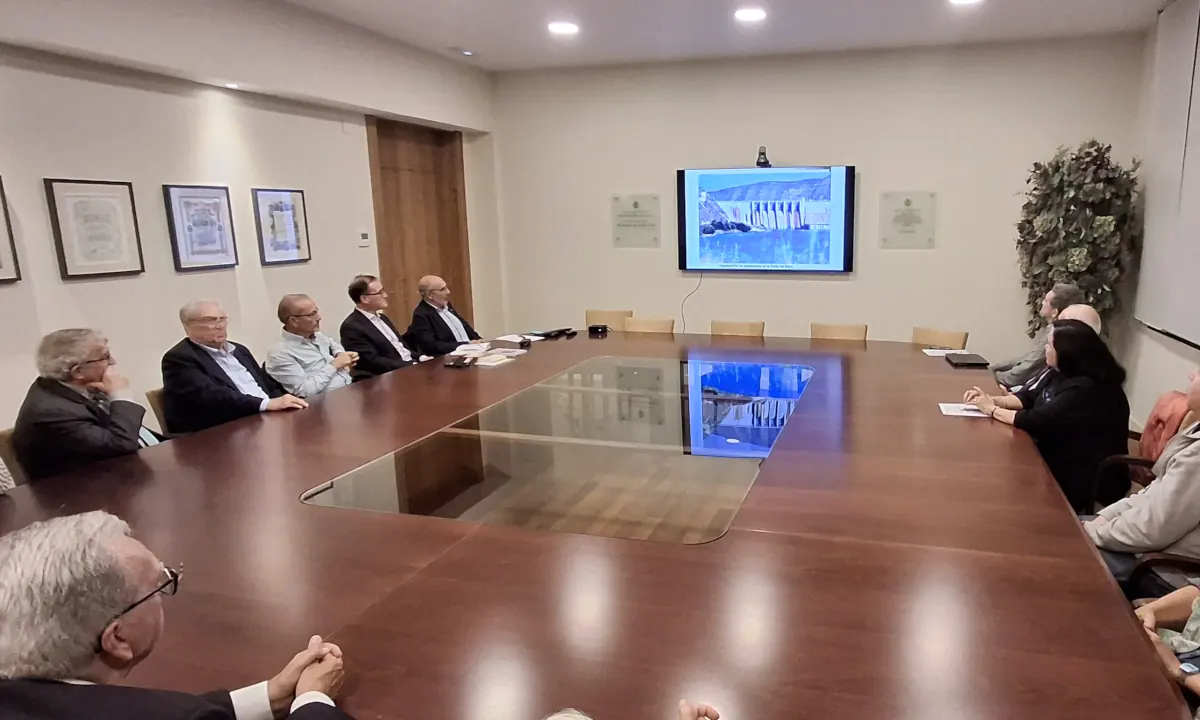



Jaume Armengou, Director of the Department of Decision Analysis at IESE Business School–University of Navarra and Numerary Member of the Royal European Academy of Doctors (READ), and Lorenzo Correa, founder of the portal futurodelagua.com and author of “100 poemas del agua”, led the academic session “From the River to the Sea: The Enigma of the Ebro Delta,” held on Thursday, November 13, 2025, and organized by the RAED in its Board Room. Both speakers had already participated last June in the academic session “DANA: Science, Management, and Water Culture,”also hosted by the Royal Corporation at its Barcelona headquarters.
For both experts—who have distinguished careers in water management and public communication—the Ebro Delta is one of the most valuable and fragile ecosystems in the Mediterranean. Formed over centuries by river sediment deposits that made it ideal for agriculture, it is now experiencing accelerated regression due to sediment scarcity, natural subsidence, and rising sea levels. This situation raises difficult questions: Should this unique ecosystem be artificially restored? Should it simply be protected as is? What alternatives exist, and according to which criteria should decisions be made when public resources are limited?
Today, according to the speakers, the main threats to the integrity of the Ebro Delta include coastal erosion, the sinking of naturally subsiding soils, the salinization of water and farmland, rising sea levels, and extreme climate events—such as floods and storms—that are increasingly frequent due to global warming. These factors endanger the ecosystem, its biodiversity, its agriculture (particularly rice cultivation), the survival of natural habitats, and even critical infrastructure.
“Managing the Ebro Delta must be understood as a real-world case of decision-making under uncertainty, where ecological, social, economic, and political factors converge. We must reflect—drawing on the rigor provided by science and considering the many variables shaping its future—on how to prioritize interventions if they are deemed appropriate by consensus, and how to manage long-term horizons in contrast with short political cycles. Likewise, we should extend this debate to identify what lessons this territory can offer for the management of other at-risk areas,” the speakers concluded.