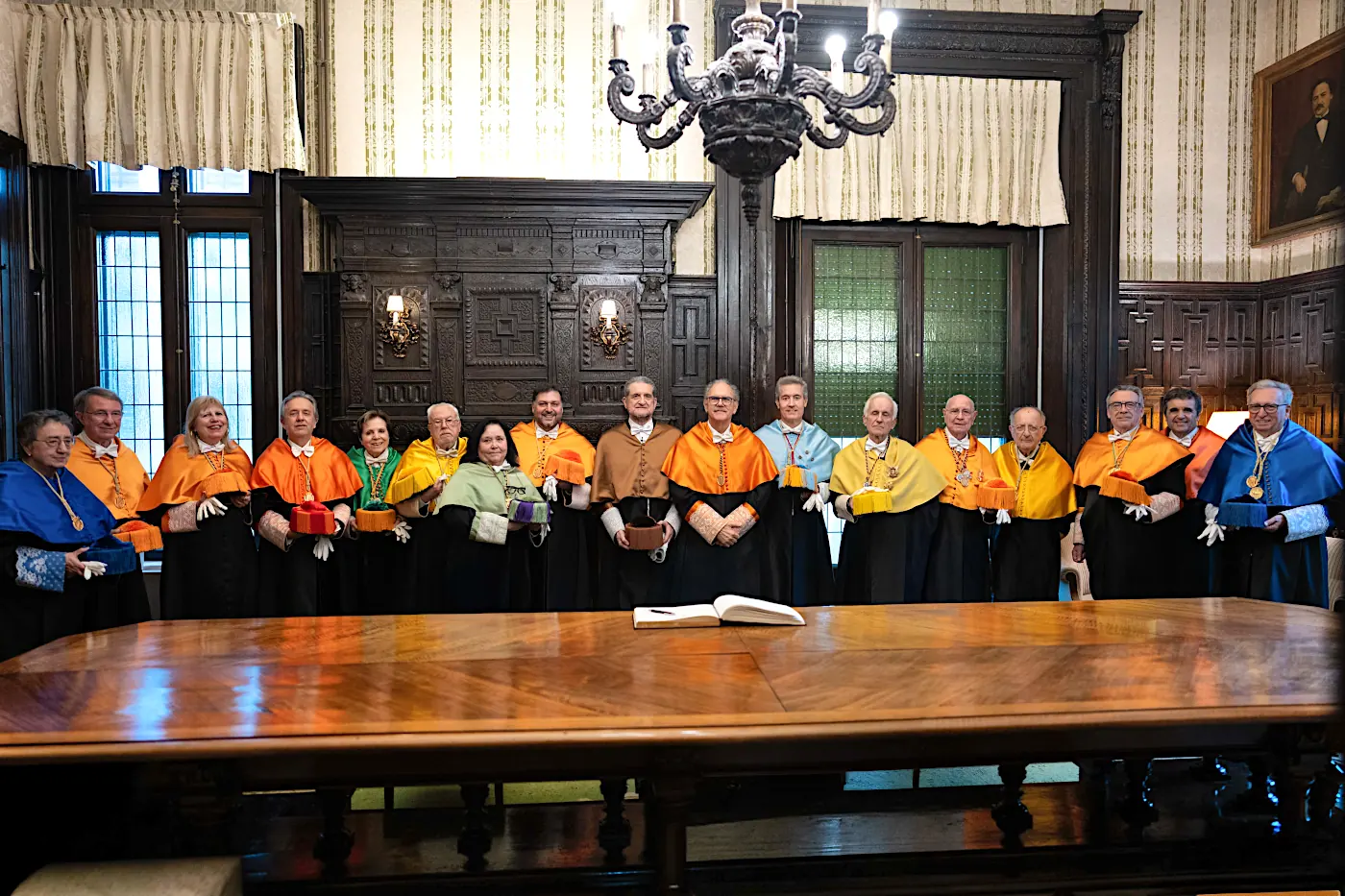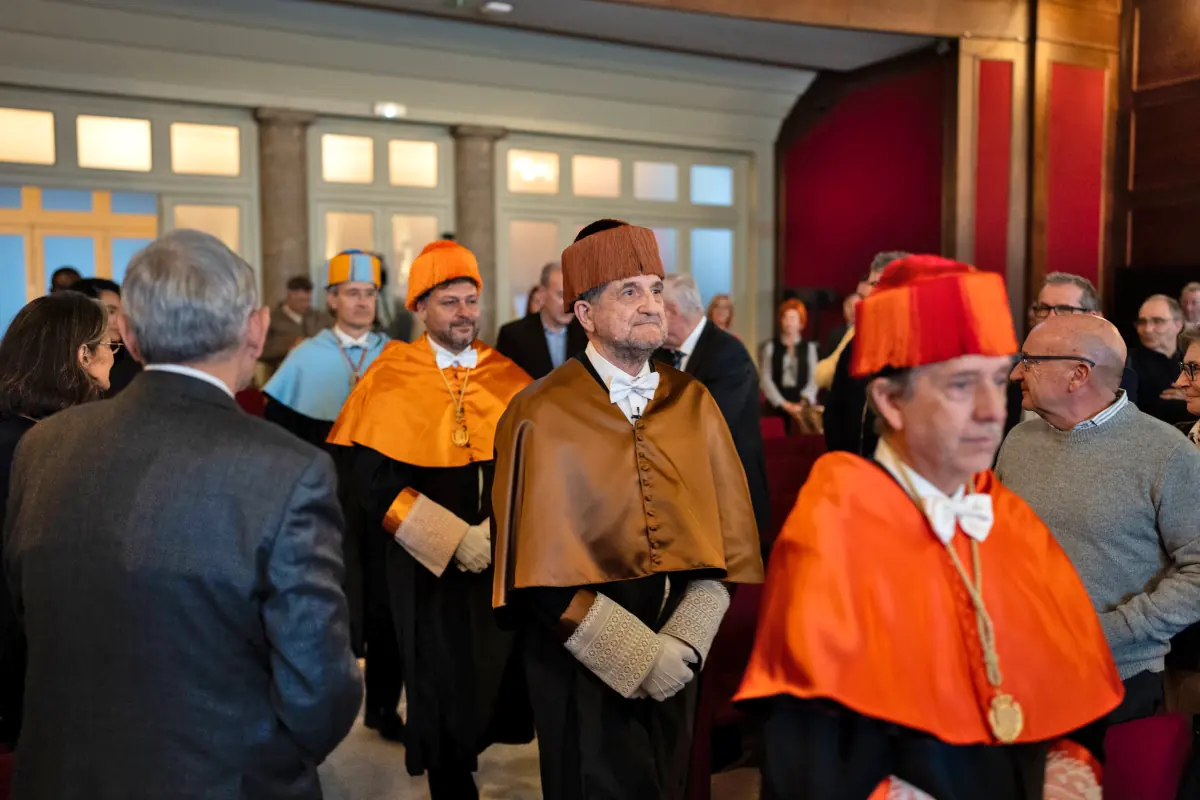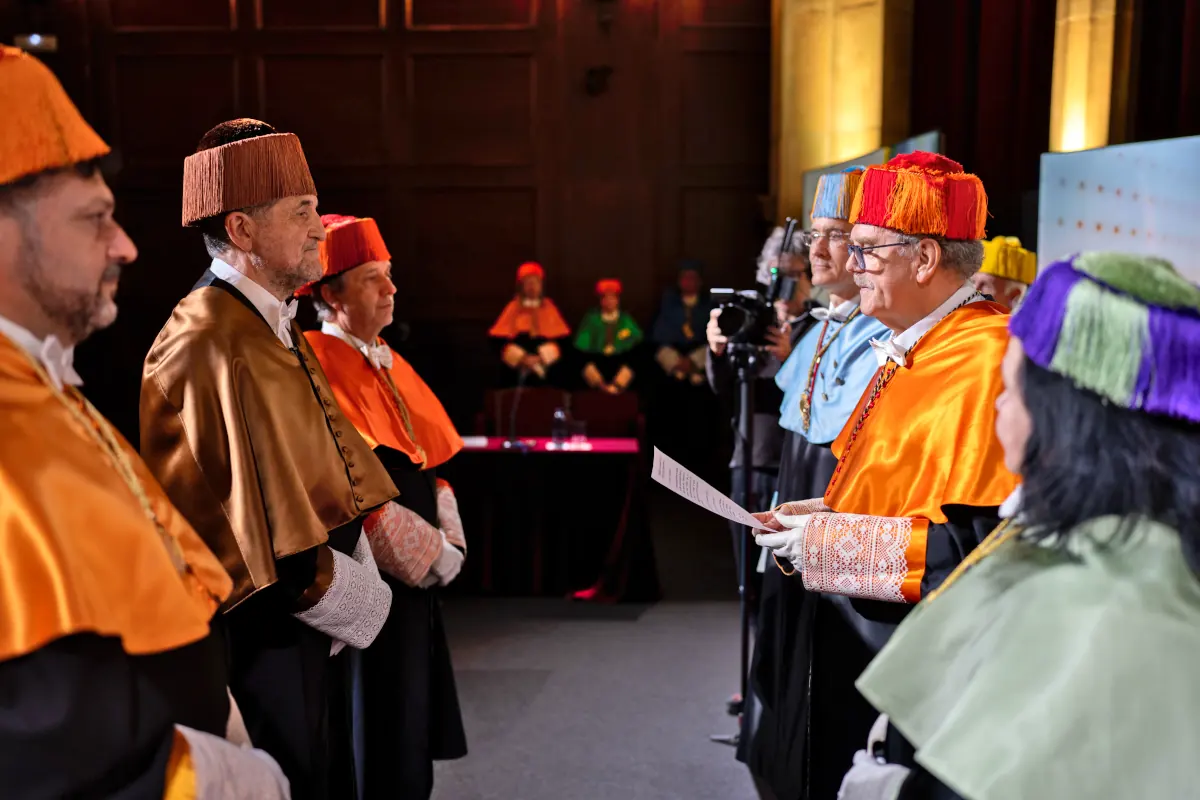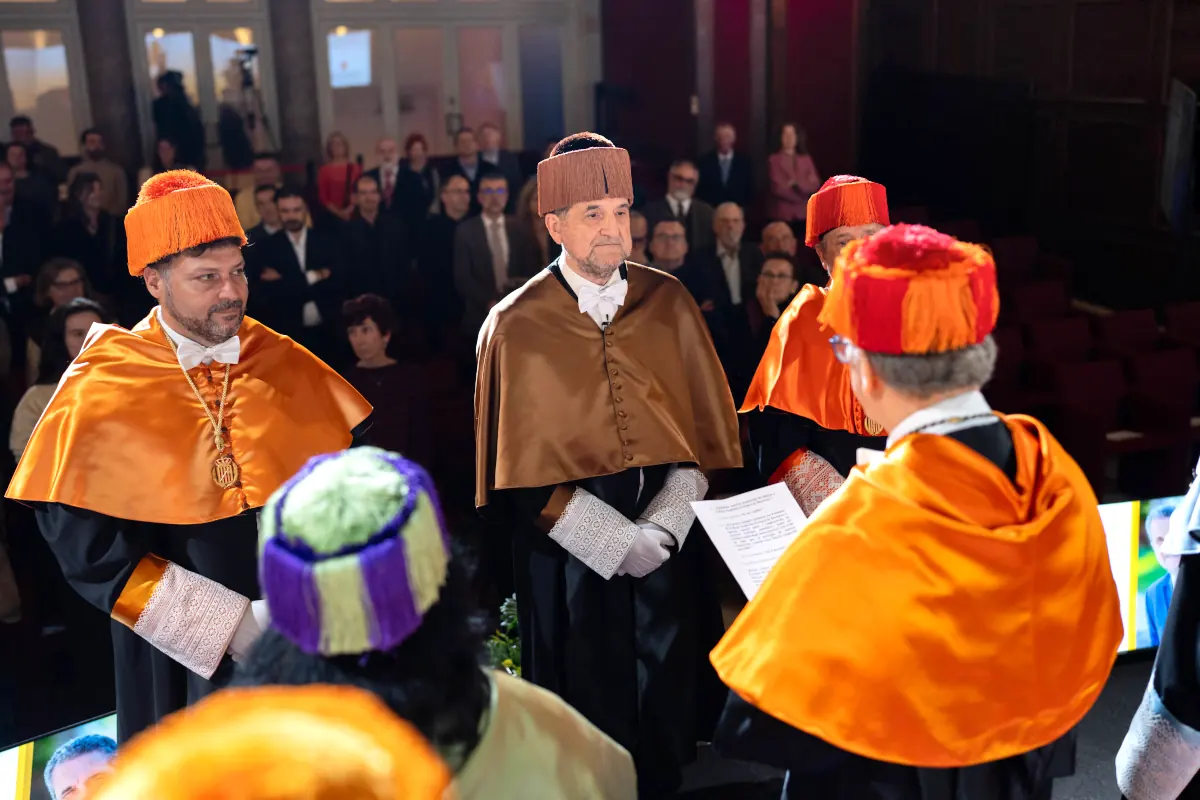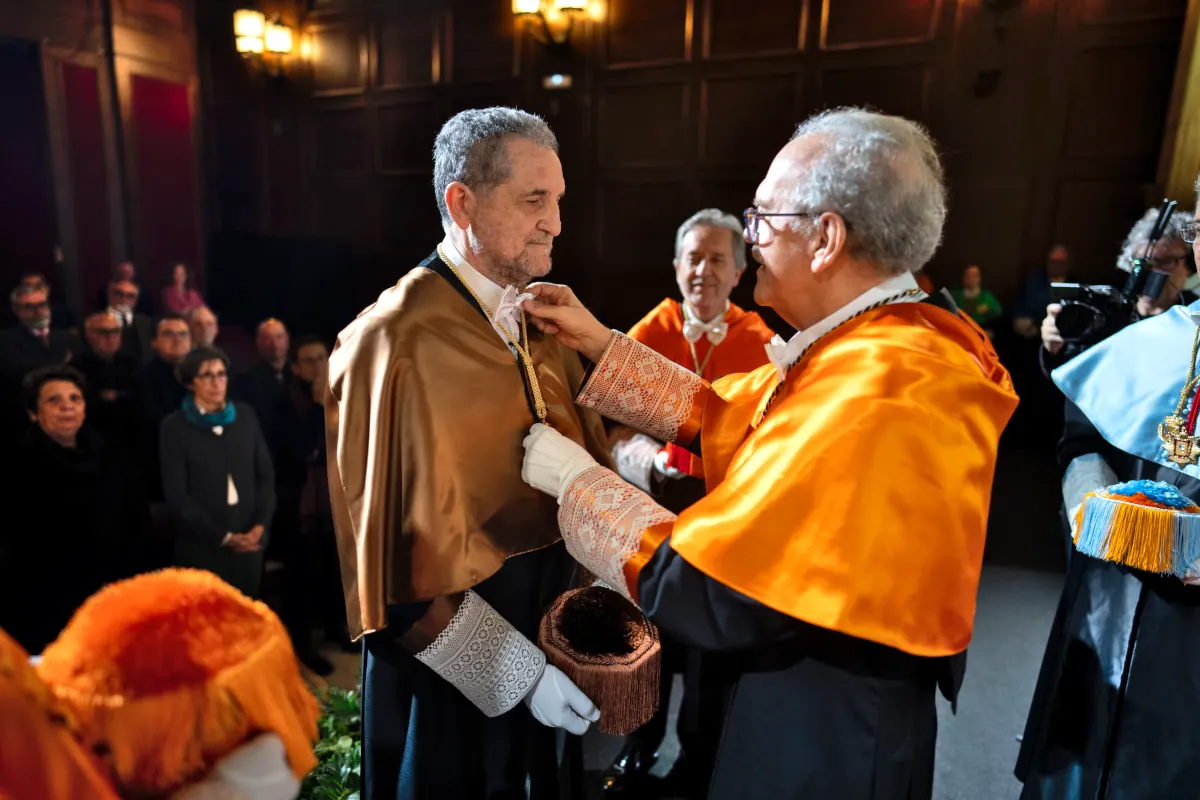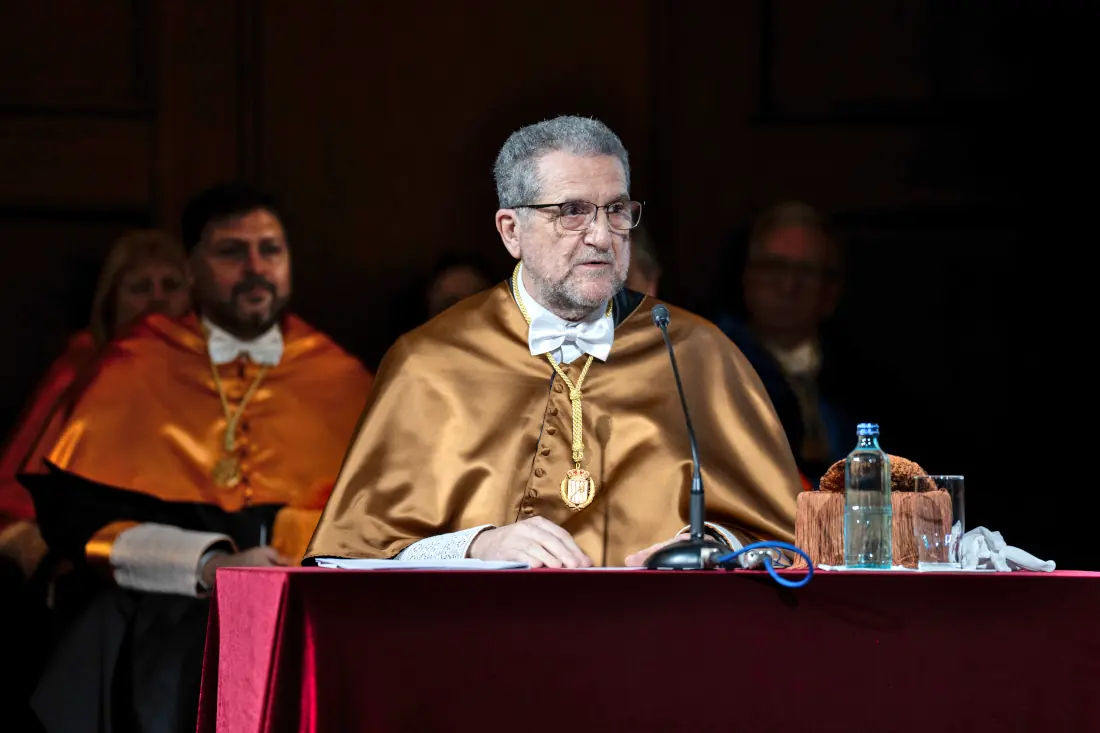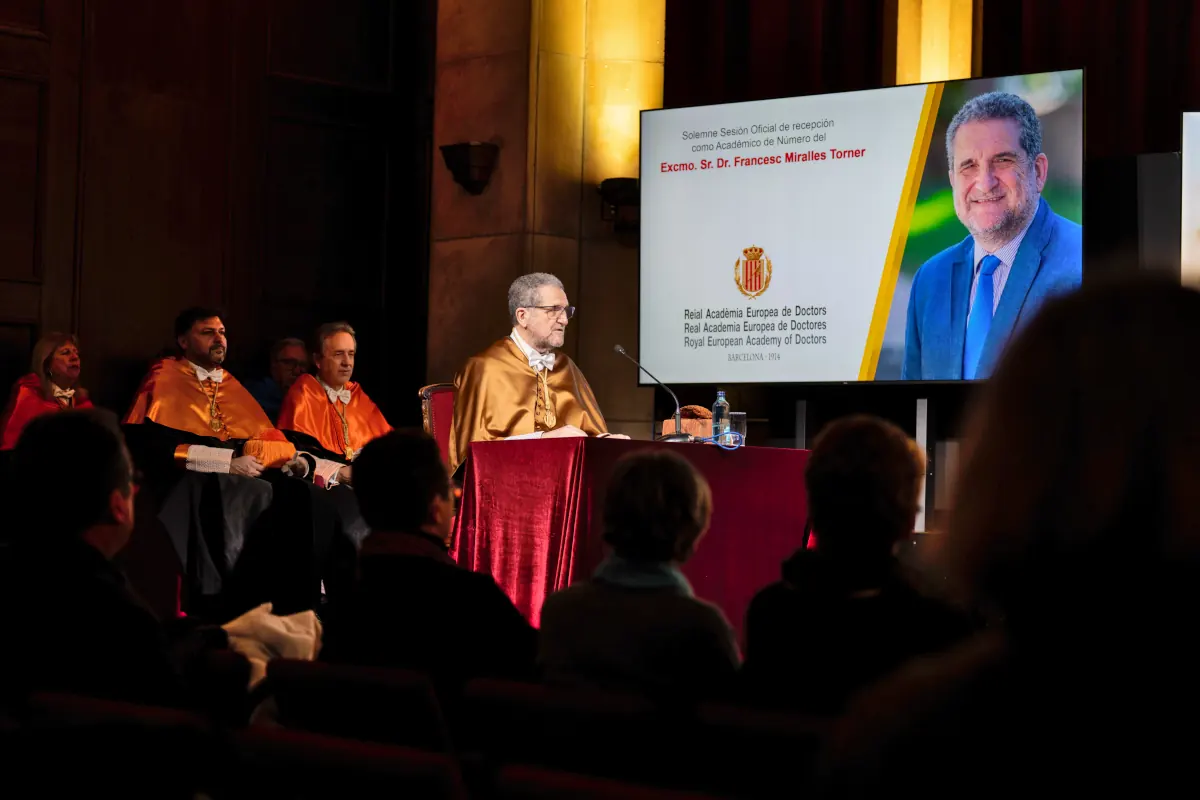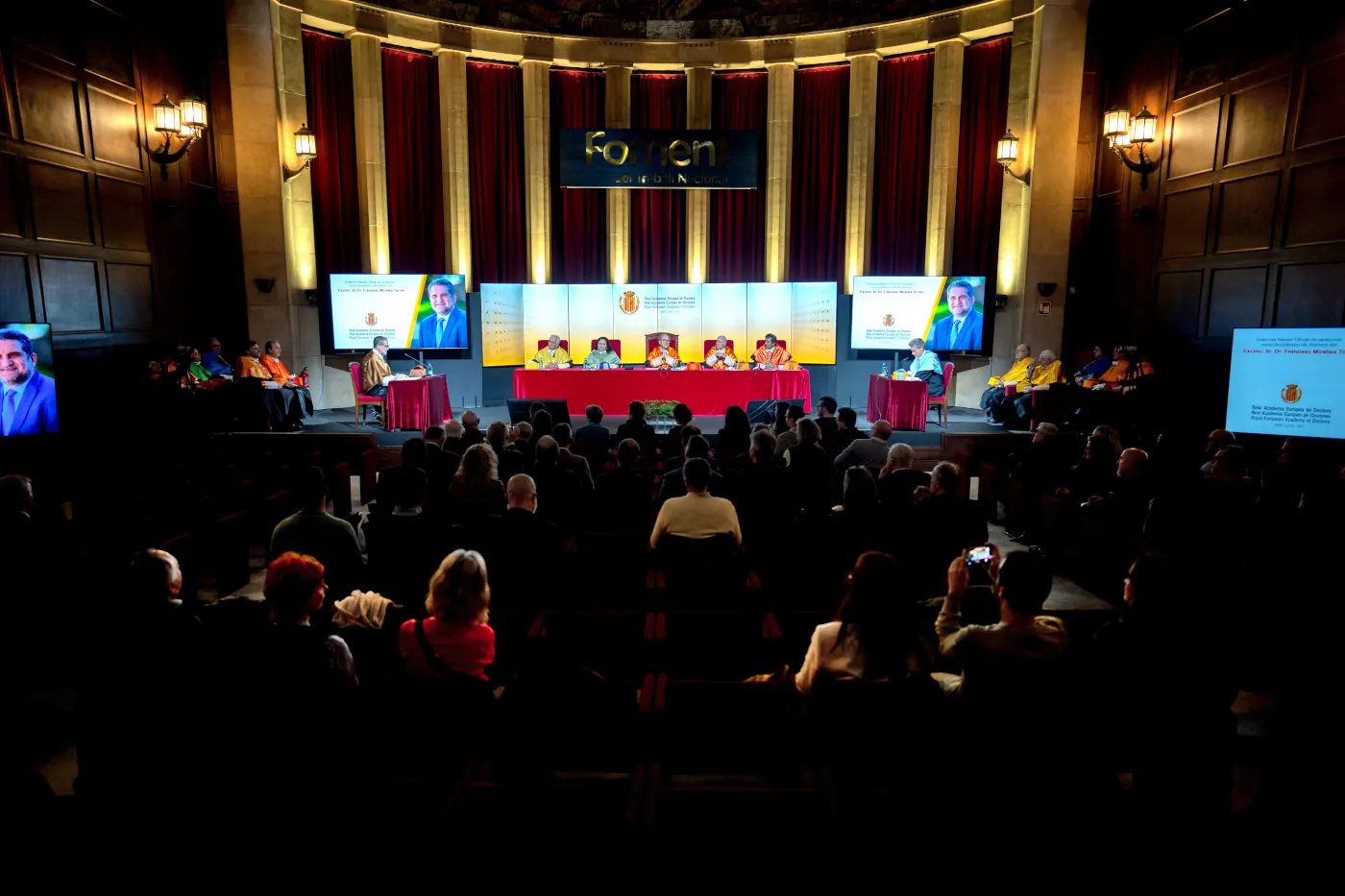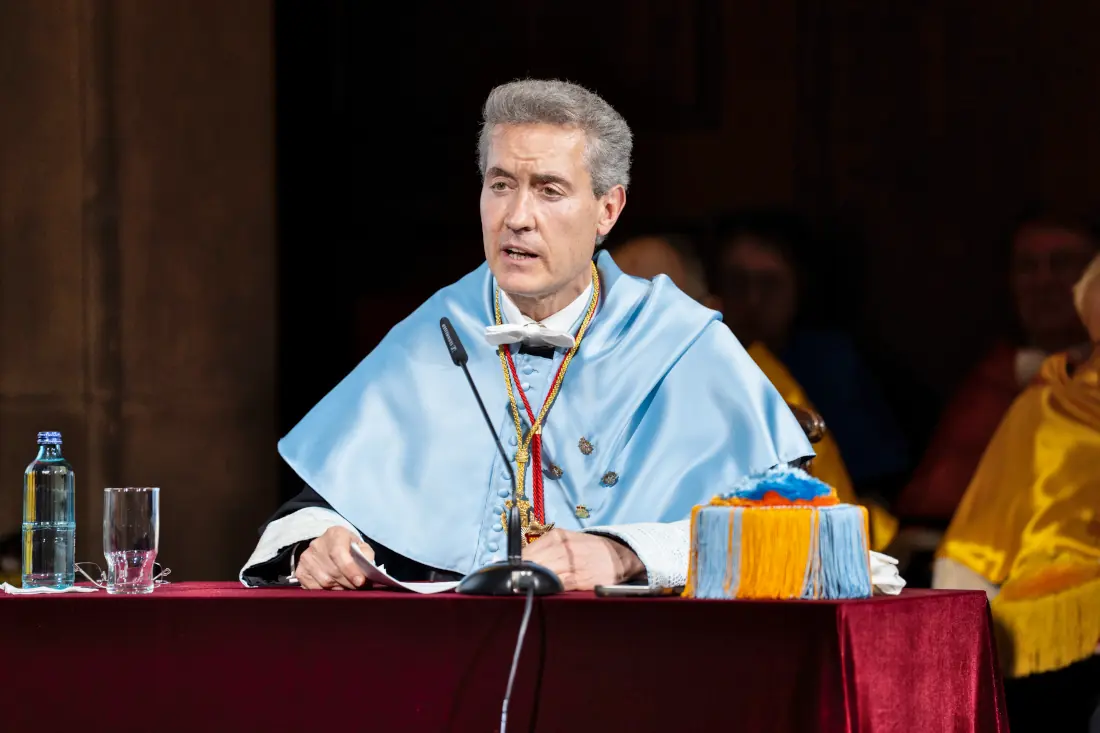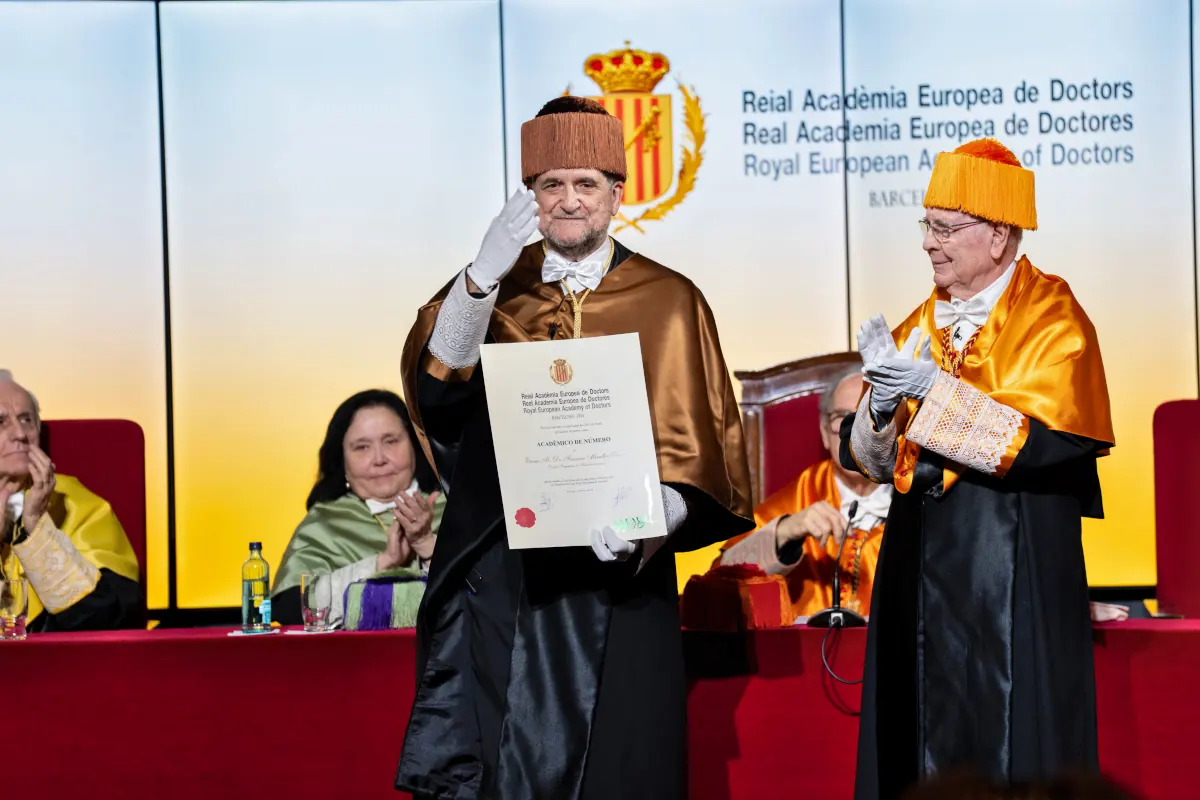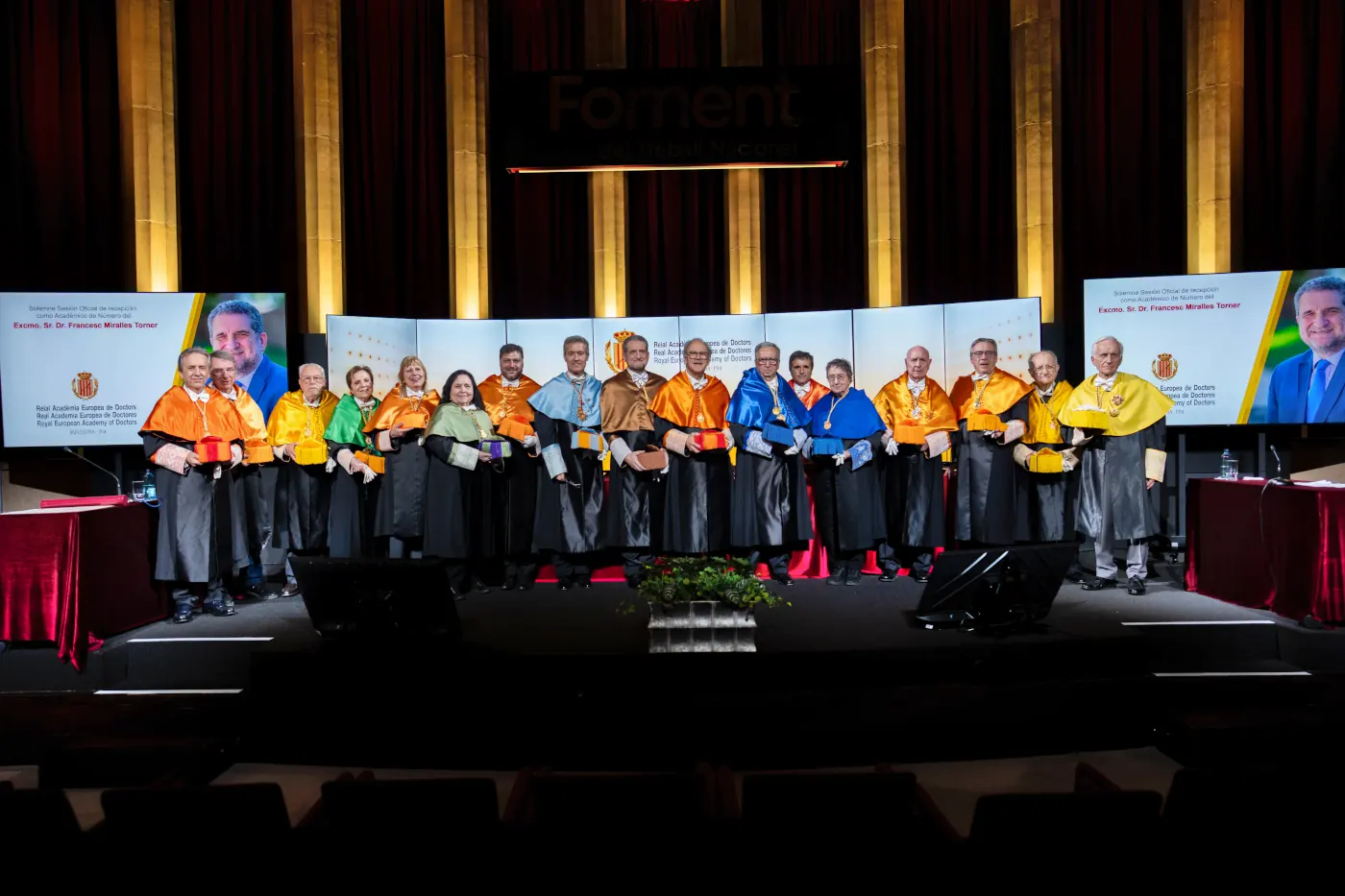



Francesc Miralles, PhD in Telecommunications Engineering and Professor at the Ramon Llull University, was admitted as a Numerary Member of the Royal European Academy of Doctors (READ) during a solemn ceremony held on 11 March at Fomento del Trabajo, the Academy’s headquarters. The recipiendary delivered the inaugural lecture “Avanzar en la comprensión de los grandes desafíos y los ODS. Una perspectiva para las ciencias sociales con Böhm, Chalmers y Lakatos” (Advancing the Understanding of Major Challenges and the SDGs. A Perspective for the Social Sciences with Böhm, Chalmers and Lakatos), in which he analyses the implementation of the Sustainable Development Goals established by the United Nations and their analytical framework, while proposing additional challenges of critical importance for the future. He was welcomed on behalf of the Royal Corporation by Numerary Member José Daniel Barquero.
For the new academic, today’s global problems cannot be addressed through traditional scientific methods, as the classical scientific model—based on a Cartesian approach and objective measurement—is insufficient to understand complex phenomena involving human factors such as values, perceptions and emotions. To overcome these limitations, he proposed a paradigm shift in the social sciences, integrating concepts from quantum theory and studies of consciousness to build a more holistic research framework. This approach seeks to understand not only measurable data, but also the subjective dimensions that influence individual and collective behaviour. For Miralles, progress in addressing the major challenges of the 21st century depends on rethinking how knowledge is generated, incorporating human complexity beyond what is strictly quantifiable.
Dr Francesc Miralles
After reviewing challenges such as climate change, poverty eradication, migration flows, hunger, water scarcity and the redefinition of gender—issues on which there is broad consensus within the United Nations framework—Miralles also warned of emerging challenges, particularly the development of new technologies such as artificial intelligence. This new frontier, he noted, brings with it a new form of inequality, which he termed the digital divide of social justice. According to his analysis, technological progress benefits groups that have already overcome certain barriers, while exacerbating the vulnerability of others, thereby widening existing inequalities.
The expert concluded by advocating what he described as a renewed scientific cosmology: an integrated vision of knowledge capable of analysing major social challenges from multiple dimensions and improving the real impact of policies designed to address them. In this regard, he draws on the concept of fallibilism developed by Imre Lakatos, the quantum theory studies of David Böhm and Roger Penrose, and research on consciousness by David Chalmers and Alva Noë. For Miralles, only this convergence between quantum physics and the study of consciousness will open the necessary range of possibilities to develop effective instruments for equity, fulfilling the promise of leaving no one behind.
Miralles serves as Commissioner for Strategic Planning at La Salle–Ramon Llull University, where he was Dean of the La Salle International School of Commerce and Digital Economy, Dean of Academic Policy and Planning, and Director of its Higher Technical School of Electronic and Computer Engineering. He previously held the position of Director of the Polytechnic School at the Pompeu Fabra University. In addition to these institutions, he has taught at the business school Esade, at the Open University of Catalonia, and at the Polytechnic University of Catalonia. In his research activities, he chairs the Innova Institute, leads research teams focused on social inclusion, innovation, entrepreneurship, and project management in engineering education, has supervised more than 20 doctoral theses, and has published over 150 scientific works, books, and book chapters. He has also led major research projects funded by the European Commission, the Government of Spain and the Government of Catalonia, and is a senior researcher at the PricewaterhouseCoopers–IESE eBusiness Center.
Full lecture: “Advancing the Understanding of Major Challenges and the SDGs. A Perspective for the Social Sciences with Böhm, Chalmers and Lakatos”