


Maria Àngels Calvo, Professor at the Faculty of Veterinary Medicine of the Autonomous University of Barcelona, President of the Academy of Veterinary Sciences of Catalonia, full member of the Royal Academy of Medicine of Catalonia and of the Royal Academy of Pharmacy of Catalonia, and full member and Vice-President of the Royal European Academy of Doctors (READ), took part on 8 July in the presentation of the report “The Future of Food Safety in Catalonia: Trends and Risk Scenarios for the Next Ten Years,” a strategic document promoted by the Catalan Secretariat of Public Health to define a roadmap for food safety over the coming decade. Calvo has also discussed various current health-related issues in leading media outlets, including the television programme “Tot es mou” on TV3.
The expert contributed her knowledge of the One Health concept, which she helped introduce in Spain, to the debate held before the presentation of the document that is intended to guide the Government of Catalonia’s food safety policies over the next decade. The forward-looking study analyses the principal trends in the field of food and identifies the emerging risks most likely to affect the population. The document aims to become a reference tool for food-chain operators and the competent authorities, strengthening their capacity to anticipate developments and facilitating decision-making in response to new food safety challenges, thereby contributing to more effective risk management based on scientific evidence.
The debate was entitled “Emerging Risks in Food Safety”. Carme Chacón, Deputy Director-General for Food Safety and Health Protection and Secretary of Public Health of the Government of Catalonia, moderated it. Alongside the READ Vice-President, the participants included Marta Hugas, former Chief Scientist of the European Food Safety Authority and President of the Scientific Council of the French Agency for Food, Environmental and Occupational Health and Safety; Xavier Pera, Head of Food Safety and Quality at the Association of Manufacturers and Distributors–AECOC; and Carme Vidal, President of the Scientific Advisory Committee on Food Safety of the Catalan Secretariat of Public Health. The speakers analysed how, in a context marked by climate change, evolving consumption habits, technological innovation, sustainability, the transformation of food production and distribution models, and the globalisation of trade, anticipating new risks is essential to protecting public health.
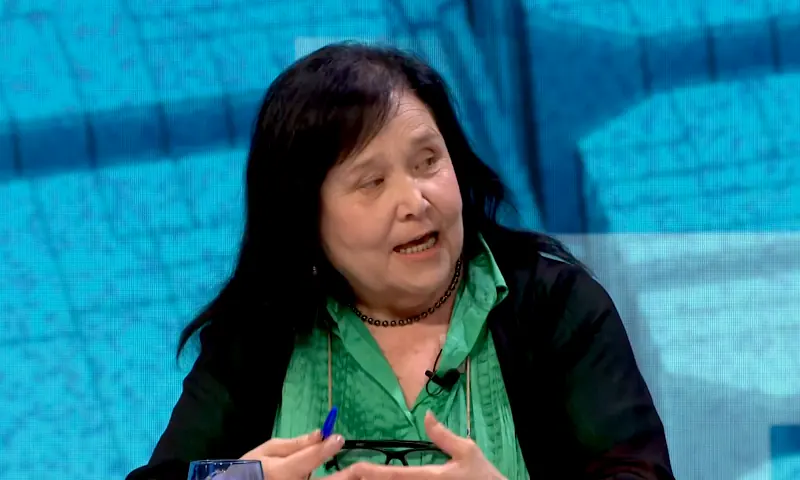
Dr Maria Àngels Calvo
For the experts, risk assessment is becoming a fundamental pillar of effective food safety management. It makes it possible to identify and characterise hazards, as well as to estimate the probability of exposure and the severity of their consequences for public health. Based on rigorous methodologies and analysis of the available scientific evidence, this multidisciplinary risk assessment provides an objective and transparent framework for prioritising action, guiding the decisions of risk managers and improving communication with the public. In a scenario of constant change and emerging new risks, they argued, strengthening risk assessment systems is essential to guarantee proportionate, coherent responses adapted to reality.
About Calvo’s analysis on the programme “Tot es mou,” the expert stressed the importance of providing healthy environments within cities, such as areas with plants and vegetation where people can walk, because contact with nature helps to reduce stress, improves mood, encourages social interaction, contributes to better air quality and mitigates urban heat. In this regard, the academic criticised the dominant urban-planning model, which for decades has been primarily guided by economic criteria of productivity, consumption, speed and profitability. This approach has created overcrowded spaces with high levels of air pollution that increase respiratory, cardiovascular and neurological risks; noise pollution linked to stress, anxiety and sleep disorders; an unequal distribution of green spaces; social isolation; and an accelerated pace of life that harms mental health. Climate change exacerbates all these problems through urban heat islands and their impact on the most vulnerable groups. Faced with this reality, the RAED Vice-President called for a new model of urban planning focused on designing spaces for life and collective well-being: reclaiming pedestrian areas, strengthening public and active transport, expanding green spaces equitably, promoting sustainable mobility and integrating environmental, social and health criteria into planning.