

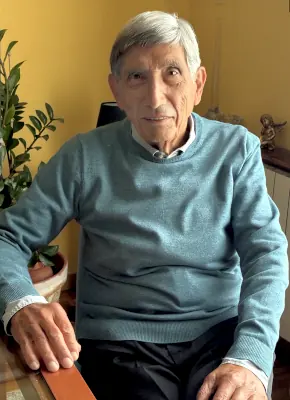
Sr. Enric Canela
Enric Canela, Emeritus Professor of Biochemistry and Molecular Biology at the University of Barcelona and collaborator of the Royal European Academy of Doctors (READ), shares with the academic community the latest articles he has published on his blog, enriccanela.cat, an informative space devoted to health and well-being, as well as his latest publications in the newspaper “El Punt-Avui”, where he focuses on education and research. Specifically, these are the entries “Més suport real a la innovació”, “La nova amenaça opioide”, “Per què el cos no vol aprimar-se”, “Com el cos decideix quan parar de menjar” and “La incapacitat temporal a Catalunya”, which appeared between April and May in both information spaces.
In “Més suport real a la innovació”, the expert calls for more decisive and, above all, more effective support for innovation from the Catalan administrations. Canela highlights that Catalonia has a relatively consolidated and interconnected open innovation ecosystem, with a good network of companies, universities, technology centres and intermediary agents. However, this potential faces significant challenges in generating large-scale economic impact, mainly due to the absence of major global corporations and a business fabric dominated by SMEs. According to the author, the main problem does not lie in the lack of strategies or a legal framework, but in the deficient implementation of existing policies, where excessive bureaucracy, administrative slowness, the fragmentation of instruments, low tolerance for risk and an overly formalistic culture hinder innovative development.
Changing subject completely, in “La nova amenaça opioide”, Canela warns of a new and extremely dangerous threat in the illegal drug market: nitazenes, a family of synthetic opioids that pose an even greater risk than fentanyl. “Nitazenes are a group of synthetic opioids, structurally different from classic opioids such as morphine or fentanyl. They were developed in the mid-20th century as possible analgesics, but were never marketed: the difference between a psychoactive dose and a lethal dose is so small that the risk outweighs any therapeutic benefit”, he explains. The author mentions the case of a 21-year-old man who died in Navarre in 2024 after inhaling a nitazene. Although they have not yet been detected in Catalonia, the author warns that their emergence is only a matter of time, as has already occurred in countries such as Estonia, Ireland and the United Kingdom.
In “Per què el cos no vol aprimar-se”, the READ collaborator states that the difficulty in losing weight is not exclusively a question of character or lack of willpower or perseverance, but is largely a matter of biology. “Each person has a reference weight, and the hypothalamus, a small brain structure, establishes the weight range it considers normal for each individual. This reference weight is the result of a biological adjustment that integrates the genetic basis, prenatal and childhood programming, physiological learning over the years and biochemical regulation. When we try to move away from that weight, the body reacts to prevent the change: it actively defends its weight”, he explains.
 Canela further explores the biological processes related to eating and weight in “Com el cos decideix quan parar de menjar”, insisting that the body is not designed to lose weight but to avoid malnutrition and maintain sufficient energy reserves. In view of this, the sensation of satiety should be explored. “Once the most suitable foods have been chosen, a good strategy to modulate intake is to eat slowly. For example, taking a highly palatable food, such as a French omelette, and prolonging its consumption by increasing chewing can significantly reduce the amount of food eaten. Let us imagine spending ten minutes eating the omelette”, he says.
Finally, in “La incapacitat temporal a Catalunya”, he notes that sick leave hours per worker have risen from around 3.8 hours per month in 2013 to nearly 8 hours per month in 2025. This increase particularly affects industrial competitiveness, represents an economic cost of more than 8% of GDP and makes the country less attractive to investment. Although the incidence is similar to the rest of Spain, it is twice the European Union average. In response to this reality, attributed to a combination of structural factors that largely do not depend on the worker, Canela calls for the elimination of unnecessary bureaucracy in primary care, the strengthening of public mental health resources and their integration into outpatient clinics, improved coordination between doctors, mutual insurance companies and the administration, and reform of the system’s governance with a smoother flow of information and clear clinical criteria. “The proposed actions are not intended to restrict access to temporary incapacity, but to eliminate the inefficiencies that harm workers, companies and the public system”, he concludes.