

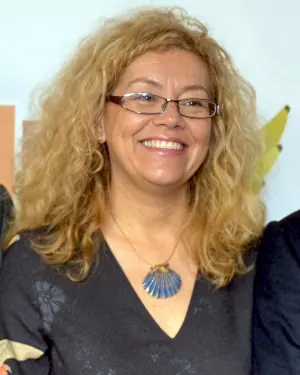
Dr. Marcela González-Gross
Marcela González-Gross, Professor of Nutrition and Exercise Physiology and Director of the Department of Health and Human Performance at the Faculty of Physical Activity and Sport Sciences of the Polytechnic University of Madrid, President of the Spanish Nutrition Society, corresponding member of the Royal National Academy of Pharmacy and full member of the Royal European Academy of Doctors (READ), analysed how rising life expectancy poses new challenges for healthcare systems, the organisation of work and welfare models in the lecture “Health, Ageing and Quality of Life in the Age of Longevity,” which she presented during the 10th International Academic Meeting held by the Royal Corporation between 15 and 20 March in various German cities under the general title “The Rhine as a Current of Knowledge: Cross-Border Dialogues.” The academic delivered her work within the framework of the joint academic event that the Royal Corporation held together with the German Sport University Cologne, of which she herself was the principal driving force.
For the expert, it is necessary to adopt an integral view of active ageing and quality of life, in dialogue with biotechnology, artificial intelligence and socio-healthcare models, in order to address this issue in all its complexity and move from a reactive and curative approach to one that is preventive, proactive and centred on quality of life. In this regard, the speaker referred to the report “Decade of Healthy Ageing (2021–2030),” prepared by the World Health Organization, as a framework for concerted action among governments, civil society and the private sector. González-Gross argued that ageing is no longer seen as an inevitable deterioration, but as a modifiable process. Faced with this new reality, maintaining healthy habits from childhood in nutrition, exercise and social relationships is key to increasing healthy years of life and reducing dependency.
“The last decades of the 20th century and the quarter century we have lived through in the 21st century have brought about a genuine revolution in people’s health. Scientific advances and an ever deeper knowledge of the human organism are making it possible to adapt nutrition, exercise plans, and the development of medicines or prostheses in an increasingly precise and personalised way. This, together with improvements in early disease detection, surgical advances, safety and hygiene, and universal access to healthcare, has increased life expectancy in Spain and around the world. Although differences still exist between countries and continents, the data support this statement. By 2050, the number of people over the age of 60 worldwide is expected to double, that is, to rise from the current nearly 1 billion to 2 billion, moving from 12% to 22%,” the academic began, placing on the table data that confirm an economic and social reality to which public administrations and healthcare systems must respond.
For González-Gross, this scenario means that current healthcare systems must undergo a profound transformation, focusing on becoming more preventive, integrated, digital, and person-centred. Responsibility, in her view, does not fall solely on the healthcare sector but also on families, schools, companies, local authorities, and the food system itself. In this regard, artificial intelligence and biotechnology are called upon to become new pillars in the early detection of health problems, in the personalisation of treatments and care and, eventually, in the repair of ageing tissues, bearing in mind that the central objective must be to improve quality of life and maintain the autonomy of older people.
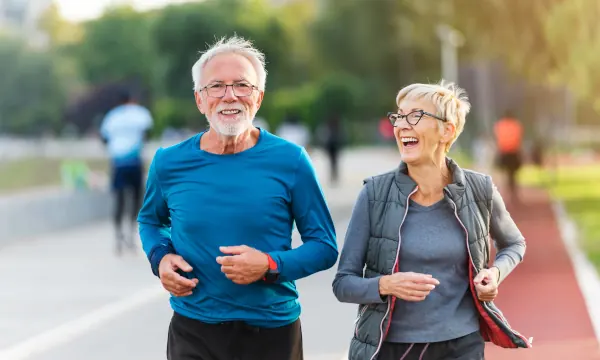 The academic concluded her address by pointing out that factors such as healthy eating, exercise, sleep, stress control and, especially, an active social life slow epigenetic ageing. She also advocated the recovery of the Mediterranean diet in collective catering, where awarding contracts should not be based solely on price, but on criteria of nutritional quality and sustainability; physical exercise as medicine, since more than half of European adults are inactive; a change in the healthcare model towards a preventive and integrated system with primary care as its محور; and the consolidation of community pharmacies as a gateway to the healthcare system, with millions of contacts each year and a key role in prevention, education and early detection.
González-Gross is a member of the boards of the Federation of European Nutrition Societies and the European Initiative “Exercise is Medicine,” a member of the International Union of Nutritional Sciences, a founding member of the scientific network Exernet and a member of the CIBER Network on Obesity and Nutrition. She has also participated in more than 70 research projects and delivered more than 250 lectures nationally and internationally. She has received several awards, including the National Research Award in Sports Medicine, awarded by the University of Oviedo. The academic is part of the scientific group leading the Global Alliance for the Promotion of Physical Activity, an initiative led by various non-governmental organisations, scientific and professional societies and sports associations in response to concern over the growing prevalence of physical inactivity and non-communicable diseases worldwide.