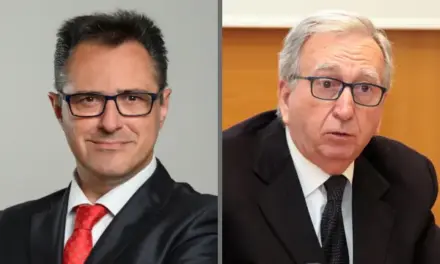


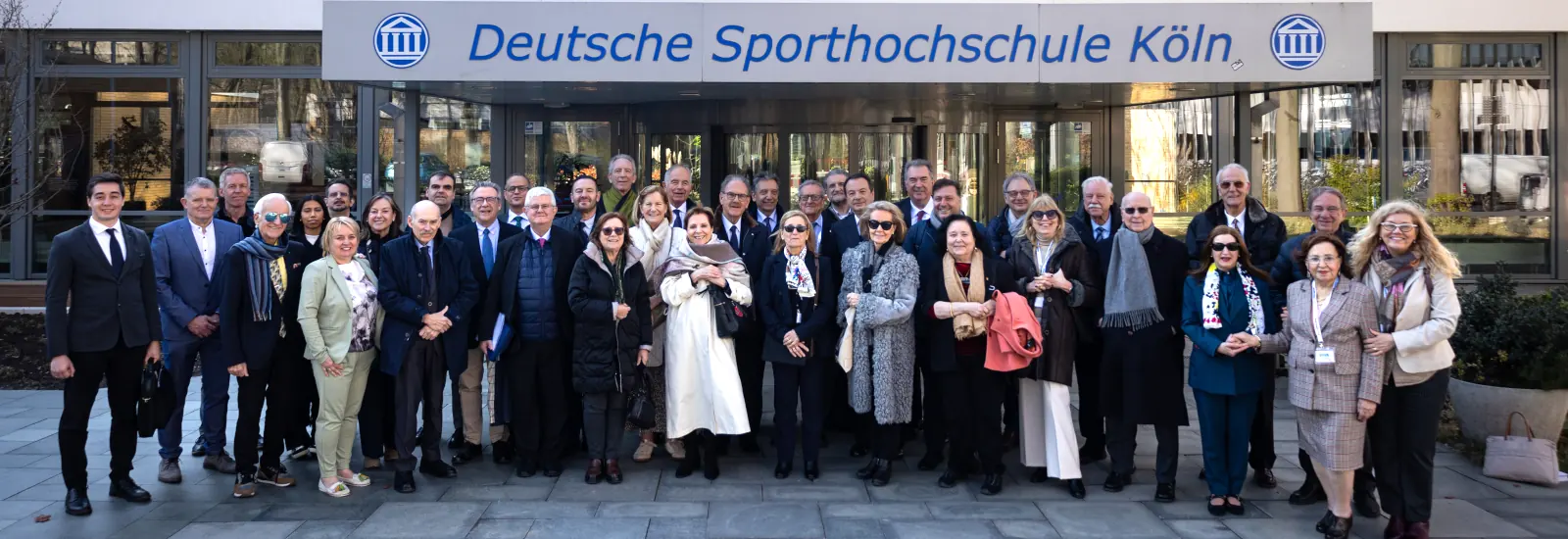
Marcela González-Gross, Professor of Nutrition and Exercise Physiology and Director of the Department of Health and Human Performance at the Faculty of Physical Activity and Sport Sciences of the Polytechnic University of Madrid, President of the Spanish Nutrition Society, corresponding member of the Royal National Academy of Pharmacy and full member of the Royal European Academy of Doctors (READ), was the driving force behind the joint academic event that the Royal Corporation held on 18 March together with the German Sport University Cologne within the framework of the 10th International Academic Meeting that READ held in various cities in Germany. The event took place between 15 and 20 March and led the academic community through the Rhine basin to Frankfurt, Mainz, Boppard, Bonn, Cologne and Koblenz.
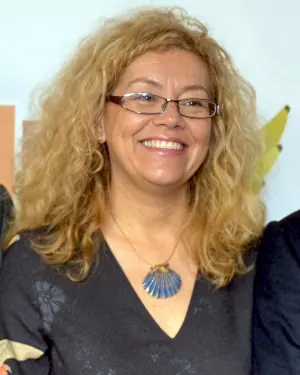
Dr Marcela González-Gross
The Rector of the German university, Ansgar Thiel, welcomed the READ delegation, led by its President, Alfredo Rocafort, who expressed his gratitude for the reception and briefly presented the Academy’s work. In the scientific session, the following speakers participated on behalf of the Royal Academy: Jaume Antich, with “Generative artificial intelligence: machines that make decisions”; José María Bové, with “Fractured Eurasia: Russia’s repositioning”; Cecilia Kindelán, who presented “Can artificial intelligence have a ‘life’ of its own?”; José Ramón Calvo, delivering “Health challenges in the European Union in the age of AI”; David López, with “Educating to lead in algorithmic times: the new leadership education”; Fernando Méndez, with the lecture “The European Union’s regulatory competence in the field of land registri”; and González-Gross herself, with “Health, ageing and quality of life in the age of longevity.”
On behalf of the German Sport University Cologne, the speakers were Ansgar Thiel himself, with “Healthy physical activity in older age: why one size does not fit all”; Christine Joisten, who presented “Sarcopenic obesity in children and adolescents”; Bernd Fleischmann, with the paper “Disease modeling in vivo and in vitro”; and Karl Ubl, who closed the session with the lecture “The birth of ‘Colonia’: how Cologne got its name.” Founded in 1947 as a pioneering initiative of the new Germany rebuilding its scientific institutions after the Second World War, the German Sport University combines high-quality teaching, international research and elite sport. It is the only university in Germany devoted exclusively to sport and physical exercise. It has four affiliated institutes and five transfer centres from which sports science is addressed in all its dimensions. It offers four degree programmes and master’s programmes and has 6,000 students.
González-Gross is a member of the boards of the Federation of European Nutrition Societies and the European Initiative “Exercise is Medicine”; a member of the International Union of Nutritional Sciences; a founding member of the scientific network Exernet; and a member of the CIBER Network on Obesity and Nutrition. She has also participated in more than 70 research projects and delivered more than 250 lectures nationally and internationally. She has received several awards, including the National Research Award in Sports Medicine from the University of Oviedo. The academic is part of the scientific group leading the Global Alliance for the Promotion of Physical Activity, an initiative led by various non-governmental organisations, scientific and professional societies and sports associations in response to concern over the rising prevalence of physical inactivity and non-communicable diseases worldwide.
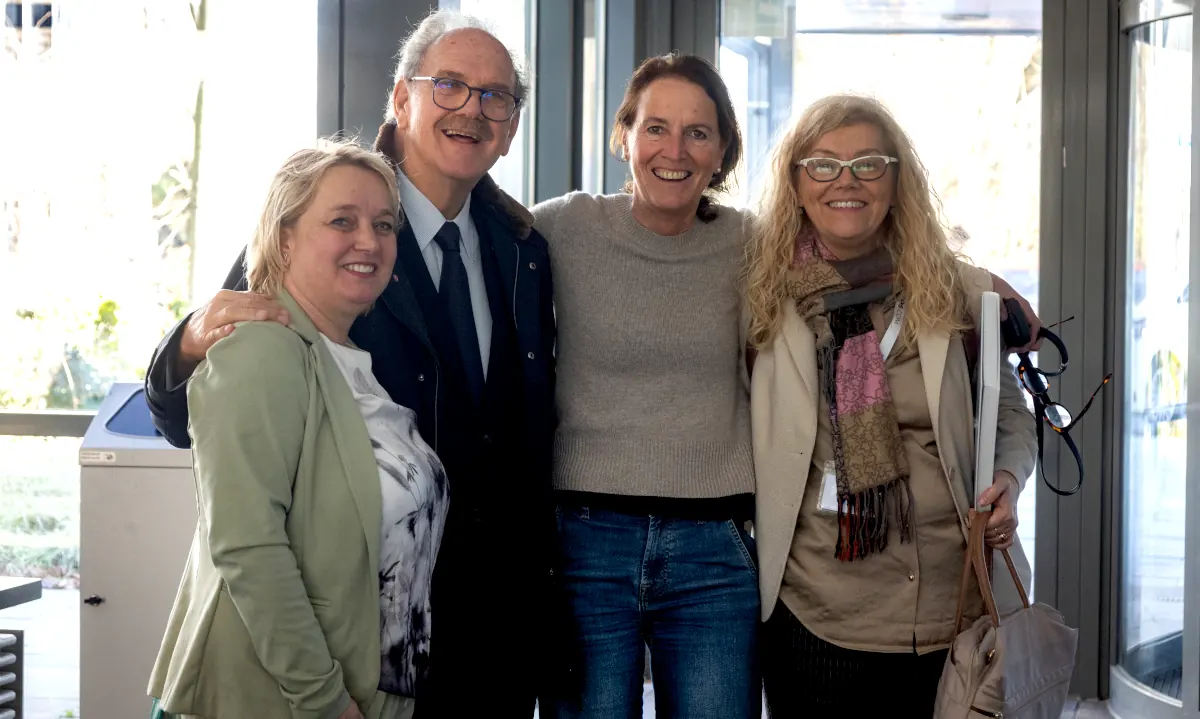
Prof. Dr Christine Joisten, Prof. Dr Alfredo Rocafort, Dr Christina Breidenassel, Prof. Dr Marcela González-Gross
-
- Prof. Dr.
-
- Prof. Dr. Wilhelm Bloch