

Dr. Francesc Torralba
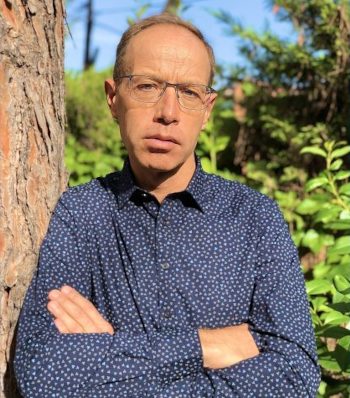
Francesc Torralba, Director of the Ethos Chair of Applied Ethics at Ramon Llull University and of the Chair of Christian Thought of the Diocese of Urgell, a member of the Dicastery for Culture and Education of the Holy See, and a full member of the Royal European Academy of Doctors (READ), has been the subject of prominent features and interviews in leading Catalan media outlets after being awarded the Josep Pla Prize by the publishing house Destino for his work “Anatomia de l’esperança” (Anatomy of Hope), during the traditional gala held on Epiphany in Barcelona. The book explores the mechanisms that sustain the human spirit when everything seems lost through philosophy, literature, and human experience, and delves further into themes addressed in his two previous publications, “La Paraula que em sosté” and “No hi ha paraules”. “Com assumir la mort d’un fill” (There Are No Words: How to Come to Terms with the Death of a Child), in which he shares his grief over the tragic death of his 26-year-old son, Oriol, in a mountain accident during a trek on which Torralba was accompanying him.
In La Vanguardia, journalist Francesc Bombí highlights the author’s exploration of the mechanisms that sustain the spirit when everything appears to be lost. “In a world that at times seems to be falling apart, the reasons for disenchantment are many, and Torralba does not deny them; he even offers reasons for despair, awakening the reader’s conscience so that each may find their own reasons to remain standing and move forward.” Meanwhile, in El Periódico, David Morán points to the path opened last year by biologist and neuroscientist David Bueno with “L’art de ser humans”, the first work of scientific popularization to receive the prize, and notes that the Pla Prize maintains a prudent distance from narrative fiction. “Torralba has devoted much of his career to reflecting on technology, freedom, and humanism, but the death of his son in a mountain accident in 2023 led him to delve more deeply into mourning and the relationship between faith and philosophy,” he explains.
In El País, Mar Rocabert emphasizes the hopeful message of the author. “With deep yet clear prose, the philosopher shows how horizons can be built and meaning rediscovered in times of uncertainty. The jury has regarded it as an indispensable map for navigating uncertainty,” she notes. In La Razón, Víctor Fernández highlights the figure of the author: “Torralba is a renowned philosopher, theologian, essayist, and university professor. His work has focused on areas such as philosophy, ethics, philosophical anthropology, and religion, with particular interest in questions concerning the meaning of life, human values, and existence.”
In Ara, Jordi Nopca explains that, through three main axes—philosophy, literature, and human experience—the author explores the mechanisms that sustain the spirit when everything seems lost. “In the book, Torralba asks ‘how we can make meaning be reborn, how horizons are constructed, and why we need that unbreakable trust that manages to keep us standing despite everything.’ ‘My discourse on hope is countercultural, because when we speak about the future it is usually in dystopian or apocalyptic terms. In the book I try to propose a different exercise from the usual ones, and I wanted to do so on solid intellectual foundations. For me, it has been a real challenge,’” the journalist explains, quoting the author. In Metrópoli, a section of the digital newspaper El Español, Joaquim Roglan analyzes the philosopher’s personal and intellectual trajectory. “The recognition and award granted to Francesc Torralba represent acknowledgment of one of the most important philosophers in Catalonia, at a time when philosophy is disappearing from primary and secondary education curricula. Philosophy teaches us how to think—something dangerous and unforgivable for the conspirators and those responsible for programmed mass idiocy,” he asserts.
Finally, the website of the radio network COPE reports on an interview Torralba gave on January 25 to the television channel Trece, in which, in addition to discussing his latest book, he reflects on the recent deaths in the railway accident in Adamuz, Córdoba, as summarized on the network’s website. “Asked about the most common mistakes made when trying to comfort someone who has suffered a loss, Torralba points out that the main one is ‘giving advice when it has not been requested.’ To avoid this, he stresses that ‘the primary attitude should be listening, allowing the person to release those emotions, that pain, that crying, those tears. It is about being there—do not keep everything inside; the worst thing is to shut oneself away and try to get through it alone.’ And ‘mourning in community is more bearable; if another person supports you and offers help, it gives you the feeling that you are not alone in the world,’” the summary explains.
A lecturer and popularizer of Christian humanism in major Catalan media outlets such as Catalunya Ràdio and the newspapers La Vanguardia and El Punt Avui, Torralba is the author of notable books including El sentit de la vida (2008), No passeu de llarg (2010), El valor de tenir valors (2012), Un mar d’emocions (2013), Córrer per pensar i sentir (2015), Saber dir no (2016), and Món volàtil (2018). During the pandemic, he published Humildad; Paraules de consol. En la mort d’un ésser estimat; Formar personas. La teología de la educación de Edith Stein; Vivir en lo esencial. Ideas y preguntas después de la pandemia; and L’ètica algorítmica, which was awarded the Bones Lletres Prize for Humanistic Essay by the Royal Academy of Good Letters and the publishing house Edicions62; La façana de la Glòria de la Sagrada Família. Fonts espirituals i teològiques de l’escatologia d’Antoni Gaudí, the result of his fourth doctoral thesis; Cuando todo se desmorona. Meditar con Kierkegaard (2023); No hi ha paraules. Com assumir la mort d’un fill (2024); and Benaurances per a agnòstics (2024). He was awarded the Ratzinger Prize 2023 by the Vatican Foundation Joseph Ratzinger–Benedict XVI.