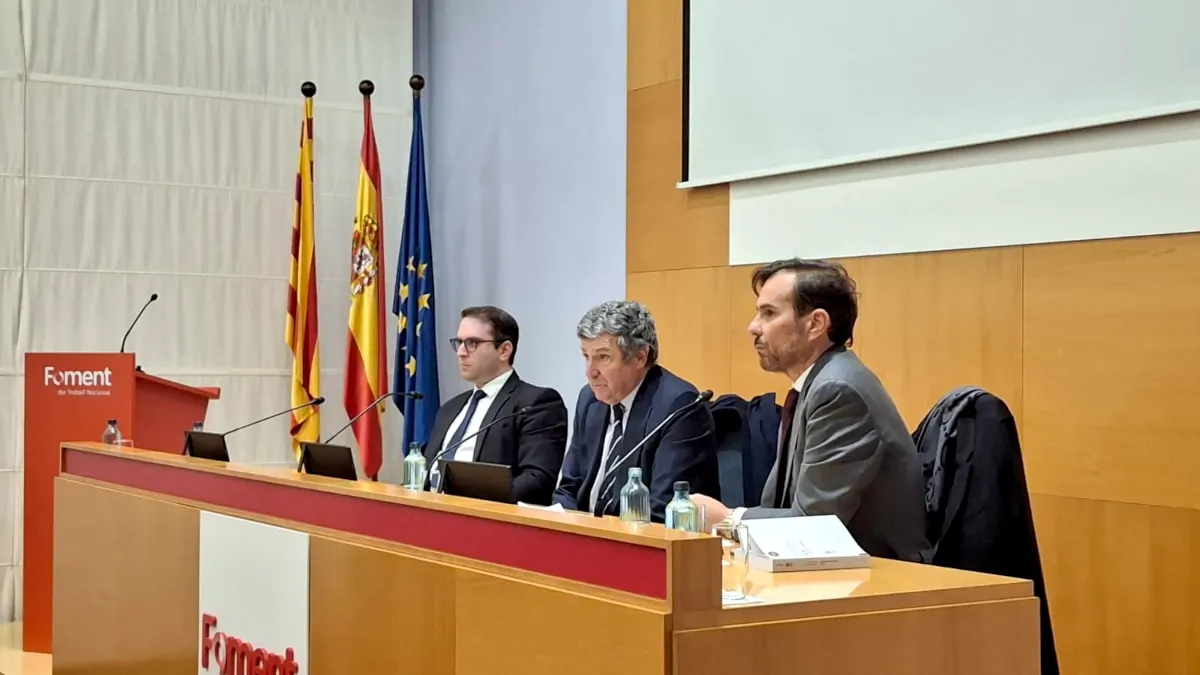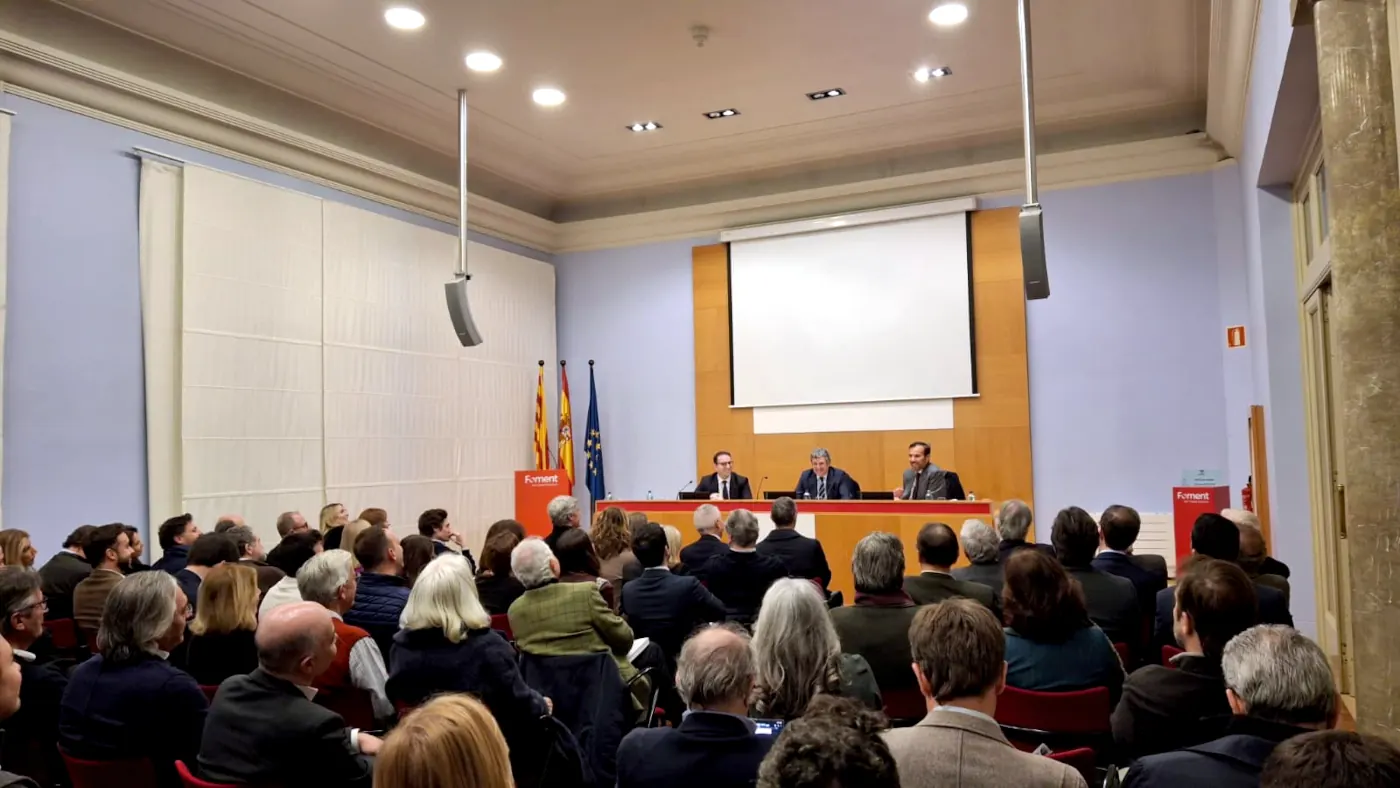


Fermín Morales, Professor of Criminal Law at the Universidad Autónoma de Barcelona, partner at Morales Abogados Penalistas, and full academician of the Royal European Academy of Doctors-Barcelona 1914 (READ); Luis de las Heras, Professor of Criminal Law at the Universidad Internacional de La Rioja and the Universidad de Valencia, Vice President of the Instituto de Derecho Iberoamericano and also a full academician of the RAED; and Francisco Marco, a recognized expert on the right to privacy, Director of the detective agency Método 3 and corresponding academician of the RAED, presented on Thursday, January 22, at Fomento del Trabajo—the Academy’s headquarters—the book «AI: The Siege of Privacy». The work reveals the invisible mechanisms that erode personal privacy and explains how personal data have become an added value often exploited for commercial purposes, frequently without the knowledge or consent of those concerned.
«Every click on ‘accept’ is a fragment of freedom we sacrifice. Every Google search, every ‘like,’ every journey tracked by our mobile phones builds a profile that others control. Artificial intelligence no longer merely observes what we do: it anticipates what we will do, influences what we think, and shapes who we are. This book proposes a new legal concept, the Data Nexus Juris, and poses an uncomfortable question: are we prepared for a future in which five corporations and a handful of algorithms control everything we are? This is not an indictment of technology. It is a wake-up call so that AI may enlighten us rather than blind us», the book’s presentation states.
Through a legal, philosophical, and technological analysis of privacy, the three academics—specialists in the field from a legal standpoint—explained why this fundamental right has undergone the most profound transformation in recent decades, driven by the development of digital technologies, the emergence of artificial intelligence, and new models of leisure and consumption that expose personal intimacy. «Are we prepared to lose our privacy? Will we allow a handful of corporations to know every detail of our lives? Will we still be able to send an email or travel without companies and governments knowing where we are and with whom?” the academics asked the audience, warning of the real threat to freedom posed by the new relationship between human beings and technology ushered in by artificial intelligence.
Morales is a founding partner of the law firm Morales Abogados Penalistas, has taught as a full professor at the Autonomous University of Barcelona for more than two decades, serves as a professor at the business school Esade, and promotes research as editor-in-chief of the Revista de Derecho y Proceso Penal. De las Heras, for his part, is a partner at the prestigious law firm Ospina Abogados, where he heads the Criminal Litigation Department. He is the author of more than 30 publications in the fields of criminal law theory and policy, personality rights, and law and literature, and a member of the Editorial Committee of Actualidad Jurídica Iberoamericana and the Editorial Board of the Revista Boliviana de Derecho. Finally, Marco was awarded the National Doctrine Prize in 2000 for his work «Monitoring Email in the Workplace», and in the field of political, judicial, and investigative reporting he has co-authored bestsellers such as «La fugida», «El método», «Operació Catalunya», and «La España inventada», as well as the novels «La preparadora de juicios», «Realpolitik», and «Los secretos de Alba».