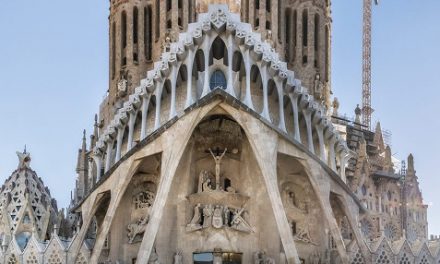


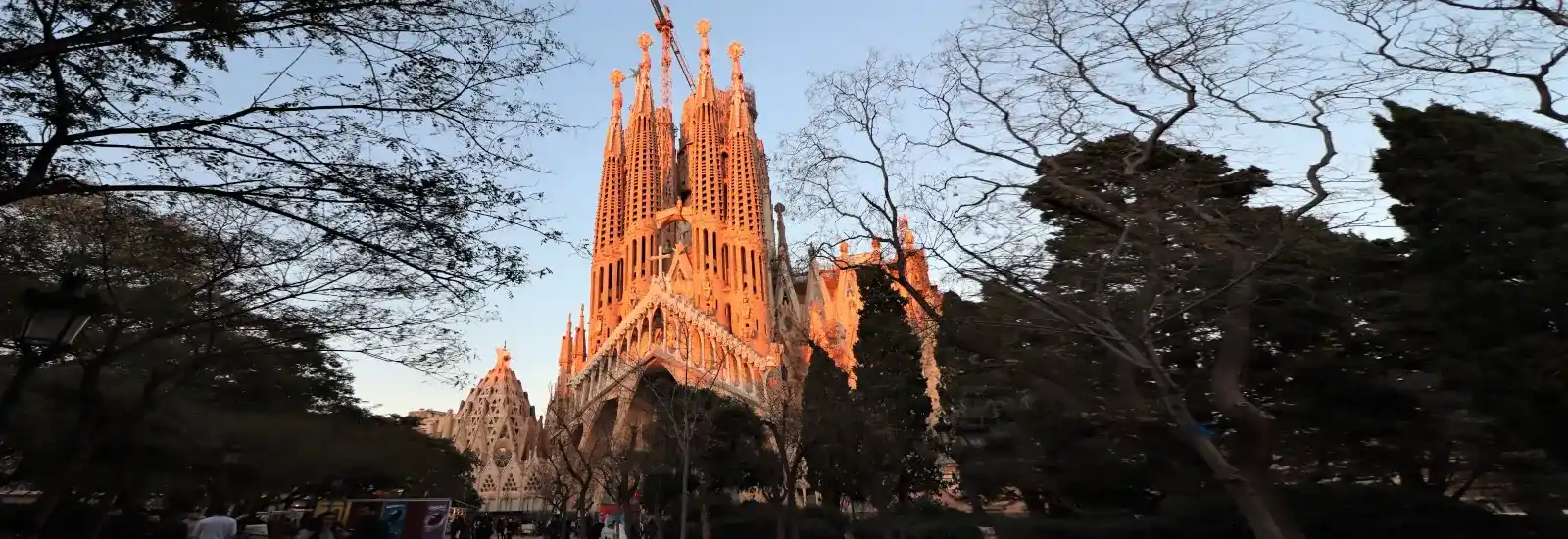
Armand Puig, President of the Agency for the Verification and Promotion of Quality in Teaching at Ecclesiastical Universities and Faculties and Academician on leave of the Royal European Academy of Doctors (READ), reflects in an interview published on 8 January in the renowned «La Contra» section of the newspaper «La Vanguardia» on the genesis of Barcelona’s Sagrada Familia basilica by Antoni Gaudí. He dismisses the idea that the project emerged from the celebrated architect’s workshop fully formed from scratch, instead locating its origins in earlier plans that already envisaged the construction of a monumental temple. Puig has explored Gaudí’s figure and creations extensively in his recent book «Antoni Gaudí, Life and Work» (Arpa).
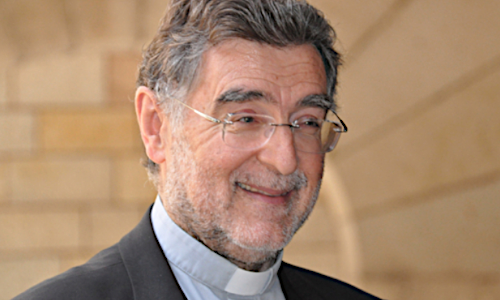
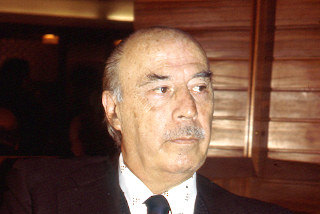
Dr Armand Puig
In conversation with journalist Lluís Amiguet, the author recalls that the original project, begun in 1882, was the work of architect Francisco de Paula del Villar, who proposed a neo-Gothic church very different from what Gaudí would later develop. When the architect from Reus took over direction in 1883, he adopted the project but radically transformed it, endowing it with a revolutionary architectural ambition that would turn it into a synthesis of art, geometry, and religious symbolism. Puig emphasizes that Gaudí not only changed the style, but also introduced an absolutely novel structural and conceptual system, based on natural forms and the pioneering use of hyperboloid and paraboloid structures and tensile elements that anticipated modern techniques.
The academic underscores that the Sagrada Familia is therefore the result of a historical dialogue among different ideas, influences, and stages. The original architect set the intention of building a temple, but it was Gaudí who endowed it with a visual language, symbolism, and constructive logic that raised it to a universal icon, abandoning all other projects to devote himself to it entirely. «He abandons all his other works and remains with the Sagrada Familia, because he wants it to be as perfect as possible, knowing that he will not finish it, because it is impossible. He knew this, and that is why he said that ‘the owner of this work is not in a hurry.’ He was aware that he had to provide the guidelines so that it could be done well without him. Gaudí already knew that no project was beyond him, and that he was capable of giving each work its own personality, unique and incomparable. When we compare Casa Batlló with La Pedrera, we see that they bear no resemblance to each other, even though only five years separate them», Puig explains.
In this regard, the academic considers that, despite material and financial difficulties—including interruptions due to wars and crises—the work has always enjoyed a continuity thoughtfully reformulated by each generation of architects who followed Gaudí. The historian rejects legendary versions that idealize Gaudí as a solitary and almost mystically inspired creator. Instead, he presents him as a professional with solid training, well versed in both the Gothic tradition and the constructive currents of his time, capable of synthesizing knowledge and emerging technologies into a single architectural language.
Puig will also take part on 12 February in the second session of the series «Theological Interpretations of the Tower of Jesus Christ of the Sagrada Familia», organized by the Sant Pacià University Athenaeum, with the lecture «The Ecclesiological Axis of the Tower», which he will deliver together with Joan Torra, rector of the Athenaeum. Other participants in the series include Jordi Faulí, chief architect of the temple works, and Francesc Torralba, director of the Ethos Chair of Applied Ethics at Ramon Llull University and of the Chair of Christian Thought of the Diocese of Urgell, a member of the Dicastery for Culture and Education of the Holy See and a Full Member of the READ. In fact, when symbolizing the interior space of this tower, the Theological Commission of the works, in coherence with the overall harmony of the basilica and the meaning of the tower, sought to transform the ascent to the viewing cross into a mystagogy—a process of initiation.
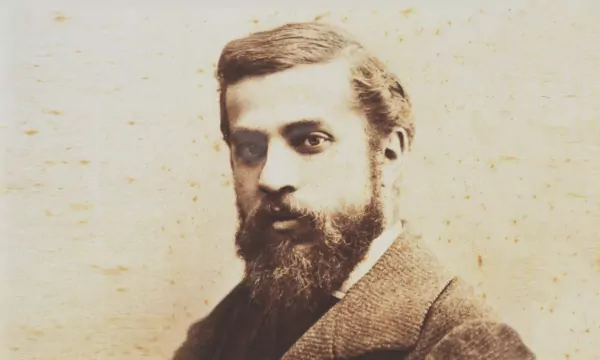
Antoni Gaudí
Puig served as rector of the Sant Pacià University Athenaeum and of the Major Interdiocesan Seminary of Catalonia until he was appointed by Pope Francis as the highest representative of the body responsible for ensuring the quality of institutions and teachings in ecclesiastical universities and faculties worldwide, at which point he moved his residence to Rome. A former parish priest of the Basilica of Saints Justus and Pastor in Barcelona, the academic is noted for his profound biblical knowledge and is the author of more than a dozen books. He holds a doctorate in Biblical Sciences from the Pontifical Biblical Commission in Rome. He was dean of the Faculty of Theology of Catalonia from 2006 to 2015, where he is an ordinary professor of the New Testament, and dean of the Antoni Gaudí Faculty of Church History, Archaeology, and Christian Arts between 2014 and 2015.
In addition to his teaching and research work, he possesses a strong capacity for outreach, which he develops through lectures for general audiences and his regular contributions to the newspaper «El Periódico» on current issues related to the Church in a broad sense. His main fields of biblical research have been the Synoptic Gospels, the Acts of the Apostles, the First Letter of Peter, and medieval Catalan biblical versions. For eleven years he coordinated the translation team of the «Interconfessional Catalan Bible», published in 1993. He has also published a biblical-theological study on the «Homilies d’Organyà» (Barcino) and coordinated the book «The Land and the Seed. The Catalan Church at the Beginning of the Millennium» (Proa). His work «Jesus: A Historical Profile» (Proa) has reached six editions in Catalan and has been translated into Spanish, Romanian, Portuguese, and Italian.